
Bristol Tree Forum blog

A grotto made from 10,000 tree samples comes to Bristol

A grotto made from 10,000 tree samples comes to Bristol

Freelance photography services

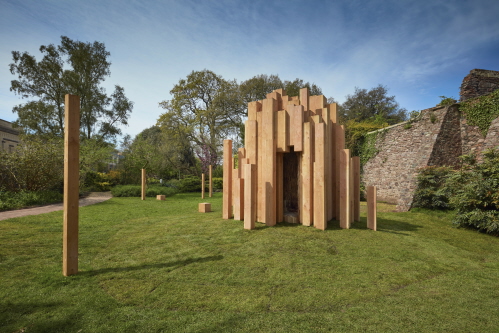
The captivating new piece of public artwork, made from 10,000 tree samples gathered from across the world and unveiled by the University of Bristol last May, is definitely worth a visit.

The intricate structure, called Hollow, is located in Royal Fort Gardens and represents the planet’s history and evolution through time. It was commissioned to mark the opening of the University’s £56.5million Life Sciences building and is produced by Bristol-based public art producers, Situations.

Described as a ‘modernist grotto’, it’s big enough to fit two people and promises to be an immersive experience as light falls through apertures in the ceiling, mimicking the way sunlight falls through trees in a forest. It took Katie Paterson three years to amass the samples, many of which have been donated by private collectors, arboretums and botanic gardens across the world.

Freelance photography services

Among the 10,000 pieces of wood is a fossil from an ancient forest which grew 390 million years ago where New York City now stands. Wood from more recent historic events also forms part of the structure, including part of the iconic Atlantic City boardwalk devastated by hurricane Sandy in 2012 and a sample from the Japanese Ginkgo tree in Hiroshima, a tree that witnessed and survived one of the darkest moments of human history.

Hollow will be open to the public during daylight hours all year round.

To Learn more, visit the Bristol University website and BBC Four documentary ‘What Do Artists Do All Day?‘.


London’s Air Conditioning

Treeco2nomics New Report Highlights the Benefits London’s Trees Bring to Air Quality

A new report, co-authored by Treeco2nomics, has identified that the tree population of inner and outer London holds nearly 2.4 million tonnes of carbon and is consuming an additional 77,000 tonnes per annum. This is equivalent to the total amount of carbon generated by 26 billion vehicle miles, significantly assisting air quality in the capital. In total, when counting all pollutants, the total value is £126 Million per annum.

The report is a partnership project also including Forest Research, Greater London Authority, Greenspace Information for Greater London, London Tree Officers Association, Natural England, Trees for Cities and The Tree Council. The project was kindly supported by Unilever. The report covered the whole of the Greater London area. Indeed, the London i-Tree project is the largest survey undertaken to date worldwide using the i-Tree software.

Understanding and quantifying the value structure of London’s urban trees helps calculate the many benefits urban tree cover bring to the local population. The London i-Tree report serves as an example and encouragement to others, particularly because it has demonstrated public involvement and hopefully commitment to change based on the results.

The survey provides the basis and a benchmark from which to move forward with structured planning for London’s urban forest.

You can read the full article on the Treeco2nomics website and download a copy of the report.