Redland Hill street trees felled by the Council. Why? An explanation…

We have now received an explanation, via a local Councillor, for why the trees on Redland Hill were felled – see our recent blog – Redland Hill street trees felled by the Council. Why?As we are anxious to update the record as soon as possible, we have decided to make it public. Here it is, received just yesterday:

Contractors removed some of those trees along this strip in error. The contractor is planting replacements free of charge (hence the blue markers) [small posts painted blue, which we noticed had recently been inserted in a line along the wall – just visible in the image below].

The history I’m told goes as follows: 

The tree officer selected and marked the specific trees to be removed with a green paint spot. The thinning out was necessary due to the lack of space on the narrow strip of verge. It is good arboricultural practice.  It has been suggested this row used to be part of an old beech hedge, this isn’t the case because the trees removed were a mix of species, ash, sycamore and elder.

Unfortunately other trees, without the green spots and which were scheduled to remain, had previously been marked up with orange paint spots. It was made clear to the contractor’s manager when they met the Council’s tree officer on site which trees were to be removed and which should stay. 

The contractor’s team leader who subsequently carried out the felling work had not been given the full information from the manager and felled all the trees except the large Beech on the corner. The felling was also done much quicker than expected which is why the Councillors weren’t notified in advance thus compounding the error.

[The Trees and Allotments Manager] has discussed this communication error with the contractors and they have agreed to replace the trees that were incorrectly felled (i.e. the orange spot ones). The new replacement trees will be much better suited to the location than the original species. The new trees are birch with a very narrow and upright form. This will be much more suited to the narrow planting location and should have potentially less conflict in the future with pedestrians with pushchairs and will be easier to maintain next to the highway.  They will all be planted by the end of tomorrow.”

Here they are…just planted…and we are very pleased to see them.

The view after planting – 13 birch planted in six groups

We have asked the Council to comment. We await their response, though we see that they have already commented to BristolLive.

Councillor Clive Stevens (and ex-Chair of Bristol Tree Forum) commented: “Although conspiracy theories are more fun to read about, sometimes it is due to a good old fashioned cock-up. Lessons to be learned on communication with the public which I think was the main theme of the Tree Forum’s original blog is the need for more and better consultation. That applies to many things the Council does. If the Government decided to increase the duty to consult on tree works lets hope they provide some extra money to pay for someone to do it. And secondly, often the Council takes a while to respond and in this case probably because they wanted to finalise the solution first; its the same department dealing with Stoke Lodge and ex Wyevale Garden Centre situations and probably a hundred or so other active planning applications all with tight deadlines which take priority.”

As a precaution, we have asked the Council to take urgent steps to protect the last remaining beech tree on the boundary wall with a Tree Preservation Order. This is partly because of what has happened, but also because we have had to advise the Planning Department that someone on the site has dumped a large amount of builders rubble and other materials on the tree’s roots on the other side of the wall from the tree. Clearly this important tree (the last vestige of a historic hedge which probably predates both the wall and the buildings nearby) is still under threat and needs protection.

We are sad to have lost what was once a significant aspect of one of the approaches to the Downs, but are pleased to see the whole sorry saga resolved. We hope that lessons have been learned and look forward to watching the replacement birches grow and flourish.

Bristol’s i-Tree Eco survey is published

The study has revealed that there are some 600,000 trees growing in Bristol – and that they are worth £280 million to the city.

The study, the initiative of a partnership between us, Bristol City Council, the Woodland Trustand the Forest of Avon Trust, saw the latter work with 29 volunteers and local partners to help uncover the remarkable story of our Bristol trees.

Using the latest i-Tree Eco 6 model, the survey ran between May and September 2018 and has revealed that Bristol’s trees store around 360,000 tonnes of carbon dioxide and remove about 14,000 tonnes more each year – equivalent to the annual carbon dioxide emissions of some 9,000 cars.

The study also found that Bristol’s urban forest is worth around £280 million. This includes the cost of replacing the trees, plus the value of all the carbon stored in all the wood.

Each year trees in Bristol provide environmental services worth around £1.6 million, removing about 100 tonnes of air pollution and reducing flood risk by soaking up some 90,000 cubic metres of water thereby preventing this from running into drains and saving us about £140,000 annually.

Bristol’s tree canopy cover is currently around 12%. However, experts believe that this figure needs to increase substantially to help us combat the effects of climate change and air pollution, and protect biodiversity and promote our health and wellbeing. 

Bristol’s One City Plan, published in January 2019, is calling for tree canopy cover to be doubled by the end of 2045. That means adding another 1,316 hectares of new trees by adding around 53 hectares of new tree plantings annually for the next 25 years. This is an ambitious goal, but it could be achieved if everyone in Bristol planted just three new trees each.

Bristol’s Deputy Mayor, Councillor Asher Craig, said:

We have identified a need to increase the city’s tree canopy cover in order to enhance Bristol’s urban environment and provide a wealth of benefits. We are calling upon all citizens and businesses in Bristol to show their support for urban trees.

I am delighted that our partnership was recognised at the recent Street Trees Awards, as it shows we are moving things in the right direction.

Mark Ashdown, Chair of the Bristol Tree Forum said:

The Forum would like to commend Forest of Avon Trust for all their hard work and dedication to this important project. This report helps set the base line for the One City Plan’s goal to double Bristol’s tree canopy cover by 2046. It is an ambitious plan, but with the full support of Bristol City Council – ensuring that planners and developers always think ‘tree’, making sure that enough land is set aside for tree planting, protecting existing trees and ensuring that adequate funding is made available – we can all secure the future of Bristol’s urban forest and help Bristol’s citizens lead healthier, happier lives.

Jon Clark, Executive Director of the Forest of Avon Trust said:

I would like to thank the volunteers who helped us with this study, which makes the case that Bristol’s trees have a really important role in mitigating the growing impact of climate change in the city as well as in managing the health impacts of vehicle and wider CO2 emissions. Looking after the trees we have now and working with communities across Bristol to plant many more of them will make the city a healthier, more sustainable place to live and one in which people will be actively involved.

The Woodland Trust’s South West External Affairs Manager Catherine Brabner-Evans said:

Intuitively we know trees are good for us. They are the green lungs of our city. Urban trees bring life and colour, connecting us with nature, reducing stress, and boosting our mental health. Now we can also demonstrate the economic value of some of the services that trees provide. It is vital we protect our beautiful urban canopy and plant for future generations.

If you would like to help us plant, protect and care for Bristol’s trees, please complete our five-minute survey HERE. The survey closes on May 3rd, 2019.

To request a pdf of the full iTree Bristol report or to ask any questions about the study, please contact us or email Jon Clark at the Forest of Avon Trust.

Redland Hill street trees felled by the Council. Why?

Until a few weeks ago there was a lovely informal stand of trees along Redland Hill, which is a busy road that I walk up twice a day to get to the Downs.

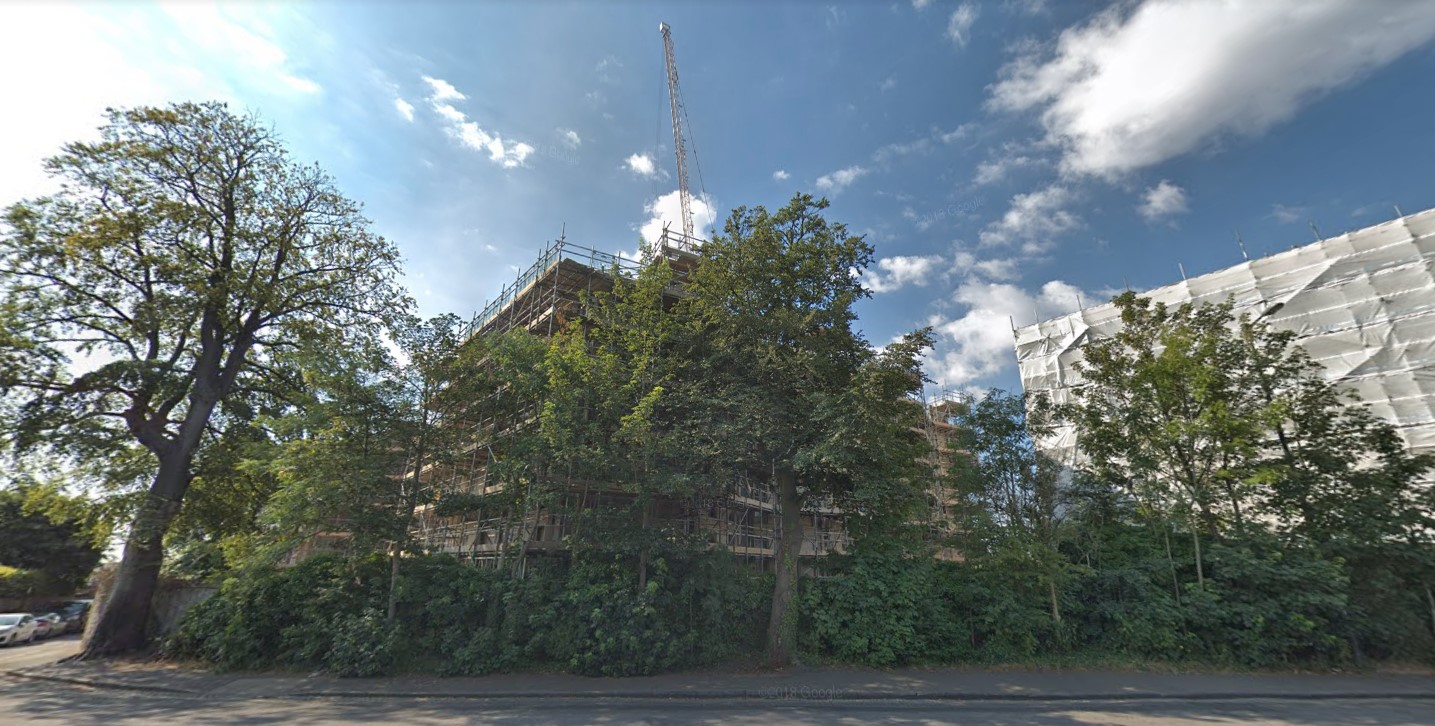
As it used to look – Google Street View – July 2018

Rush hour stationary traffic belches out pollution and the trees provided some respite.  I have watched over the years as several of the old beech trees were removed.  They were probably once part of a beech hedge that predates the existing buildings (and the wall): now only one is left.  Instead, an informal collection of ash and other trees grew in their place.  This was a great place to see Broomrape, a parasitic plant that grew at the base of some trees.

How it now looks…All gone – just one lonely beech and some street furniture left to improve the view.

There was no consultation of any kind with the community. One day the trees were there, the next they were gone. Without any involvement from the Bristol Tree Forum, the local councillor or the local community, we can only guess why the trees were removed. Perhaps it was concerns about the nearby wall.  A careful examination shows that there are no obvious cracks, even close to the one remaining beech tree.  Was a proper engineer’s survey done? In days gone by a Bristol City Council Tree Officer defended a tree, similarly close to a garden wall, that the owners wanted to cut down, even obtaining an engineer’s report. Even if there were substantial damage to the wall, other options were possible, such as thinning out the trees (only some were marked with green paint) or laying them as a hedge as was recently done in Redland Green.

…just sawdust, rubbish and some ivy (now hacked down), nothing else.

Of course the removal may be for a different reason. Maybe what the developers really wanted to do was to create views for their flats and successfully put pressure on the council? Perhaps the pavement will be widened?  Or perhaps the area will be dug up for services. I don’t think the removal of trees was in the planning application.

J

At this time, with the threat of Ash die-back disease we should be looking to keep healthy ash trees in case by chance they turn out to be the ones that are resistant. Cutting down healthy ash trees is misguided.

The money that was spent cutting down these trees should have been used for planting new street trees, something that Bristol City Council says it has no funds to do. I’m guessing more money will now be spent to tarmac over the area where the trees once were. 

Bristol City Council should have thought differently. For example, it should have enforced a root protection area for the last remaining beech tree. This was apparently not done and I guess we will see that last tree fail in the next ten years.

At present, Bristol City Council refuses to consult over tree felling decisions, despite requests from the Bristol Tree Forum for a decade. It is almost as though the council thinks there are no inhabitants in the urban forest and that they always know best. Unilateral decisions such as this show how important the government’s proposal is to require local authorities to properly consult before removing street trees

Bristol has an ambitious plan to double its tree canopy by 2050. Yet all over Bristol, on an almost daily basis, tree canopy is being lost – for multiple reasons. Just in the local area, about half a dozen really large trees have gone and the canopy cover has decreased. We did manage to get one new street tree, in the middle of Redland roundabout but it took a four year battle and the help of our local MP to get it planted. Trees are lost very gradually in our bit of Bristol and are often not replaced.  So the change in canopy is not obvious. Fisheries biologists have coined the term “shifting baselines”, where each generation sees only minor negative changes. But the effect over a long period is substantial.

As Professor Corinne Le Quere has said, “actions to tackle climate change have to penetrate all the decisions that we take in society”. We are hoping that we can get this point across to the decision makers in Bristol City Council.

The Bristol Tree Forum will now be campaigning for these trees to be replaced.

Vassili Papastavrou.