A recent study* has used i-Tree Canopy^ (a free-to-use tool developed by the USDA Forest Service) to survey the tree canopy cover (TCC) of 282 towns and cities in England.
TCC, also called ‘urban canopy cover’ or ‘urban tree cover’, has been defined as the area of leaves, branches, and stems of trees covering the ground when viewed from above. It is an easily accessible measure that can be used to estimate the percentage of tree cover that any urban area enjoys.
It is now internationally accepted that properly managed forests and trees in urban environments make important contributions to the planning, design and management of sustainable, resilient landscapes – they help make cities safer, more pleasant, more diverse and attractive, wealthier and healthier.
Research also suggests that even moderate increases in canopy cover within cities can aid adaptation to the adverse effects projected under a changing climate. However, a baseline TCC value for many of the UK’s towns and cities is unknown.
Nor is it known whether canopy cover is changing and, if it is, whether it is increasing or diminishing. There is also a knowledge gap when it comes to knowing the numbers of trees in towns and cities, or their species, age composition and health. The level of canopy cover required to deliver meaningful benefits in UK towns and cities is also unknown, though there is some evidence to suggest that it is in decline.
This study* has now gone some considerable way to answering these questions and revealed a wide range of baseline tree canopy cover across the country – from a TCC of 45% in Farnham to just 3.3% in Fleetwood; with a median TCC of 15.8% and only 132 (47%) of sampled areas exceeding this.
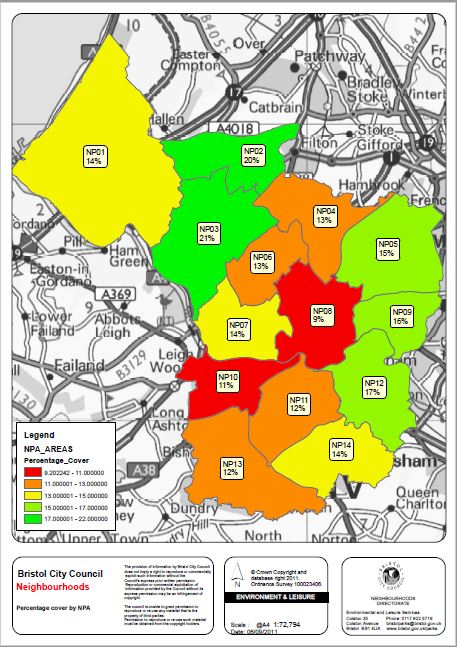
Bristol, for example, ranks 176/282 samples if the 14% TCC identified in a studyundertaken by Bristol City Council in 2011 is used. If the 18.6% cover estimated in this recent study is used (the study only looked at TCC in the urban land classes, rather than at the whole administrative area covered by BCC), then its TCC is above average and it would rank 83/282 samples. This suggests that “…boundary choice can impact TCC results and should be driven by the overriding question: ‘what is the tree canopy cover in the urban land classes of a given local authority?’, compared to ‘what is the tree canopy cover in a given local government jurisdiction?'”‘.
Doick et al – i-Tree Canopy Assessment urban area mapped
Bristol also has the added benefit of having already surveyed many of its public trees, albeit some eight to ten years ago. This treasure-trove of data has been collated and augmented with other data we have collected to make a dataset of nearly 67,500 individual trees (though just 2.4% of predicted TCC) and made available to all via the Trees of Bristol web site.
Conclusions drawn by the study
A TCC target that is city-wide and not targeted at specific wards or land-uses poses a number of challenges. It can be delivered in such a way that does not optimise or diversify benefit delivery. For towns and cities that have a green belt (or similar designation), planting schemes can be targeted within this land. However, with comparatively lower populations than the urban centres, planting here offers fewer benefits on a per capita basis.
Canopy increase targets could equally be met by preserving the existing tree stock and allowing natural growth. As the canopies increase so will total canopy cover, although such increases will be constrained by tree loss/removals, natural wastage and damage by pests and disease.
Such an approach, however, also fails to address social equity. Targets based on land-use-based assessments or ward are more likely to align the provision of ecosystem services with indicators of social inequity. It will be important that such approaches are underpinned by a robust baseline and a commitment to repeat canopy cover surveys using a consistent approach.
Species diversity and placing the right tree in the right place are important considerations when planting to achieve a TCC increase as these allow resilience to be built into the urban forest. Knowing the composition of the existing urban forest in terms of species and age structure, condition and appropriateness to location (and therefore life expectancy) can inform such decisions. Given that private ownership of trees can be as little as 24-35% in some cities, but as high as 71-75% in others (Introducing England’s urban forests), TCC baselining studies should be complemented by a field study.
With the wide range of considerations and stakeholders involved in urban forest management, TCC targets should be set both within local planning policy and within a formal urban forest management strategy.
Targets should have a target date, an action plan and a commitment to monitor, review and update. The policies should inform on which tree species to plant. They should also prioritise wards and/or land uses and should protect the existing tree canopy by enforcing best practice, codes of practice and statutory controls in the care, maintenance and protection of trees. Given that the average lifespan of a typical urban tree is estimated to be 32 years, changes in the age profile of the urban forest should also be modeled to at least 50 years distant in order to understand and plan for the likely impact on total TCC of tree planting and loss.
Any strategy will need to focus on partnerships with institutions and on guidance advising residents how they can best protect and look after their tree stock, schemes to assist in management and maintenance, and support future tree planting amongst the different ownership groups.
Finally
City-wide tree canopy cover is a useful indicator of the extent of tree presence across a city. Its assessment can be simple, fast and highly reproducible. Repeat observation could be a cost-effective means of monitoring tree populations, setting targets and tracking effectiveness of planting programs.
The results of this study suggest that:
an average TCC of 20% should be set as the minimum standard for most UK towns and cities, with a lower target of 15% for coastal towns;
towns and cities with at least 20% cover should set targets to increase cover by at least 5% (i.e. above the ±2% tolerance of i-Tree Canopy) within 10 to 20 years (depending on what is achievable against their baseline); and, targets and strategies for increasing tree cover should be set according to the species, size and age composition of the existing urban forest, based upon a ward/district level and land-use assessment.’
We at BTF commend and recommend this very helpful and timely study.
Representatives of the Woodland Trust, The Bristol Tree Forum, The Forest of Avon Trust and Bristol City Council met last Thursday 1 March to start the process of developing a Tree Strategy for Bristol. This is the first tentative step in a process which will include consultation and involvement of all those groups and individuals who have an interest in Bristol’s trees.
The process of developing a strategy will need a lot of thought: Bristol has woodland trees, park trees, trees on private land, street trees and trees on corporate land (including university trees). In each case, the costs and benefits and what we would like to achieve are different, as are those we would want to involve. The idea is to start a “conversation” which would include an online platform, a number of exploratory meetings with key partners and then, in June, a public meeting which would be convened by the Woodland Trust, the Bristol Tree Forum and the Forest of Avon Trust in collaboration with Bristol City Council.
Without pre-judging what might be in a tree strategy, these are some of the considerations:
Bristol already has a lot of good practice in place, both at a policy level and through individual case studies. The idea would be to collate all this together with a clear approach to improve the management of existing trees, the planting of new trees and to increase community engagement in tree management. Inevitably we will need to bring funding to Bristol to meet these goals and a good tree strategy will help with this.
The initial discussion was very positive – it is something we have talked about for some time and I am really pleased that there is now the momentum to carry it forward.
In a quiet street in Brislington East there used to stand an apple tree, planted, the residents think, at about the same time that the street was developed, sometime in the 1930s.
It was an unusual, red-fleshed variety with very deep pink blossom and red inner flesh when a stem or its fruit was cut. It gave delight to all who passed by it, shelter to local wildlife and provided fruit to anyone who chose to take them, for they made quite good eaters and were delicious when cooked well. The birds also enjoyed them as autumn turned to winter.
The passage of the years had exaggerated its natural lean and caused it to become dangerous so, sadly, it had to come down.
However, before it was felled, a resident took cuttings for budding and sent them to two nurseries and an amateur gardener. This winter these produced eight new trees on MM106 rootstocks, for which homes have been found across the country. Three have been returned to the street and planted in front and back gardens nearby and one has been planted in Horfield. There are now also specimens to be found in Hawksbury Upton, Wootton-under-Edge and in Wales.
The last one is going to a red-fleshed apple expert in Leicestershire in the hope that they will be able to identify the variety.
So, what to replace it with?
The location, on a north-facing pavement, is just five metres from nearby houses (so neighbours are particularly concerned not to lose too much light), requires a tree which is small, light canopied, preferably has both blossom and fruit and definitely has value for insects and birds.
The street supports a rare swift colony and there are breeding starlings and sparrows using the nearby house eaves to nest and raise their young. The residents are keen to support all these declining species, especially the swifts which have a very high demand for insect food.
The majority of trees in the neighbourhood are small to medium sized, blossoming and bearing either berries or fruits – typical of a 1930s housing estate. These trees bring a lot of pleasure to all and support bio-diversity.
What do you think would suite this location? Please let us know.
If you would like to get a tree planted on a street near you this winter, you will need to make sure that you have submitted your sponsorship request well before the end of this December.
If the tree site you want to sponsor is not shown on the Council’s map, then send an email to Simon Cuthill, Business Support Assistant at treebristol@bristol.gov.ukidentifying the site you have in mind and ask for it to be included.
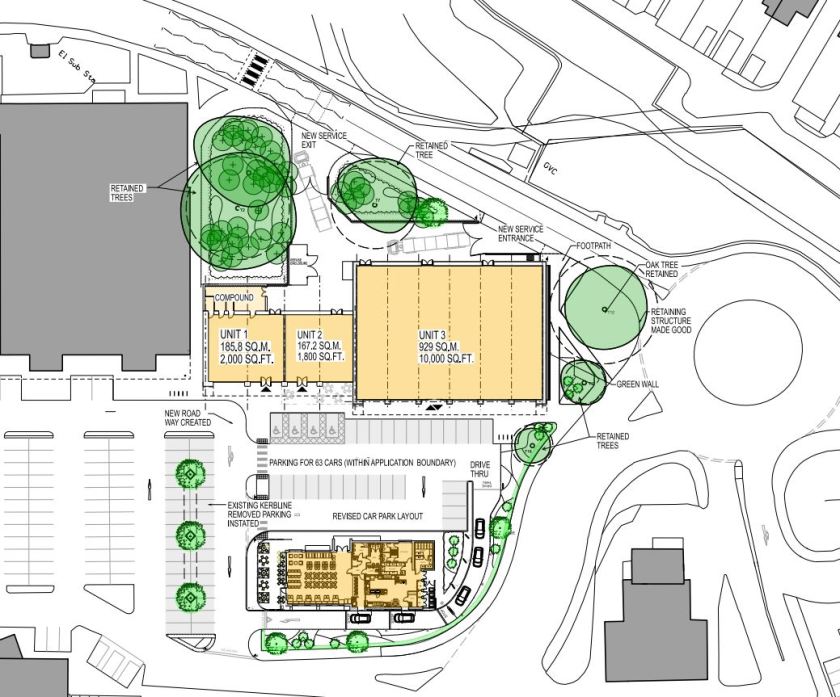
Over the summer, the owners of the Eastgate Retail Park, Consolidated Properties Group, submitted plans for the redevelopment of the east end of the retail park. (170/01580/P) Currently the area comprises a drive-thru Burger King, a car park in front and an area of woodland behind.
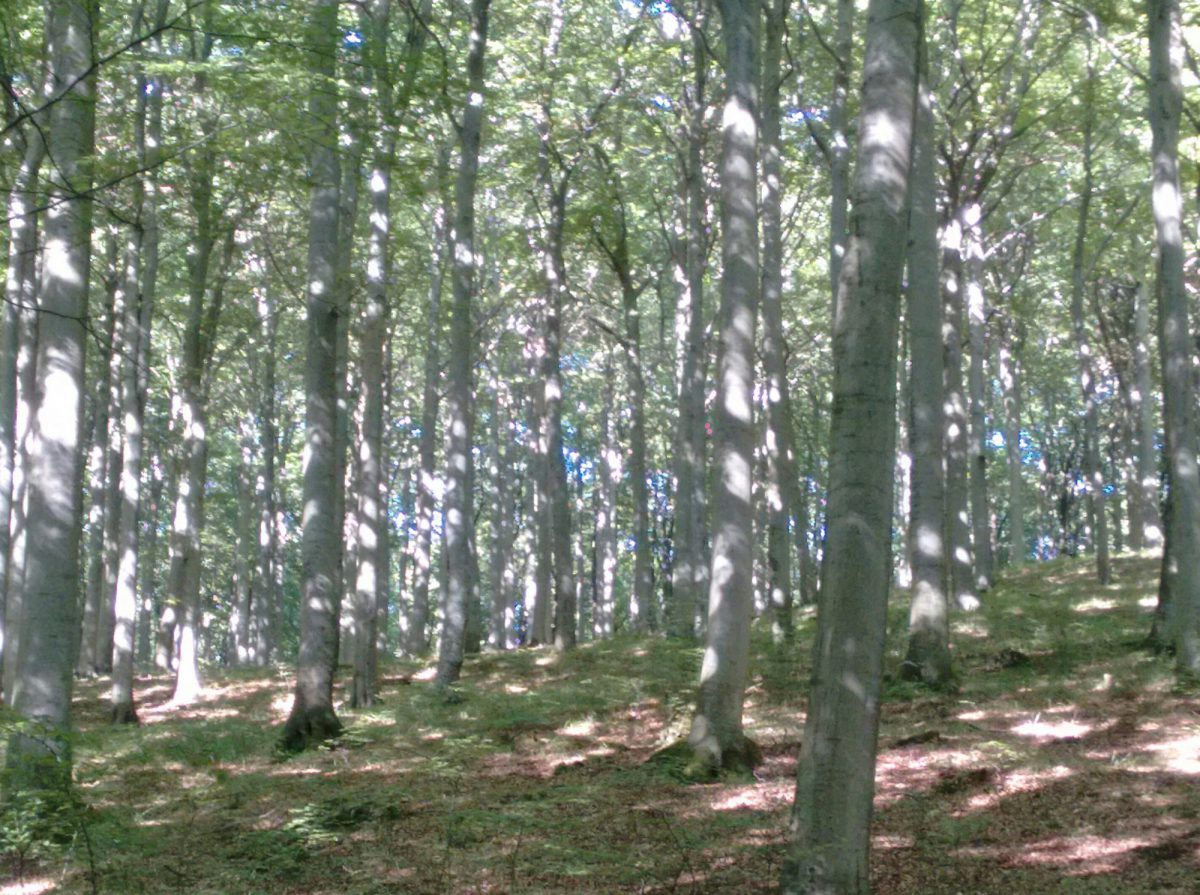
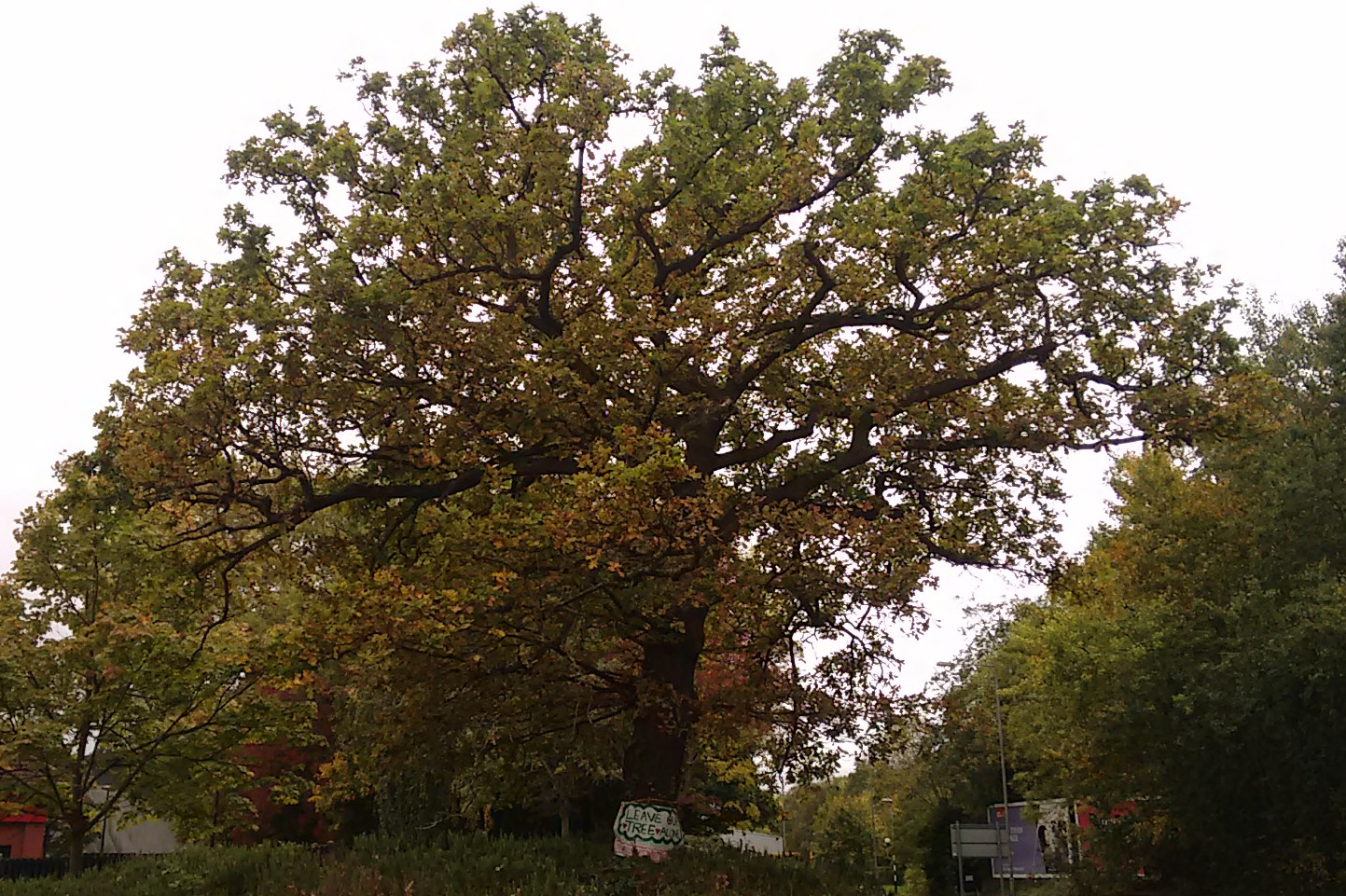
The proposal is to replace the Burger King building with 5 new retail units and move the drive-thru restaurant into the car park. Rear service entrance to the units will be required, necessitating a service road which effectively removes the woodland. Marked for re-development were a fine 120 year-old Oak, protected by a Tree Preservation Order (TPO), overlooking the roundabout and and an area of woodland also protected by a TPO which includes 12 specific trees with an understory of younger trees and bushes.
Over summer there was great public outcry about the loss of the prominent oak (Bristol Tree Forum) and plans were resubmitted which mark the oak, two poplars and an ash for retention, but with no change to the location of the buildings. The woodland area is still destroyed, leaving only three isolated trees from the original canopy and understory.
The aboricultural report produced by Matthew Bennett of the Bristol City Planning Department is very critical of the plans, pointing out that the proposal takes no account of the Bristol core strategy nor of the tree replacement scheme and remarks that “The group of trees are an important green infrastructure asset which has a historical reference and provided a significant visual amenity to an already heavily developed site.”
Consolidated Properties Group owns over 40 retail parks and retail units throughout the UK, having bought Eastgate in 2011 . The company is one the the richest family-owned businesses in the UK and is chaired by the founder, Peter Stuart Dawson. The company acquired Eastgate in 2011.
Looking at the aerial photographs of retail parks on their website, the absence of green spaces is very striking . Retail parks take up large areas of ground, comprising only buildings and tarmac. Very little land is given to green spaces or exposed ground. Trees where they are planted are largely functional, used for screening purposes.
Isn’t it high time that a significant part of retail parks should be reserved for trees and woodland. This is after all more in line with the meaning of “park”. If not, then at least we should resist the urge to remove what little woodland does still exist.
Public consultation on the revised proposal is now closed but comments can still be addressed to councillors and officers.
Cost of planting replacement trees will remain at £295. Only trees planted in new sites will be charged at £765.
Bristol City Council is looking for new ways to fund street tree maintenance – both short and long-term.
Attendance Bristol City Council:
Cllr Charlie Bolton, Cllr Asher Craig (Chair), Gemma Dando, Richard Ennion, Peter Mann, Shaun Taylor.
Attendance External:
Avon Wildlife Trust: Eric Heath
Bristol Tree Forum: Mark Ashdown, Stephanie French, Peter Harnett, Vassili Papastavrou (minutes) and John Tarlton
Forest of Avon Trust: Jon Clark
BCR Streetscene Group: Rob Umphray
University of Bristol: John Tarlton
University of Birmingham Chris Bouch
Woodland Trust: Catherine Brabner-Evans and Ross Kennerley
Apologies: Councillors Anthony Negus, Clive Stevens and Gill Kirk; Richard Fletcher; Liz Kew.
Councillor Craig welcomed the participants and summarised the present financial situation within Bristol City Council, which is being forced to make substantial cuts to its services. In response to a question as to whether there is an acceptance that the cut in the street tree maintenance budget will result in fellings in 3-5 years, Councillor Craig agreed that there would be knock on effects. The purpose of the meeting was to work together to find a solution to the problem and mitigate the impact. The cuts in budgets across the council would have consequences.
It was decided that the group would focus on street trees but also consider the context of Bristol’s other publicly owned trees (in parks and on estates). Notes to be circulated to attendees and further meeting to be held in mid-September.
Alternative models of supporting trees in cities – trust models including sponsorship, civic ownership
It was acknowledged that existing examples are for planting trees rather than maintenance. A number of participants expressed the view that it was extremely hard to obtain money for maintenance, despite the well-known value of the urban trees and the various benefits (e.g. health and well-being, water retention, cooling effect) that they provide. One idea was to use sponsorship plaques which would indicate that the maintenance of a particular tree was sponsored.
Tree maintenance concerns, epicormic growth and local community involvement
The implications of the cut in tree maintenance from £240,000 to £53,000 (£187,000 cut) was discussed. Pollarding cannot be done by members of the public. Rob Umphray provided details of epicormic growth removal that has already been undertaken by the Community Payback Scheme along the Gloucester Road. It turns out that the insurers would not accept the risk of getting members of the public to work on highways, in particular, stepping out into the road and working on busy pavements. However, very quiet residential roads may be a different matter. This means that in general the removal of epicormics growth will also have to be done by professional contractors.
It was agreed that street tree maintenance is a core council service which cannot be done by volunteers.
Action: Shaun Taylor to consider a flexible approach to allow communities to undertake certain works to highway trees where risk was considered lower and training / guidance could be provided to mitigate risk further.
Councillor Craig suggested two possible immediate and short term solutions for the shortfall in funding for street tree maintenance. The first was to use some of the money that remains within the “One Tree Per Child” budget, whilst maintaining that project at a slower pace. The second solution is to access some of the approximately £4 million CIL funding (sum equivalent to a 15% allocation of total CIL receipts).
Action: Councillor Craig offered to come back to the next meeting in September with the outcome of her discussions re “One Tree Per Child”, including taking into account the partnership approach to delivering this project and using CIL funding (both the 15% that is currently determined locally and the remaining 85% that is currently retained wholly by the Council). (N.B These are just proposals to be explored and brought back to next meeting)
Tree planting initiatives and the future of woodland creation
There was a discussion regarding the present sponsorship scheme for street trees where trees to replace stumps or in existing tree pits cost £295 and street trees on new sites cost £765 (plus the cost of an engineered tree pit if needed). The scheme was seen as extremely successful and Richard Ennion was congratulated for getting it underway. It was felt that a dramatic increase in costs would result in sponsorship drying up and may result in existing sponsors (such as the University of Bristol) withdrawing. It was also acknowledged that delaying planting in existing sites may ultimately result in much greater expense as a vacant site only remains “current” for a period of about 5 years. Richard Ennion also confirmed that £295 was a true and genuine reflection of the actual cost of planting a tree in an existing site. It was decided to maintain these sponsorship costs at the existing level and not implement the proposal to increase all tree costs to £765. This will require further “internal” discussion at BCC.
“One tree per child” was discussed and the educational value of the project was stressed with good feedback from the schools involved.
The representative from the Woodland Trust suggested that it might be a mistake to separate street trees from the wider context.
Action: In terms of a way forward it was agreed to look into new funding sources and the possibility of setting up a Trust for the future. It was felt that it is possible to raise funding for tree planting and this would be pursued.
It was also agreed to start the process of preparing a Tree Strategy for Bristol
Future for trees in parks
Discussions regarding Bristol’s parks are ongoing and the Newcastle initiative of creating a Mutual Parks Trust is being explored, as well as Newcastle’s success in obtaining £1 million public health funding. A visit to Newcastle is planned.
Next Meeting
The next meeting of the Group would be mid-September when Councillor Craig should be able to provide further information regarding the short term/immediate funding of street tree maintenance.
The Sheffield Tree Action Group or STAG is urgently fundraising to support the legal fees of eight of its members.
The fund has reached nearly £21,000 (as of 23 July 2017) but it is likely that the legal costs will be double that for the three day hearing that starts on 26th July.
They have been taken to the High Court by Sheffield City Council in order to intimidate them and other protesters. Sheffield City Council is hoping that the court will issue injunctions against the protesters, claim huge damages and prevent them and others from opposing the felling of trees in future. One Councillor is amongst the eight.
Graham Turnbull from STAG spoke at our 4 July Bristol Tree Forum meeting. The situation in Sheffield is shocking, with whole avenues of street trees being removed as part of a PFI agreement with Amey to manage Sheffield’s streets for 25 years. Quite simply, it is cheaper to remove most of the street trees and replace them with small saplings than to maintain the existing stock of trees. There have been 5 am dawn raids and arrests under obscure anti-trade union laws – although the Crown Prosecution Service dropped all charges against protesters. Now the council has decided to invoke civil law where the standard of proof is lower.
The problems Sheffield residents are facing are not unique. The outcome of their protests will determine whether other councils decide to embark on wholesale felling as a way of cutting costs. From a wider perspective, their council is seeking to outlaw peaceful protest. We should all help for those very reasons.
In May, Cllrs Stevens and Negus submitted questions and statements to Cabinet about the safety and financial risks and the alternatives to the proposed budget cuts to street trees. They were reassured that the proposals would be looked at again. At the time of writing we have not heard any updates on this review.
We understand that Bristol Tree Forum volunteers are looking for constructive ways to work with the Council to solve this problem, but trust is at rock bottom and each time new information emerges it gets worse.
The emergency Tree Forum meeting on 4th July revealed some uncomfortable truths:
The Council’s Highways Department did not consult the Council’s arboricultural officers, the TreeForum or any other relevant experts about street trees before making their decision to cut 78% off the budget.
The budget line RS02 voted on in Full Council in February referred to £1.2m of Highways Maintenance Reductions in 17/18 and wasn’t specific as to what these would be.
Highways are justifying the decision on the basis of cutting back to a statutory service, usually doing this achieves the minimum short term cost. For street trees maintaining a statutory service level is not minimum cost as was and has been pointed out time and time again. We are still yet to see the fully costed business case and risk assessment.
Question 1
Could the Mayor clarify whether he wants to minimise the cost of managing street trees, or does he want the service to be at a statutory level which will cost the Council more (possibly more this year as reserves might need to be allocated to cover the higher risks)?
Question 2
Could the Mayor check with his legal officers the personal liability of himself and/or the Deputy Mayor and/or the Council should an accident occur where it is proven that the Council has a duty of care (e.g. Maintaining the highway) and that the damage is directly caused by this change in policy? Given the facts that have come to light, it seems that in such an instance it could be a case of negligence.
Bristol’s street trees are struggling in this recent hot, dry spell – especially the newly planted ones that have yet to get established. So, please keep watering any newly-planted trees and send us photos of new trees that are in trouble or have died.
On Saturday, Councillor Clive Stevens – @SageAndOnion – and I spent some time filling up the Hippo bags (specially designed tree watering bags) connected to newly planted trees on the Downs to see how long they would take to drain. We used four 5 gallon water containers placed on chairs so that they were high enough and then siphoned the water into the bag.
We can report that the bags do work effectively and take several hours to drain from completely full to empty. Probably four hours is a good estimate. As the problem does not lie with the bags, there must be some other reason why the soil under many of the new trees was completely dry for so long.
Several of those trees on the Downs that were completely dry when I checked them on Friday (7th July 2017) are now damp. They must have been watered some time after 18:30 on that Friday and midday Saturday (when Clive and I went around watering), which is good.
Clive and I filled up the bags of a couple more where we found that the soil was completely dry (between Westbury Road and Westbury Park). There are still some more in that area where the soil is still completely dry. We haven’t done a complete survey of the Downs, but the soil under most of the other trees is now damp and there was still residual water in many of the bags on Saturday morning.
The Hungarian oaks on Parrys Lane have now had damp soil for the last 10 days, so the system is now working for them.
BUT on Easton Way…..
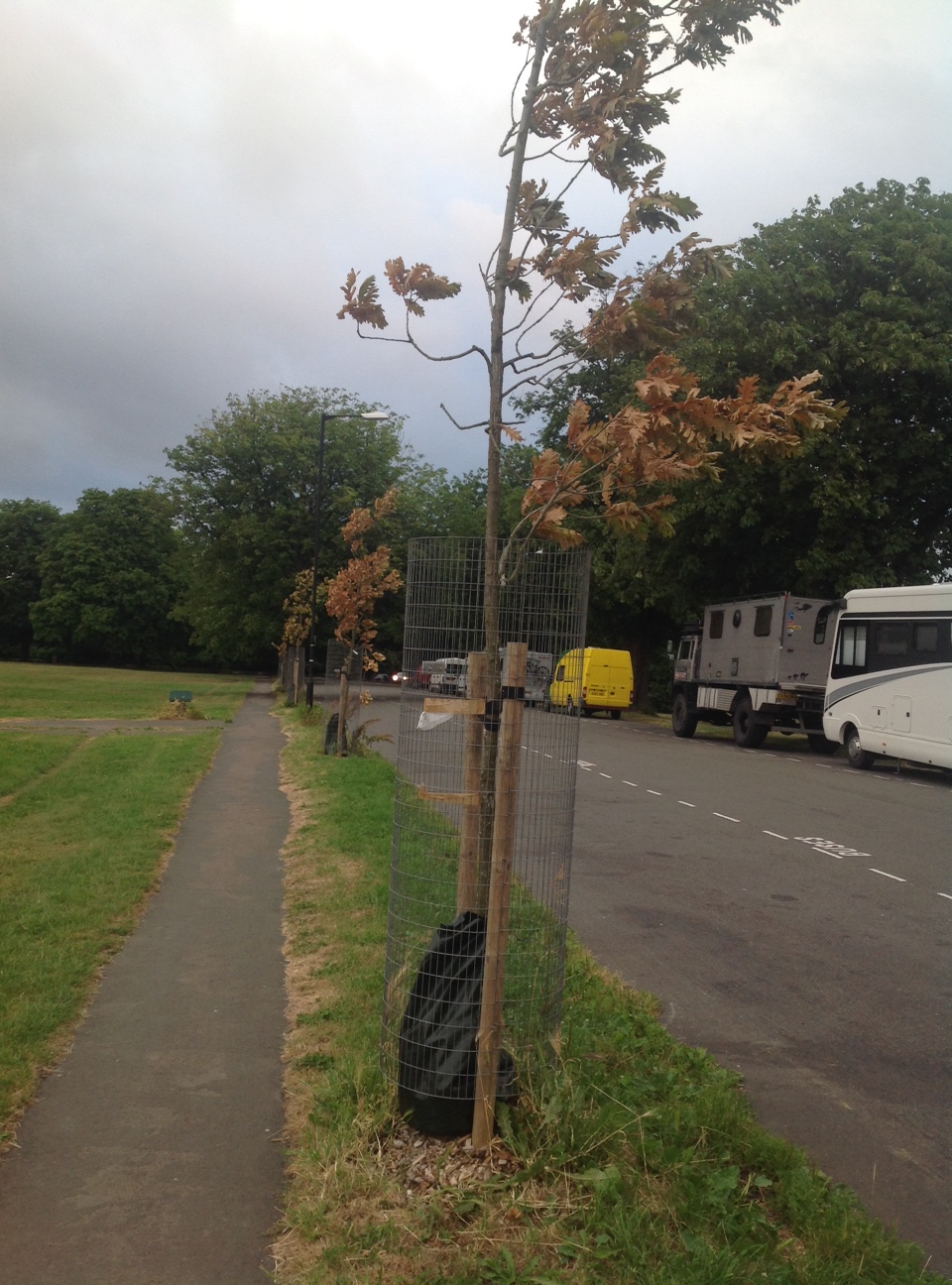
We hear from @averagearborist that there is a whole row of newly planted trees on Easton Way that have died, despite having only been planted only last year. I went to have a look and they really are in sorry state.
It was a great idea to plant these trees but so sad that they are now dead or dying. It sends a poor message to the people who live in this area.
We are told that it should be OK because the Council has said that it will replace newly planted, sponsored trees that die before they are successfully established. Here on Easton Way is a very dead tree.
A quick examination of Google Streetview shows that it was already dead by June 2014. When, we wonder, will it be replaced?


 Over summer there was great public outcry about the loss of the prominent oak (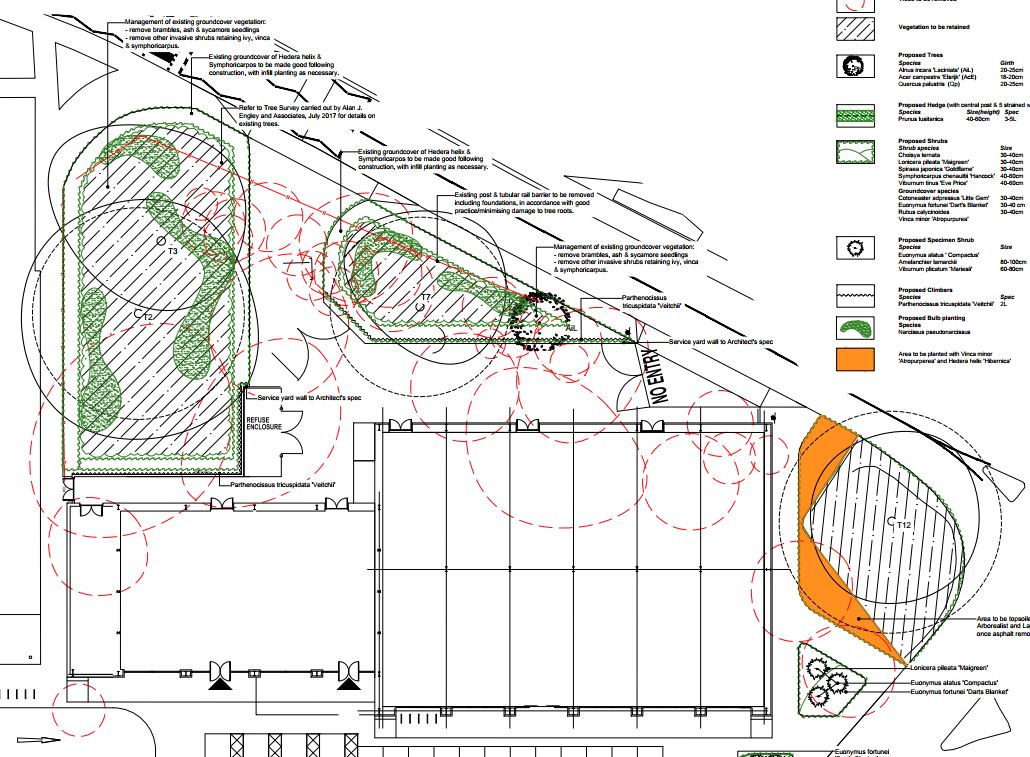




 bristoltreeforum.org