The other day, as I wandered around Bristol looking at the delightful, newly planted trees so many generous Bristolians have paid to have planted, I passed No. 13 Monk Road in Bishopston – the house where PaulDirac, the famous theoretical physicist, was born and lived in as a child. He is regarded as one of the most significant winning physicists of the 20th century.
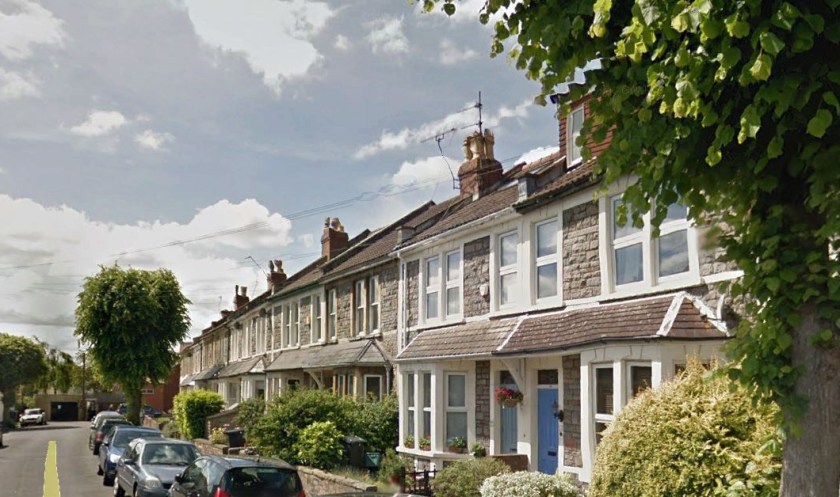
Sadly, the line of lime and plane trees that grace the road has a prominent gap where a tree is missing. It is just outside No. 13 (which has a blue plaque). There was probably one there once, though.
Wouldn’t it be great if we could get it replaced…and perhaps build on that to plant other Blue Plaque Trees where famous Bristolians once lived and so celebrate their lives.
‘The casual glimpses which the ordinary population bestowed upon that wondrous world of sap and leaves called the Hintock woods had been with these two, Giles and Marty, a clear gaze. They had been possessed of its finer mysteries as of commonplace knowledge; had been able to read its hieroglyphs as ordinary writing; to them the sights and sounds of night, winter, wind, storm, amid those dense boughs, which had to Grace a touch of the uncanny, and even the supernatural, were simple occurrences whose origin, continuance, and laws they foreknew. They had planted together, and together they had felled; together they had, with the run of the years, mentally collected those remoter signs and symbols which, seen in few, were of runic obscurity, but all together made an alphabet. From the light lashing of the twigs upon their faces, when brushing through them in the dark, they could pronounce upon the species of the tree whence they stretched; from the quality of the wind’s murmur through a bough they could in like manner name its sort afar off. They knew by a glance at a trunk if its heart were sound, or tainted with incipient decay, and by the state of its upper twigs, the stratum that had been reached by its roots. The artifices of the seasons were seen by them from the conjuror’s own point of view, and not from that of the spectator’s.’
Come along and find out about the iTree Project training day between 10 a.m. to 12.30 p.m. at Ashton Court next Sunday 13th May.
iTree Bristol is a new project providing a great opportunity to be personally involved in a campaign to care for the Bristol’s existing trees and woodlands and to plant many more of them all over the city.
The plan is to survey around 200 randomly selected plots across the city. In this way we will have a better understanding of the structure of the city’s urban forest and the many benefits it brings us – reducing air pollution, capturing carbon, reducing rainfall runoff.
Internationally recognised, i-Tree Eco is being used by cities and towns across the UK to help inform their tree strategies. The results of our iTree Bristol survey will inform the forthcoming plans for our Tree Strategy Action Plan, setting out our goals and priorities for increasing our tree canopy cover and developing and funding our urban forest and its trees into the future.
iTree Bristol needs volunteers to help run the survey. You don’t need to be an expert. All you need is an interest in trees and have time to help with a small number of surveys over this summer when our trees are in full leaf and at their best. Forest of Avon Trust will provide training and support.
Come and join in
If you would like to join in, please complete the form below and email it to Forest of Avon Trust to register your interest. They will be in touch with more information about the event.
A recent study* has used i-Tree Canopy^ (a free-to-use tool developed by the USDA Forest Service) to survey the tree canopy cover (TCC) of 282 towns and cities in England.
TCC, also called ‘urban canopy cover’ or ‘urban tree cover’, has been defined as the area of leaves, branches, and stems of trees covering the ground when viewed from above. It is an easily accessible measure that can be used to estimate the percentage of tree cover that any urban area enjoys.
It is now internationally accepted that properly managed forests and trees in urban environments make important contributions to the planning, design and management of sustainable, resilient landscapes – they help make cities safer, more pleasant, more diverse and attractive, wealthier and healthier.
Research also suggests that even moderate increases in canopy cover within cities can aid adaptation to the adverse effects projected under a changing climate. However, a baseline TCC value for many of the UK’s towns and cities is unknown.
Nor is it known whether canopy cover is changing and, if it is, whether it is increasing or diminishing. There is also a knowledge gap when it comes to knowing the numbers of trees in towns and cities, or their species, age composition and health. The level of canopy cover required to deliver meaningful benefits in UK towns and cities is also unknown, though there is some evidence to suggest that it is in decline.
This study* has now gone some considerable way to answering these questions and revealed a wide range of baseline tree canopy cover across the country – from a TCC of 45% in Farnham to just 3.3% in Fleetwood; with a median TCC of 15.8% and only 132 (47%) of sampled areas exceeding this.
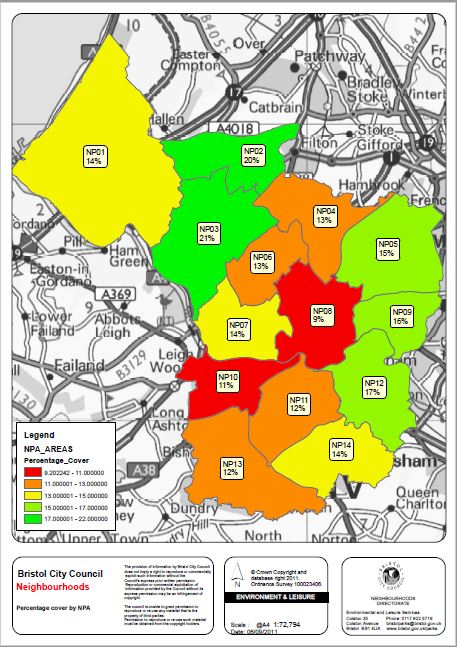
Bristol, for example, ranks 176/282 samples if the 14% TCC identified in a studyundertaken by Bristol City Council in 2011 is used. If the 18.6% cover estimated in this recent study is used (the study only looked at TCC in the urban land classes, rather than at the whole administrative area covered by BCC), then its TCC is above average and it would rank 83/282 samples. This suggests that “…boundary choice can impact TCC results and should be driven by the overriding question: ‘what is the tree canopy cover in the urban land classes of a given local authority?’, compared to ‘what is the tree canopy cover in a given local government jurisdiction?'”‘.
Doick et al – i-Tree Canopy Assessment urban area mapped
Bristol also has the added benefit of having already surveyed many of its public trees, albeit some eight to ten years ago. This treasure-trove of data has been collated and augmented with other data we have collected to make a dataset of nearly 67,500 individual trees (though just 2.4% of predicted TCC) and made available to all via the Trees of Bristol web site.
Conclusions drawn by the study
A TCC target that is city-wide and not targeted at specific wards or land-uses poses a number of challenges. It can be delivered in such a way that does not optimise or diversify benefit delivery. For towns and cities that have a green belt (or similar designation), planting schemes can be targeted within this land. However, with comparatively lower populations than the urban centres, planting here offers fewer benefits on a per capita basis.
Canopy increase targets could equally be met by preserving the existing tree stock and allowing natural growth. As the canopies increase so will total canopy cover, although such increases will be constrained by tree loss/removals, natural wastage and damage by pests and disease.
Such an approach, however, also fails to address social equity. Targets based on land-use-based assessments or ward are more likely to align the provision of ecosystem services with indicators of social inequity. It will be important that such approaches are underpinned by a robust baseline and a commitment to repeat canopy cover surveys using a consistent approach.
Species diversity and placing the right tree in the right place are important considerations when planting to achieve a TCC increase as these allow resilience to be built into the urban forest. Knowing the composition of the existing urban forest in terms of species and age structure, condition and appropriateness to location (and therefore life expectancy) can inform such decisions. Given that private ownership of trees can be as little as 24-35% in some cities, but as high as 71-75% in others (Introducing England’s urban forests), TCC baselining studies should be complemented by a field study.
With the wide range of considerations and stakeholders involved in urban forest management, TCC targets should be set both within local planning policy and within a formal urban forest management strategy.
Targets should have a target date, an action plan and a commitment to monitor, review and update. The policies should inform on which tree species to plant. They should also prioritise wards and/or land uses and should protect the existing tree canopy by enforcing best practice, codes of practice and statutory controls in the care, maintenance and protection of trees. Given that the average lifespan of a typical urban tree is estimated to be 32 years, changes in the age profile of the urban forest should also be modeled to at least 50 years distant in order to understand and plan for the likely impact on total TCC of tree planting and loss.
Any strategy will need to focus on partnerships with institutions and on guidance advising residents how they can best protect and look after their tree stock, schemes to assist in management and maintenance, and support future tree planting amongst the different ownership groups.
Finally
City-wide tree canopy cover is a useful indicator of the extent of tree presence across a city. Its assessment can be simple, fast and highly reproducible. Repeat observation could be a cost-effective means of monitoring tree populations, setting targets and tracking effectiveness of planting programs.
The results of this study suggest that:
an average TCC of 20% should be set as the minimum standard for most UK towns and cities, with a lower target of 15% for coastal towns;
towns and cities with at least 20% cover should set targets to increase cover by at least 5% (i.e. above the ±2% tolerance of i-Tree Canopy) within 10 to 20 years (depending on what is achievable against their baseline); and, targets and strategies for increasing tree cover should be set according to the species, size and age composition of the existing urban forest, based upon a ward/district level and land-use assessment.’
We at BTF commend and recommend this very helpful and timely study.
Representatives of the Woodland Trust, The Bristol Tree Forum, The Forest of Avon Trust and Bristol City Council met last Thursday 1 March to start the process of developing a Tree Strategy for Bristol. This is the first tentative step in a process which will include consultation and involvement of all those groups and individuals who have an interest in Bristol’s trees.
The process of developing a strategy will need a lot of thought: Bristol has woodland trees, park trees, trees on private land, street trees and trees on corporate land (including university trees). In each case, the costs and benefits and what we would like to achieve are different, as are those we would want to involve. The idea is to start a “conversation” which would include an online platform, a number of exploratory meetings with key partners and then, in June, a public meeting which would be convened by the Woodland Trust, the Bristol Tree Forum and the Forest of Avon Trust in collaboration with Bristol City Council.
Without pre-judging what might be in a tree strategy, these are some of the considerations:
Bristol already has a lot of good practice in place, both at a policy level and through individual case studies. The idea would be to collate all this together with a clear approach to improve the management of existing trees, the planting of new trees and to increase community engagement in tree management. Inevitably we will need to bring funding to Bristol to meet these goals and a good tree strategy will help with this.
The initial discussion was very positive – it is something we have talked about for some time and I am really pleased that there is now the momentum to carry it forward.
In a quiet street in Brislington East there used to stand an apple tree, planted, the residents think, at about the same time that the street was developed, sometime in the 1930s.
It was an unusual, red-fleshed variety with very deep pink blossom and red inner flesh when a stem or its fruit was cut. It gave delight to all who passed by it, shelter to local wildlife and provided fruit to anyone who chose to take them, for they made quite good eaters and were delicious when cooked well. The birds also enjoyed them as autumn turned to winter.
The passage of the years had exaggerated its natural lean and caused it to become dangerous so, sadly, it had to come down.
However, before it was felled, a resident took cuttings for budding and sent them to two nurseries and an amateur gardener. This winter these produced eight new trees on MM106 rootstocks, for which homes have been found across the country. Three have been returned to the street and planted in front and back gardens nearby and one has been planted in Horfield. There are now also specimens to be found in Hawksbury Upton, Wootton-under-Edge and in Wales.
The last one is going to a red-fleshed apple expert in Leicestershire in the hope that they will be able to identify the variety.
So, what to replace it with?
The location, on a north-facing pavement, is just five metres from nearby houses (so neighbours are particularly concerned not to lose too much light), requires a tree which is small, light canopied, preferably has both blossom and fruit and definitely has value for insects and birds.
The street supports a rare swift colony and there are breeding starlings and sparrows using the nearby house eaves to nest and raise their young. The residents are keen to support all these declining species, especially the swifts which have a very high demand for insect food.
The majority of trees in the neighbourhood are small to medium sized, blossoming and bearing either berries or fruits – typical of a 1930s housing estate. These trees bring a lot of pleasure to all and support bio-diversity.
What do you think would suite this location? Please let us know.
If you would like to get a tree planted on a street near you this winter, you will need to make sure that you have submitted your sponsorship request well before the end of this December.
If the tree site you want to sponsor is not shown on the Council’s map, then send an email to Simon Cuthill, Business Support Assistant at treebristol@bristol.gov.ukidentifying the site you have in mind and ask for it to be included.
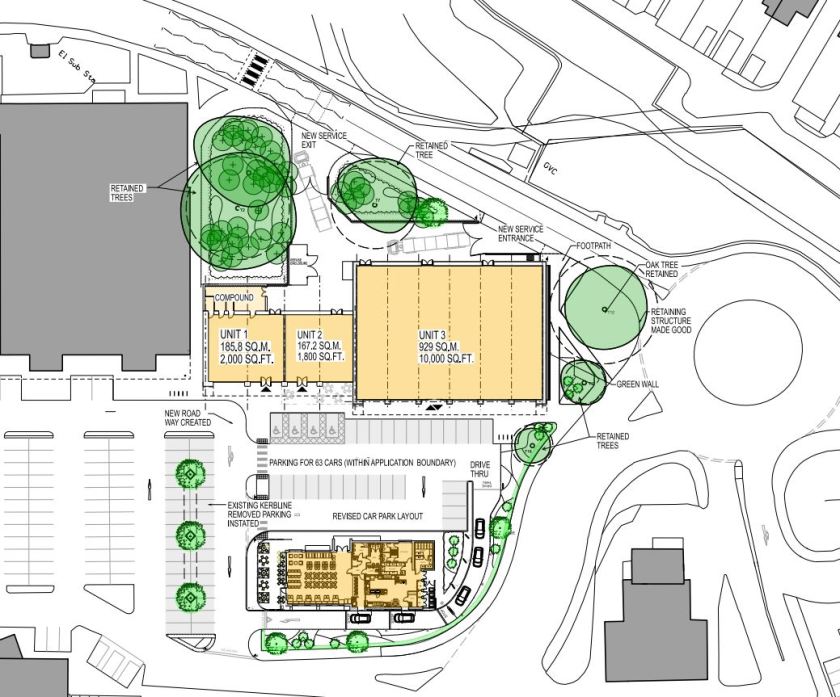
Over the summer, the owners of the Eastgate Retail Park, Consolidated Properties Group, submitted plans for the redevelopment of the east end of the retail park. (170/01580/P) Currently the area comprises a drive-thru Burger King, a car park in front and an area of woodland behind.
The proposal is to replace the Burger King building with 5 new retail units and move the drive-thru restaurant into the car park. Rear service entrance to the units will be required, necessitating a service road which effectively removes the woodland. Marked for re-development were a fine 120 year-old Oak, protected by a Tree Preservation Order (TPO), overlooking the roundabout and and an area of woodland also protected by a TPO which includes 12 specific trees with an understory of younger trees and bushes.
Over summer there was great public outcry about the loss of the prominent oak (Bristol Tree Forum) and plans were resubmitted which mark the oak, two poplars and an ash for retention, but with no change to the location of the buildings. The woodland area is still destroyed, leaving only three isolated trees from the original canopy and understory.
The aboricultural report produced by Matthew Bennett of the Bristol City Planning Department is very critical of the plans, pointing out that the proposal takes no account of the Bristol core strategy nor of the tree replacement scheme and remarks that “The group of trees are an important green infrastructure asset which has a historical reference and provided a significant visual amenity to an already heavily developed site.”
Consolidated Properties Group owns over 40 retail parks and retail units throughout the UK, having bought Eastgate in 2011 . The company is one the the richest family-owned businesses in the UK and is chaired by the founder, Peter Stuart Dawson. The company acquired Eastgate in 2011.
Looking at the aerial photographs of retail parks on their website, the absence of green spaces is very striking . Retail parks take up large areas of ground, comprising only buildings and tarmac. Very little land is given to green spaces or exposed ground. Trees where they are planted are largely functional, used for screening purposes.
Isn’t it high time that a significant part of retail parks should be reserved for trees and woodland. This is after all more in line with the meaning of “park”. If not, then at least we should resist the urge to remove what little woodland does still exist.
Public consultation on the revised proposal is now closed but comments can still be addressed to councillors and officers.





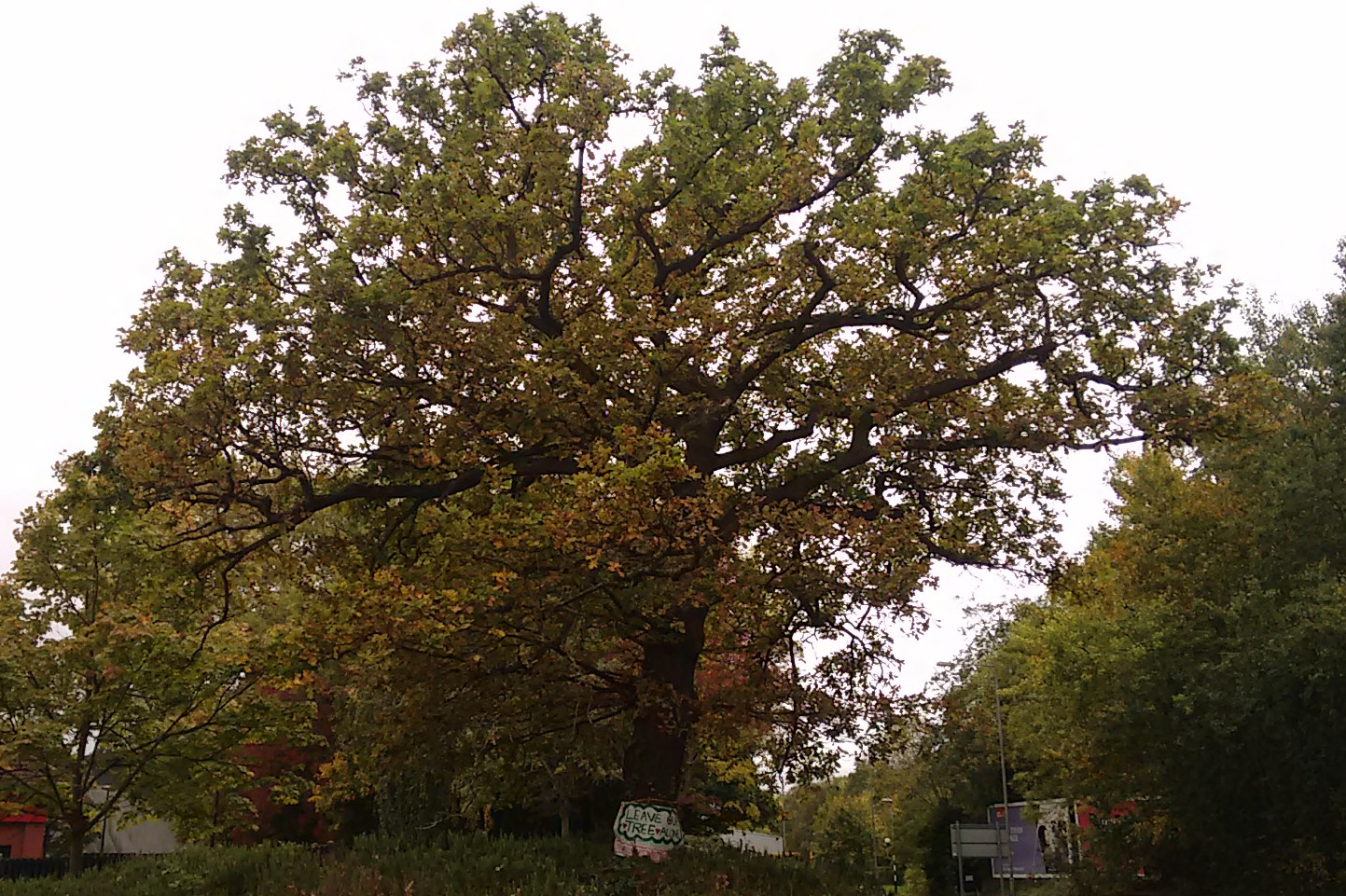 Over summer there was great public outcry about the loss of the prominent oak (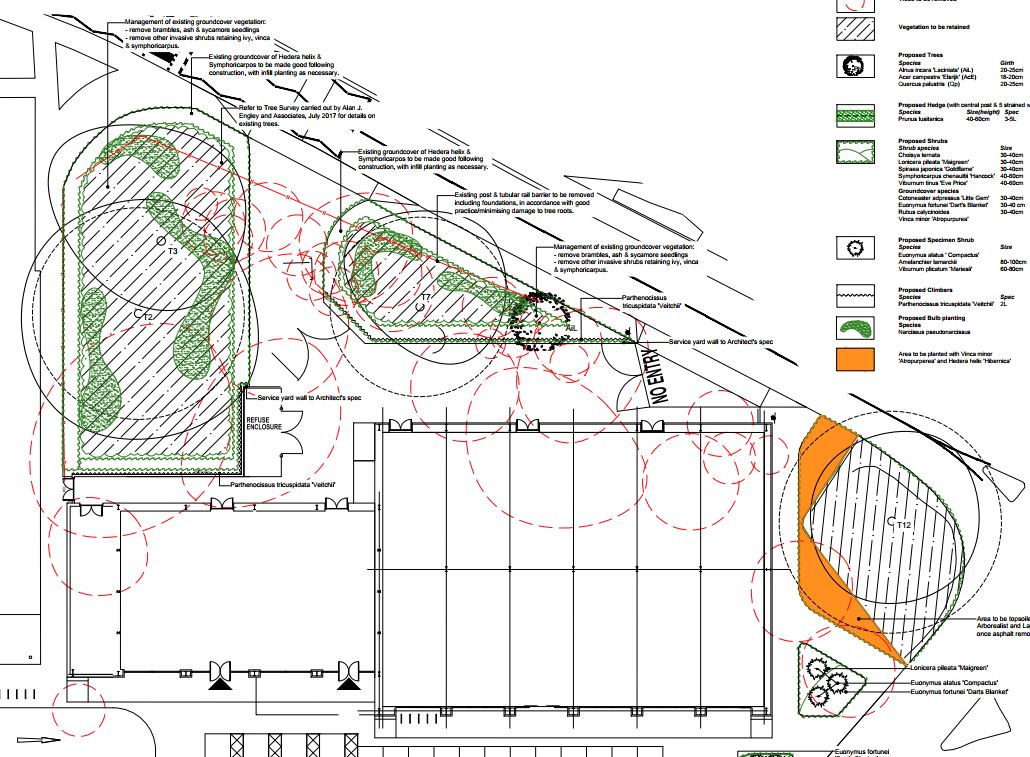

 Bristol Tree Forum