Green space and our health

The evidence for physical and mental health benefits from contact with nature, such as reducing rates of non-communicable diseases is clear.

A range of bodies, including Government agencies, have promoted the potential physical and mental health benefits of having access to green spaces.

The evidence for physical and mental health benefits from contact with nature, such as reducing rates of non-communicable diseases is clear. So are the challenges for preserving and extending urban green spaces.

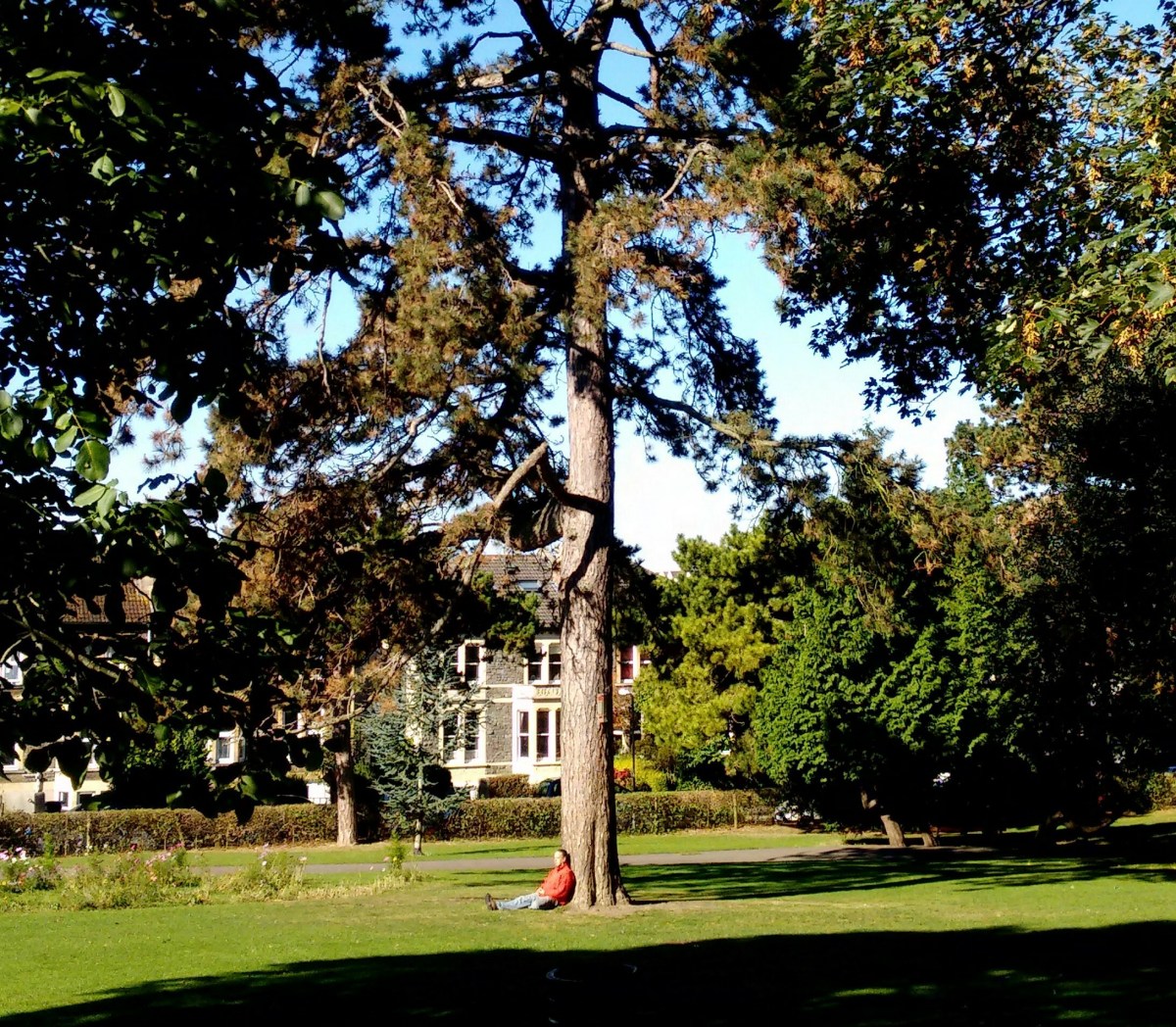
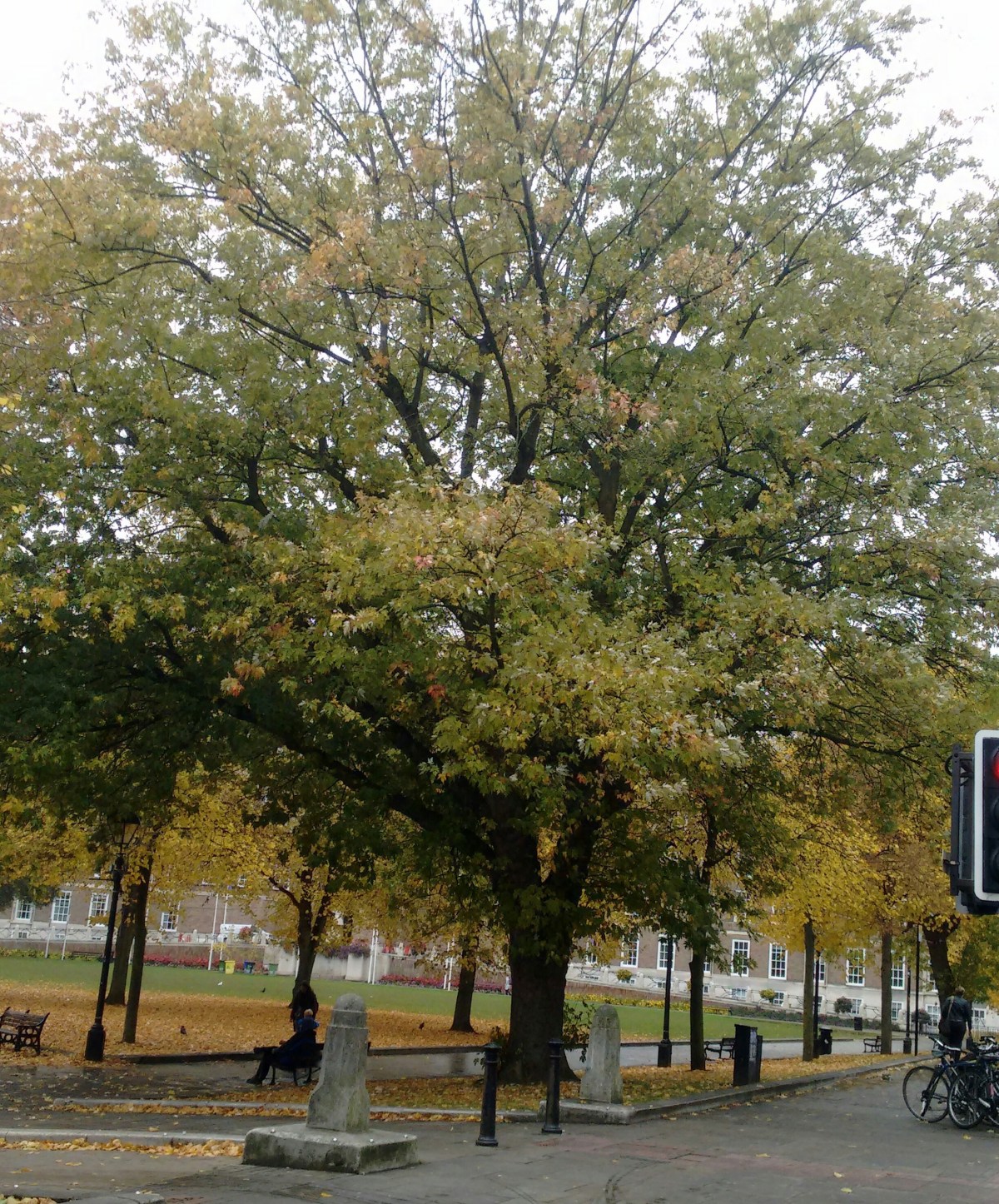
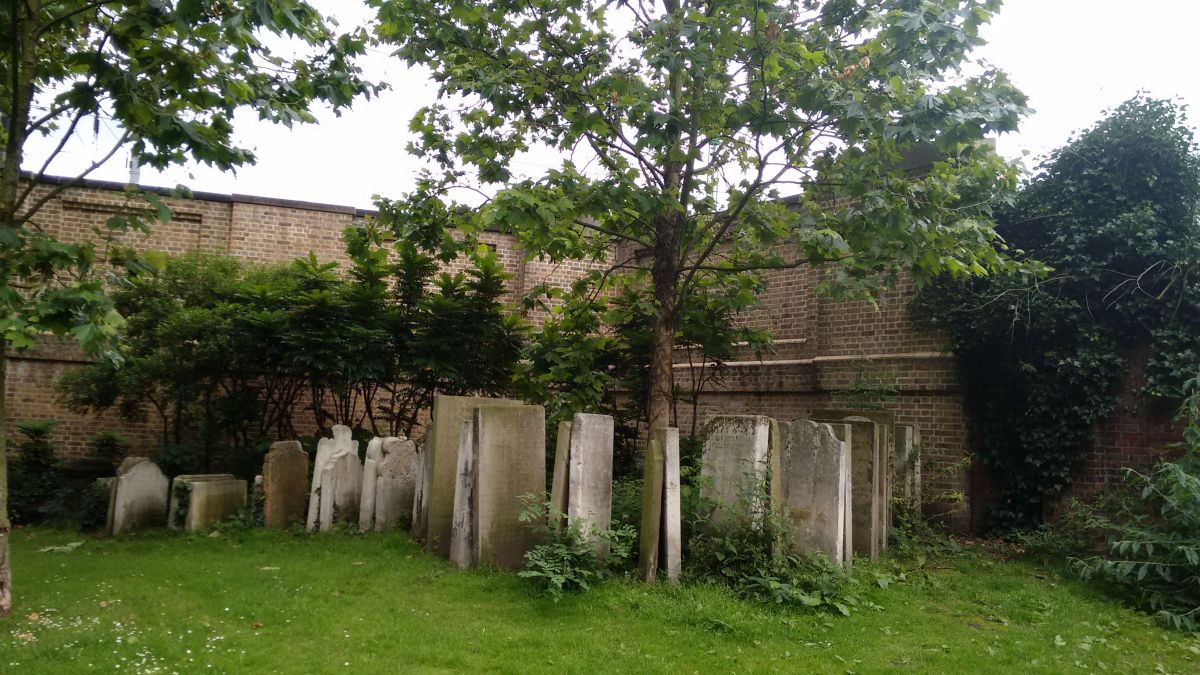
Green space is natural or semi-natural areas partially or completely covered by vegetation that occur in or near urban areas and provide habitat for wildlife and can be used for recreation. They are many and varied – from tree-covered streets & avenues to squares, play areas, schools, cemeteries, parks, woodlands, nature reserves and allotments.
Sadly, only half of us live close to green space. Green space is expected to decrease as urban infrastructure expands.

Key benefits include:

  • Physical and mental illnesses associated with sedentary urban lifestyles are an increasing economic and social cost.
  • Areas with more accessible green space are associated with better mental and physical health.
  • The risk of mortality caused by cardiovascular disease is lower in residential areas that have higher levels of ‘greenness’.
  • There is evidence that exposure to nature could be used as part of the treatment for some conditions.
  • There are challenges to providing green spaces, such as how to make parks easily accessible and how to fund both their creation and maintenance.

The W.G. Grace Beeches on the Downs

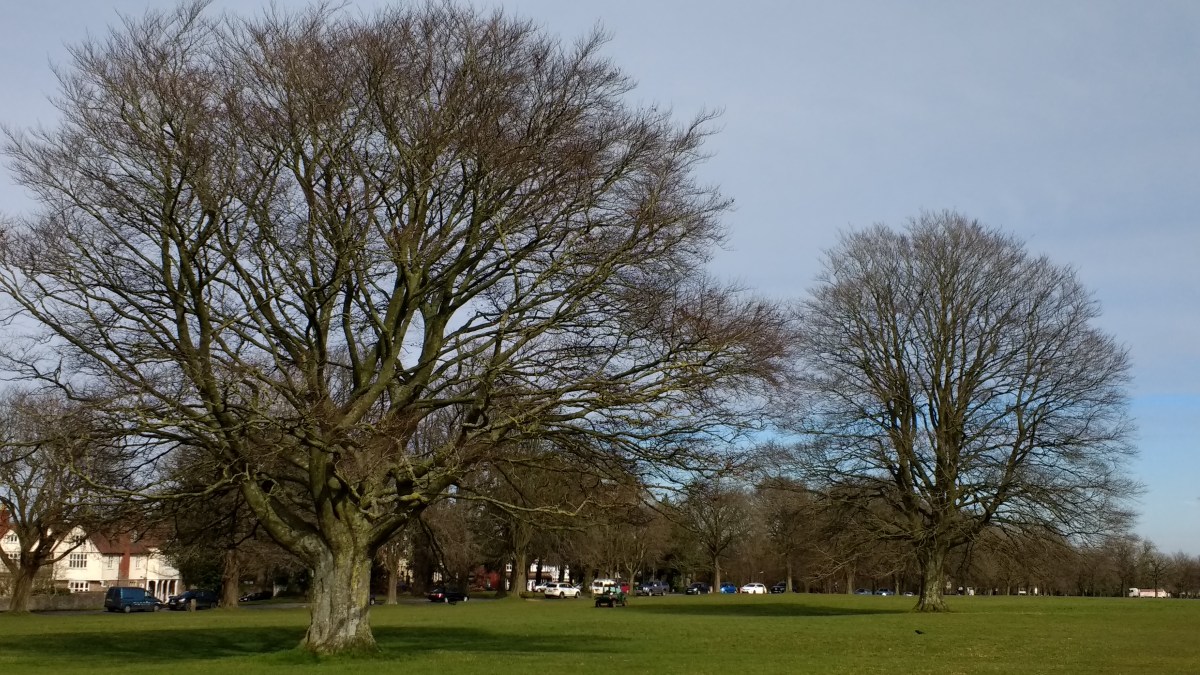
These seven Beech trees on Clifton and Durdham Downs are the last surviving vestiges of some 16 trees which were planted in the late 1860s as the boundary markers for the first Gloucester County Cricket ground. The boundary was also marked by fence posts in between the trees.

Dr W.G. Grace was, of course, the major mover in the creation of the county team and of the original cricket ground. However, they found that it was more or less impossible to establish a paying audience on the site so, after just one match, moved it to Clifton College where they could more easily charge – and have a much better pitch! Unfortunately that meant that they could only play in August during the college’s summer vacation, so they then moved to the present county ground in Bishopston.

Using the girths with the Trees of Bristol Age Calculator, the tree ages range from 85 to 180 years. There is a cluster of ages around 150 giving a planting date of 1867, but we wonder why the range is so large. Were a couple replanted and why is the tree by the southernmost end so much larger than the others at over 4.5 metres in diameter – especially as it does not appear on either map below?

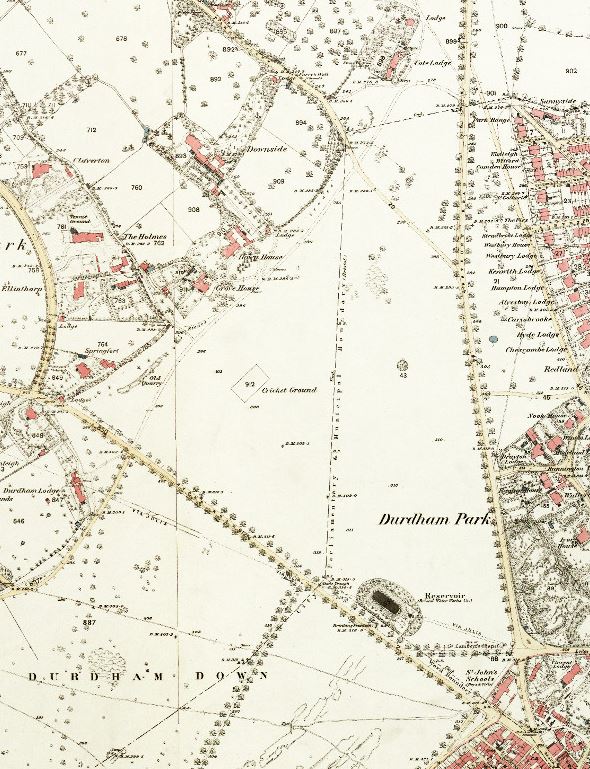
The 1880s Epoch 1 map shows the cricket ground but does not show the trees – though we understand that they had been planted by then.

Durdham Downs 1880

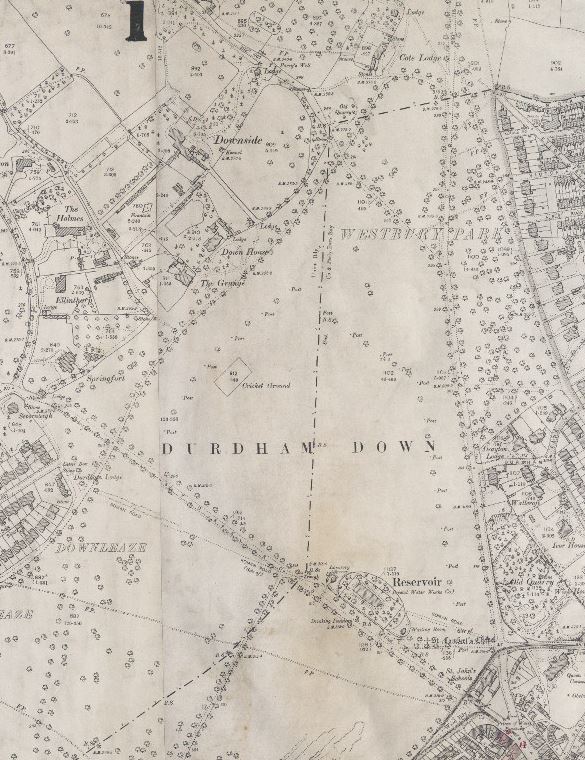
They do, however, appear the 1900 Epoch 2 map.

Durdham Downs 1900

These maps may be accessed by using the historic layers of Bristol City Council’s Pinpoint map.

South West alert: Sweet Chestnut Blight

This has just been received from Mark Prior Forestry Commission Area Director | South West England.

“I am writing to you with information about an outbreak of sweet chestnut blight in the South West and to notify you of four 5 km zones that are subject to movement restrictions.

Sweet chestnut blight is caused by a fungus called Cryphonectria parasitica, which gets into the trees through wounds or graft sites. Although oak trees suffer very little damage if they are infected by the fungus, they can spread it, so restrictions on movements of oak material are also required as a precaution.

Sweet chestnut blight was found in Devon in December 2016, initially south of Exeter. We wrote to our Devon contacts in January to inform them and again last week to let them know about two restricted zones; you may have seen articles in the forestry or local media about this. As a result of related survey and tracing work, we have now identified another zone in Devon and one in Dorset where restrictions are required. We are now writing to all our South West contacts to let you know what we are doing to manage the outbreak and to inform you about the movement restrictions.

Managing the outbreak

The Government is committed to doing all it can to prevent plant pests and diseases crossing our borders, and although we cannot eliminate all risks, we have stringent plans to deal with threats, and take prompt action when they are detected. To this end we work collaboratively with the international community, industry, NGOs, landowners and the public to reduce the risks of pests and diseases entering the country and to mitigate the impact of newly established ones. 

  1. parasitica is a quarantine organism, so the Government’s Chief Plant Health Officer has activated our contingency plan for such an event, in compliance with our obligations under the UK’s Protected Zone status for this disease. We and our colleagues in the Animal & Plant Health Agency (APHA) moved quickly to implement the contingency plan, and in particular we have taken the following measures.
  • We have conducted an intensive survey of sweet chestnut (Castanea sativa) trees within a 1 km radius of each site with a confirmed infection.
  • We have also carried out a targeted survey of sweet chestnut trees within 5 km of each site.
  • We are tracing and inspecting sweet chestnut trees at other planting sites that used stock from the same planting years.

Movement restrictions

UK plant health authorities have introduced a prohibition on the movement of sweet chestnut and oak material within four specific zones in Devon and Dorset. A prohibition on two zones in Devon came into force on Friday 24 February 2017. Two more will come into force on Thursday 9 March 2017, one in Devon and one in Dorset. The exact boundaries of all of these zones are shown in notices and maps on the Forestry Commission and Gov.uk websites (please scroll to the end of the notice for the map). The zones will remain in place until further notice and will be kept under review.

This prohibition is implemented by Plant Health (Sweet Chestnut Blight) (England) Order 178/2017. It makes it illegal to move sweet chestnut material including plants, logs, branches, foliage and firewood out of, or within, zones covering a 5 kilometre (3.2 mile) radius of the affected sites where sweet chestnut blight has been found. The same restrictions apply to oak within 1 kilometre (0.62 mile) of the same sites. Exceptions to this movement prohibition include oak or sweet chestnut material entering and exiting the zones without stopping. For example, the delivery of plants, logs or firewood which start and end their journeys outside the zones is permitted.

Exceptions may also be granted in certain circumstances by the Forestry Commission (southwest.fce@forestry.gsi.gov.uk or telephone 0300 067 4960), in the case of woodland sites, or by the Animal and Plant Health Agency (APHA) Plant Health & Seeds Inspectorate, for horticultural requests (01904 405138 or by emailing planthealth.info@apha.gsi.gov.uk).

The Forestry Commission and APHA are working closely together to carry out tracing activity and inspecting sweet chestnut trees at other sites which may lead to more zones being established. Further advice will follow should this be necessary.

Further information and a symptoms fact sheet and pest alert are available on our website to help you know what to look for when inspecting your trees.”

Please pass on the message.

Finding a Bristol tree on the move

The Trees of Bristol web site provides an interactive guide to the trees in and around Bristol. Currently there are nearly 66,500 live trees recorded – about 67,500 when tree stump and planting sites are included. These cover over 1,000 species, varieties and cultivars in more than 2,100 sites dotted around the city, many within easy walking distance.

If you have a GPS-enabled Android Phone with Firefox installed (they are working on Chrome) or an iPhone with Safari installed, you might like to add this this location-aware page to help you locate and identify Bristol’s many remarkable trees whilst you are on the move. This page will load all the trees in a given area around the phone’s location. As you move, the map will show trees within the range you have set, highlighting and detailing the nearest tree to you.

Why not try it out when you are next out an about in Bristol. You will be amazed and the many, varied and beautiful trees what the city has to offer, even in the heart of the city.


Crisis for the Bristol Environment

Trees, parks and the financial crisis

The recent decisions made by the City Council in response to the drastic cuts made by the government will create a dramatically changed world for the whole Bristol environment. We have got used to our street trees being manicured, our parks being regularly mown and tended, new trees being widely and enthusiastically planted, developer’s plans being closely monitored. We may have moaned about minor inefficiencies, criticised delays and decisions, but we have expected to be listened to and mostly we have been.

It is all going to change. By 2020 Bristol parks are going to have to find their own finance, parks users will have to pay for the privilege of using them and parks groups will have to take over maintenance. Street trees will cease to be pollarded. Last winter leaves were not swept until they had all fallen, and only now have most gutters been cleared. Next autumn sweep your own gutters and keep your own gutters clear, the Council won’t be able to do it!

And it will be no use protesting, shouting, writing rude e-mails to your local Councillor. There is little that they can do. Its put-your-money-time-and-effort-where-your-mouth-is time. Getting out there, talking and co-operating with your neighbours, getting wet, doing the stuff that needs to be done – as many are already doing. There are lots of dangers in this. There will be a degree of chaos, there will be mistakes. But it is also an opportunity to ‘act local’ and show that we are all responsible for where we live, that the parks are our parks, that we value trees and our public spaces, that we don’t expect “them” to solve all our problems.

And there will be some ‘up side’. The natural world is an exuberant world. Things may be less tidy, but biodiversity thrives in messy places. Unswept gutters and untrimmed hedges may cause problems, but we can help ourselves to resolve these issues – and hedge trimmings and fallen leaves makes great leaf mould.

Here is the a “dead hedge” on the downs, rebuilt by volunteer labour last month to help protect the wildflower meadow beside it from joggers; just one example of what self-help can do.

downs-hedging

Who knows, we might even get our urban sparrows back.

Richard Bland  March 2017

A secret arboretum


Knoll Hill Woodland Trust Reserve in Sneyd Park is the remains of the great garden and estate of Bishops Knoll. The developers did not want it, so the Woodland Trust bought it, and recently have been doing a lot of restoration work. It is very little known because the only car access to it is down at the bottom of Bramble Lane in Sneyd Park, though you can walk into it from the new Avon Wildlife Trust Reserve of Bennett’s Patch.

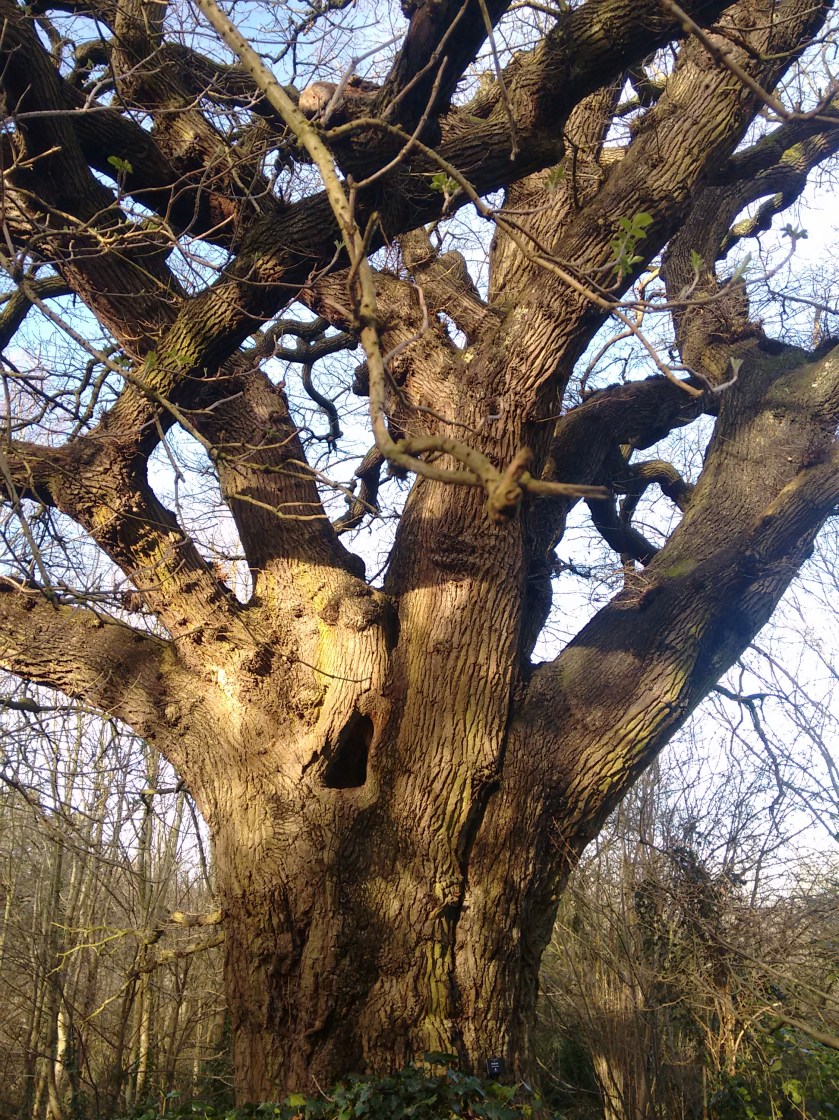
The major trees in it have recently been labelled. It has the largest Oak in the city, seven metres in girth, with huge spreading limbs that appear to be writhing into the sky like an octopus. It is, unusually, a Sessile Oak. It is quite close to the entrance, but, in summer at least, almost invisible until you are up close. It is clearly much older than the estate itself which was created in 1862.

quercus-petraea-bishops-knoll-wood
The Knoll Hill Oak in winter – Bristol’s largest oak with a girth of 7 metres

Lower down the steep path there is the largest Austrian Pine in the city, 4.6 metres in girth, with a massive crown and broken and twisted branches evidence perhaps of the Burns-night storm of 1990. At the bottom of the reserve there is a line of planting that must have been done when the Severn Beach railway line was built in 1875. It includes several Western Red Cedars, three Coast Redwoods, one the largest in the city, which tower over all the other trees, a magnificent Jeffreys Pine, one of only two in the city, which is the pine with the largest needles of all, and a Fern-leaf Beech, one of three in the city.

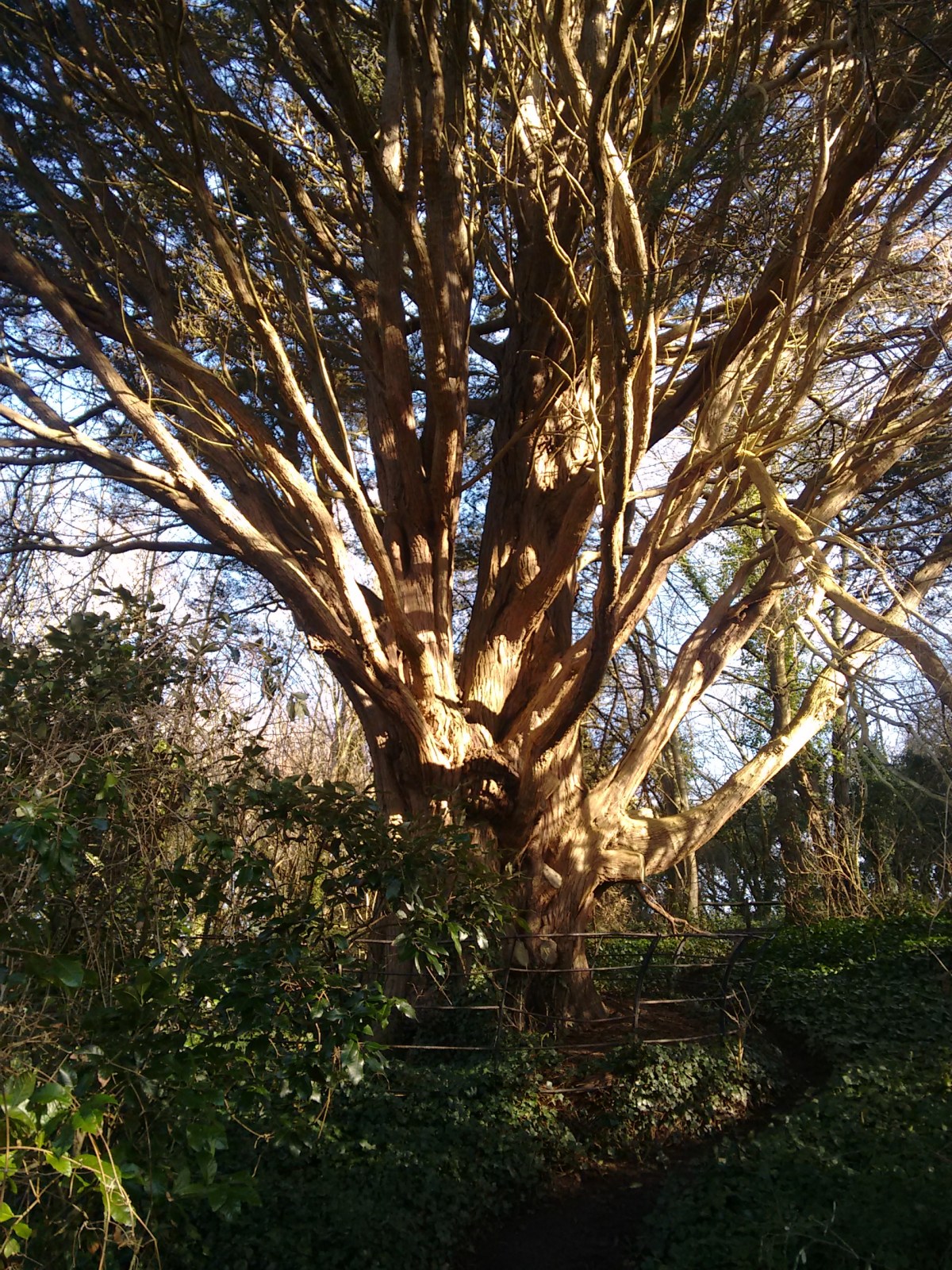
The most dramatic tree of all is a Monterey Cypress, which must have been one of the first imported into this country, with a 710 cm girth. It is a species that was one of the parents of Leylandii, and is well known for the speed with which it grows. It dominates the hillside, and would have been far more striking before all the young ash trees that surround it sprang up. The estate is also dotted with a dozen veteran oaks, some of them pollards, and all two hundred years old or more, which would have been growing in the wood pasture when the Knoll Hill estate was established.

monterey-cypress-bishops-knoll
The Monterey Cypress – Champion of the reserve with a 7.1 metre girth