Bristol Tree Forum Annual Tree Giveaway 2025/26 – free saplings for planting

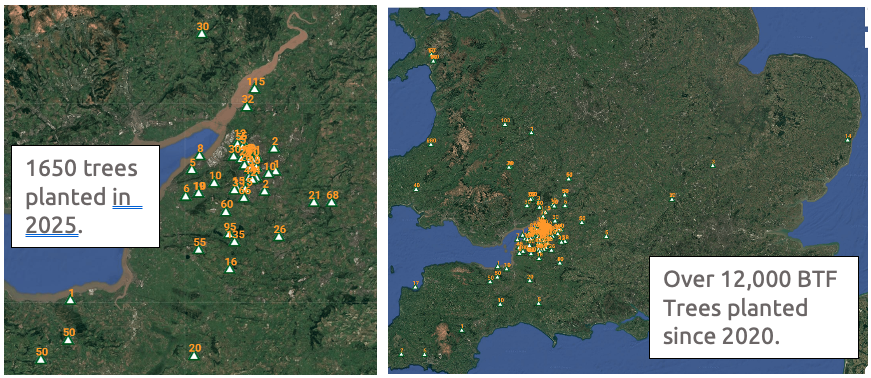
Once again, Bristol Tree Forum are giving away tree saplings. Since 2020, we have given away over 12,000 for tree lovers to plant around Bristol…. and beyond!

Perhaps one of the most significant things we can do to help protect our future environment, promote nature and make the world a better place for generations to come is to plant a tree. It may be that trees we plant today will continue to provide benefits for the environment, wildlife and people, for hundreds of years to come.
Planting trees is still the most effective and widespread means of removing CO2 from the atmosphere. For instance, a single mature oak tree is the equivalent of 18 tonnes of CO2 or 16 passenger return transatlantic flights. However, it is in our cities that trees provide the greatest benefits; cleaning our air, reducing flooding, reducing traffic noise, improving our physical and mental health, and, crucially, reducing temperatures during heat waves.

During heat waves, that are predicted to increase in both severity and frequency, the “heat island” effect can raise temperatures in cities by as much as an additional 12C over that found in surrounding rural areas. Trees can greatly reduce this effect, partly through shade but also by actively cooling the air by drawing up water from deep underground, which evaporates from the leaves… a process called evapotranspiration. According to the US Department of Agriculture, this cooling effect is the equivalent to 10 room sized air con units for each mature tree.

Thus, trees are a crucial, but often ignored, element in increasing our resilience to climate change.

The UK is one of the most nature depleted countries in the world, and have lost nearly 70% of our biodiversity since the industrial revolution. Trees are vital in supporting biodiversity. With national legislation now allowing around 60% of development sites to be exempt from the need to replace lost biodiversity, and this biodiversity permitted to be replaced anywhere in the country, our city trees are under greater threat than ever before. Furthermore, the proposed new Local Plan, which sets planning policy for the next decade or more, appears to reduce protection for Bristol’s green spaces, allowing these to be built upon.

Therefore, increasingly, it is up to us to protect nature, and what better way of doing this than to plant a tree?

 What is the Bristol Tree Forum doing to help?

It is said that the best time to plant a tree is 20 years ago, and the second best time is now.

Unfortunately, important mature trees are constantly being lost to development, damage and disease. Though these might easily be replaced by new trees, what is less easy is replacing the decades or even centuries that the tree has taken to grow, the carbon that the tree has sequestered, the ecosystems the tree supports and all of the other benefits trees provide. For these reasons, much of the work of the Bristol Tree Forum focuses on protecting our existing trees. These efforts are particularly crucial in the urban environment where our trees are under the greatest threat.

However, as well as advocating the retention of life-saving trees in our city, Bristol Tree Forum have been encouraging new tree planting by holding an annual tree giveaway since 2020; the ancient trees of the future are being planted today! Most of Bristol’s trees are sited in private land and gardens, so the trees we have are mostly thanks to the efforts of Bristol residents, and it is those residents we must look to if we want to increase our tree canopy.

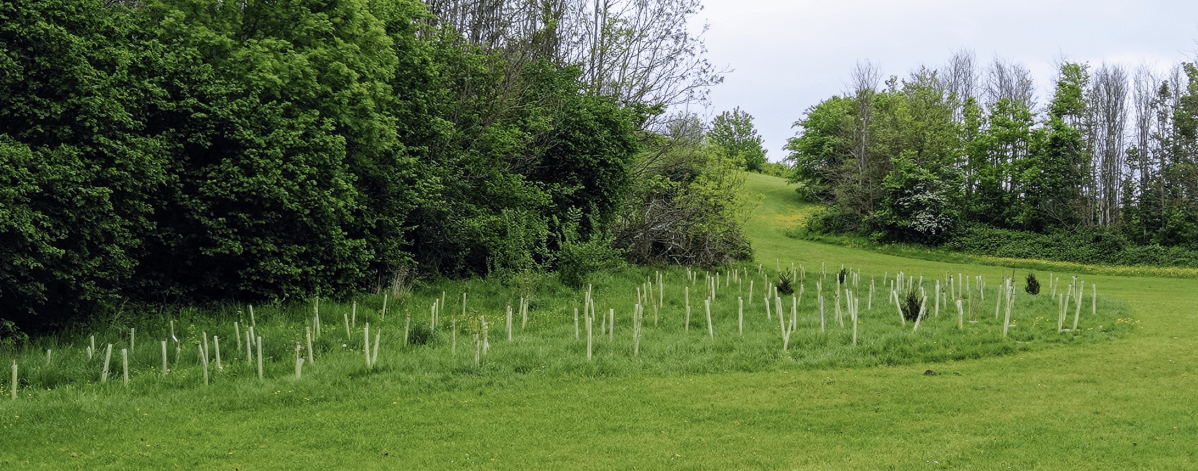
Over the last five years, we have given away over 12,000 trees, with species as diverse as English and sessile oak, downy birch, silver birch, grey birch, alder, alder buckthorn, rowan, Scots pine, sweet chestnut, sycamore, spindle, wild cherry, apple, pear and plum.
This year’s Tree Giveaway has been made possible by the generous support of Maelor Forest Nurseries, based on the Welsh borders.

Thanks to Maelor, we are able to offer a variety of species of different mature stature and preferred habitats. This year we are giving away:

English oak (Quercus robur), hawthorn (Crataegus monogyna), beech (Fagus sylvatica), hornbeam (Carpinus betulus), grey alder (Alnus incana), and crab apple (Malus sylvestris).

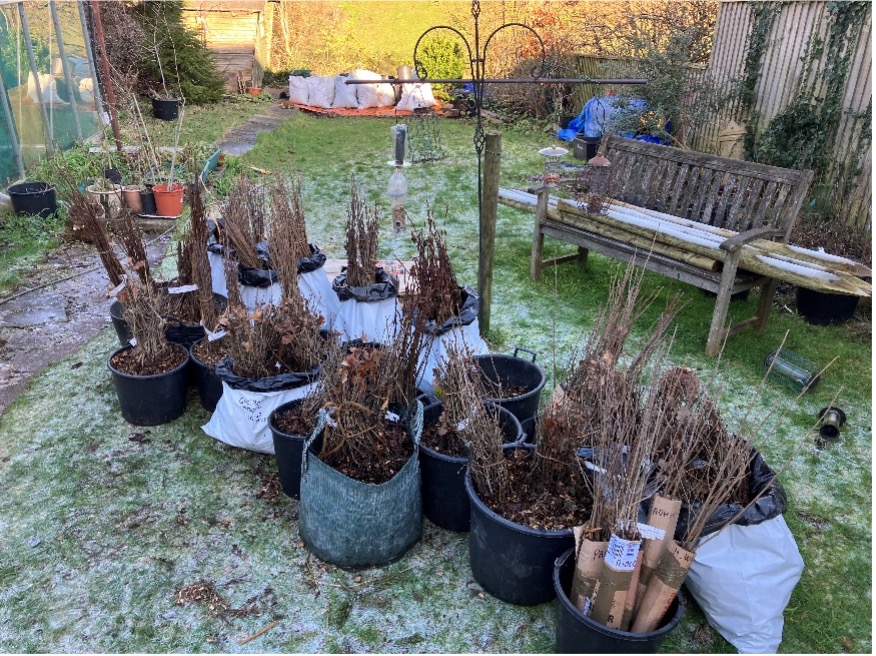
We will get delivery of the saplings in mid to late February, when the trees can be collected from a site in Redland, Bristol.

The small saplings, or whips, come bare-rooted (i.e. out of the soil) and need to be planted as soon as possible after collection, although the viability of the trees over winter can be extended by storing the trees with the roots covered in damp soil.


To order your tree saplings:

Email: treegiveaway@bristoltreeforum.org with the subject “Tree Giveaway” and tell us:

  • Your name and email.
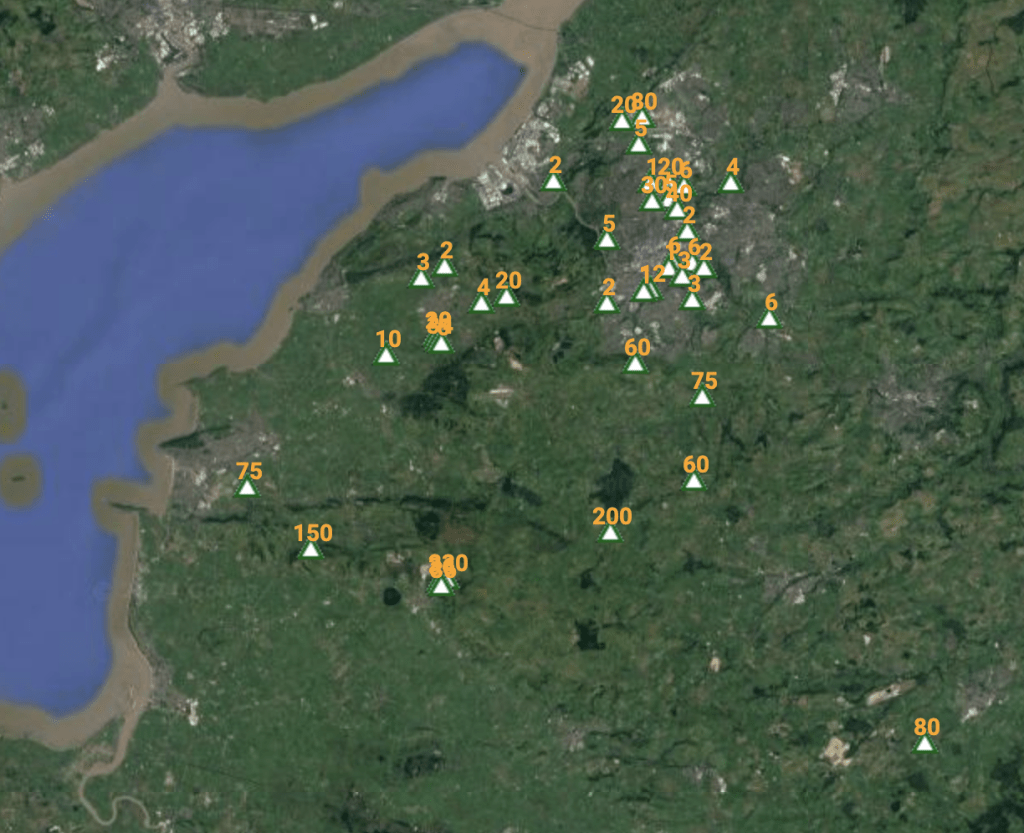
  • Your post code – for an approximate location of the planned planting sites, so that we can include these on our map.
  • How many of each species you would like – English oak, hawthorn, beech, hornbeam, grey alder, or crab apple.

We will email you to organise a collection date and time in February.

The 2025 Annual Tree Giveaway – free saplings available for planting

Many thanks for of of you who have asked for trees – over 1,200!

We have now closed the offer.

Planting a tree is, perhaps, one of the most significant things we can do to help protect our future environment, promote nature and make the world a better place for the generations to come. The trees we plant today will continue to provide benefits for the environment, wildlife and people, for hundreds of years.

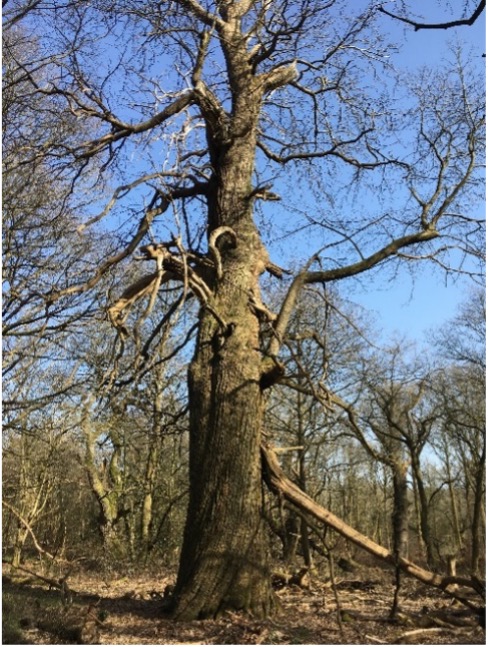
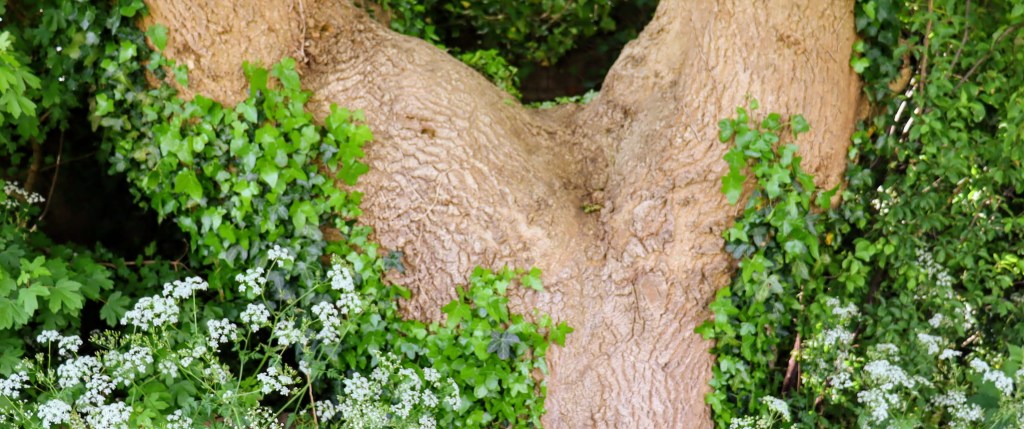
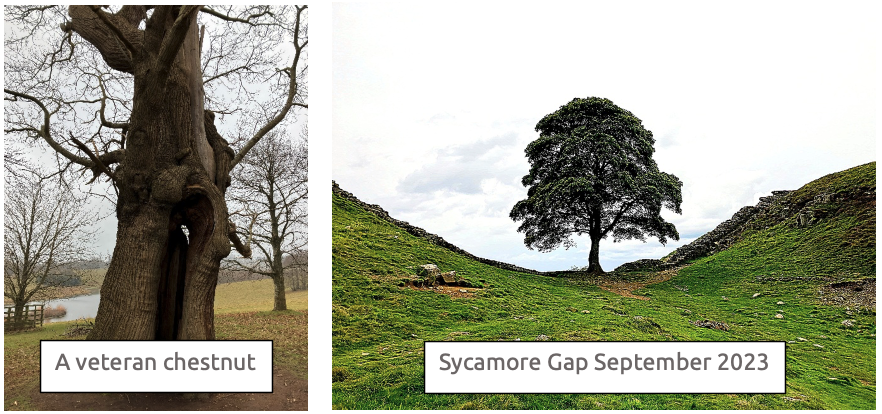
A veteran chestnut

We all know the value of trees in sequestering carbon, and they still represent the most effective and widespread means of removing CO2 from the atmosphere. For instance, a single mature oak tree is the equivalent of 18 tonnes of CO2 or 16 passenger return transatlantic flights. However, it is in our cities that trees provide the greatest benefits; cleaning our air, reducing flooding, improving our physical and mental health, and, crucially, reducing temperatures during heat waves.

Our cities suffer additional problems during heat waves, with all of the concrete and tarmac absorbing a lot of energy from the cooling sun and releasing it as heat. This “heat island” effect can raise temperatures by as much as an additional 12 degree centigrade. Trees can greatly reduce, or even eliminate, this effect, partly through shade but also actively cooling the air by drawing up water from deep underground, which evaporates from the leaves… a process called evapotranspiration. According to the US Department of Agriculture, this cooling effect is the equivalent to 10 room sized air con units for each mature tree. This cooling greatly enhances our resilience to the dangerous heat waves that are predicted to increase in severity and frequency.

A veteran Beech

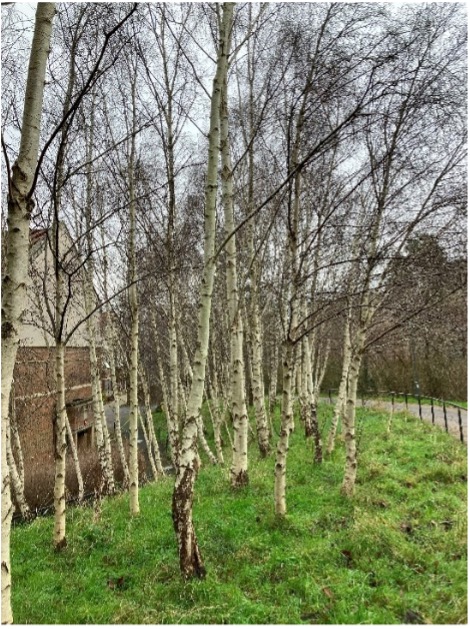
A stand of Silver birch

Also, Trees improve air quality by absorbing both gaseous (e.g., NO2) and particulate pollution. They reduce traffic noise and flooding and improve physical and mental wellbeing.

Thus, trees are a crucial, but often ignored, element in increasing our resilience to climate change.


What are the Bristol Tree Forum doing to help?

It is said that the best time to plant a tree is 20 years ago, and the second-best time is now.

Unfortunately, important mature trees are constantly being lost to development, damage and disease. Though these might easily be replaced by new trees, what is less easy is replacing the decades or even centuries that the tree has taken to grow, the carbon that the tree has sequestered, the ecosystems the tree supports and all of the other benefits trees provide. For these reasons, most of the work of the Bristol Tree Forum focuses on protecting our existing trees. These efforts are particularly crucial in the urban environment where our trees are under the greatest threat.

However, as well as advocating the retention of life-saving trees in our city, Bristol Tree Forum have been encouraging new tree planting by holding an annual tree giveaway since 2020; the ancient trees of the future are being planted today! Most of Bristol’s trees are sited in private land and gardens, so the trees we have are mostly thanks to the efforts of Bristol residents, and it is those residents we must look to if we want to increase our tree canopy.

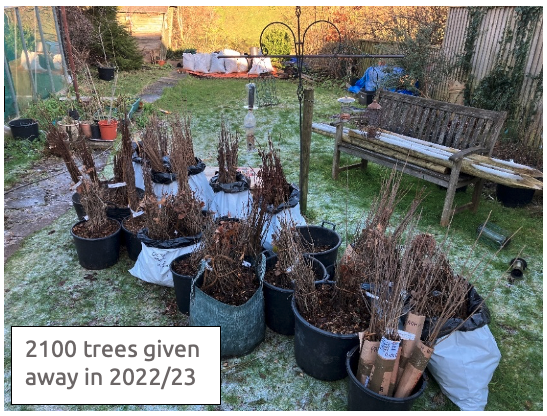
Over the last four years, we have given away around 10,600 trees, with species as diverse as English and Sessile oak, Downy birch, Silver birch, Grey birch, Alder, Alder buckthorn, Rowan, Scots pine, Sweet chestnut, Sycamore, Spindle, Wild cherry, apple, pear and plum.

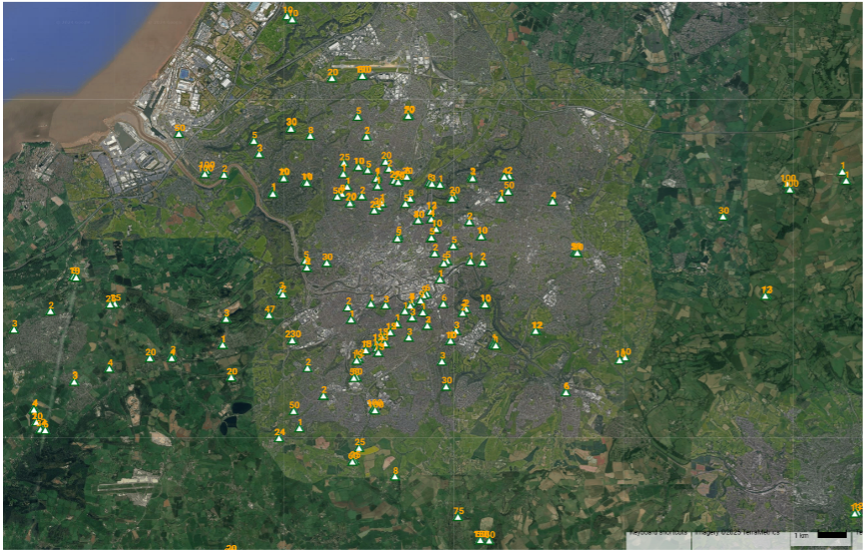
The trees planted to date.

Trees given away in 2022 / 2023

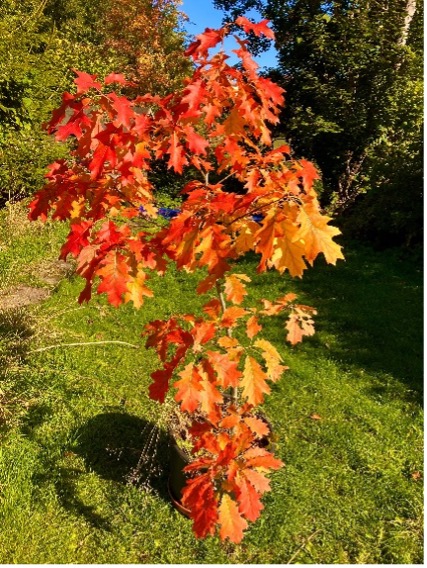
Red oak sapling

This year’s Tree Giveaway has been made possible by the generous support of Maelor Forest Nurseries, based on the Welsh borders, and Protect Earth whose aim is to plant, and help people plant, as many trees as possible in the UK to help mitigate the climate crisis.

Thanks to Maelor, we are able to offer a variety of species with a wide range of sizes and preferred habitats, including Pedunculate (English) oak, Red oak, Sweet chestnut, Silver birch, Sycamore, Hawthorn, Beech, Hornbeam, Wild cherry, Alder, Red alder, Field maple and Norway maple.


Trees can be ordered using the form below

We will get delivery of trees in February, when the trees can be collected from a site in Redland, Bristol. We will email you when they are ready.

The saplings come bare-rooted (i.e. out of the soil) and will need to be planted as soon as possible after collection, although the viability of the trees over winter can be extended by storing the trees with the roots covered in damp soil.

The form below is to find out who would like to have saplings for planting, which species, how many and where you plan to plant them.

Please provide your email so we can contact you organise collection of the trees. Your contact details will be kept private and will not be used for any other purpose than to process your request.


Our Giveaway offer has now been filled.

Thanks for all your support.

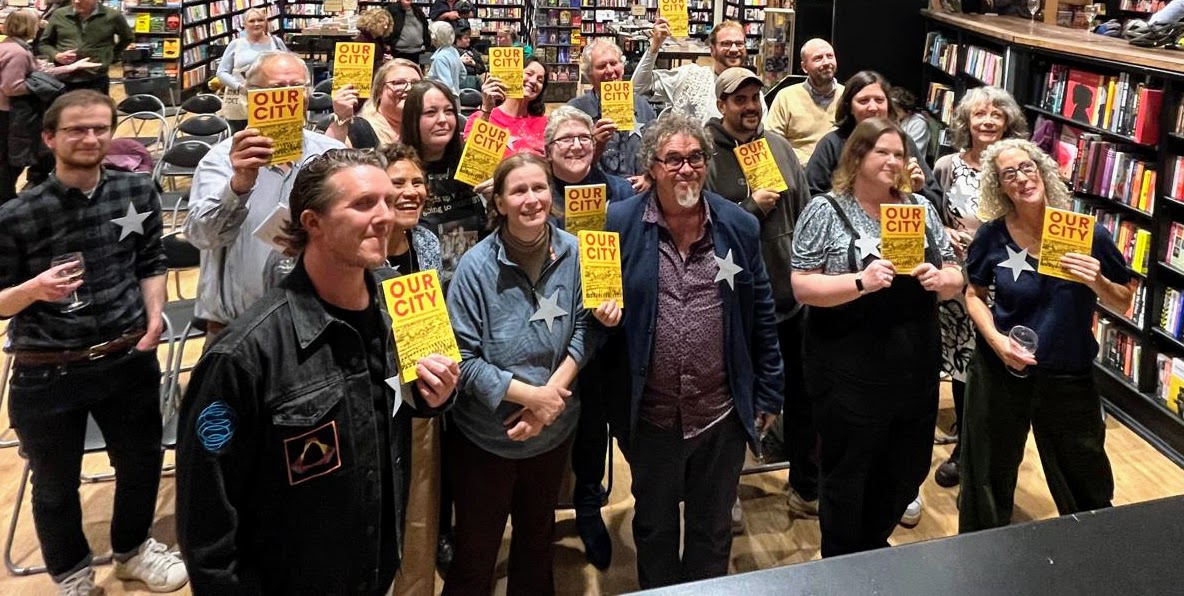
Our City book launch

On Thursday 26 September 2024 Waterstones at The Galleries launched Our City. This book chronicles community activism in Bristol through multiple campaigns described in eighteen individually authored chapters.

Suzanne Audrey pulled the whole project together, edited the book and contributed the introduction and conclusion. The book is well worth buying. It tells a story of the diversity and resilience of Bristol communities when faced with threats usually emanating from the council which should be looking after them. The Bristol Tree Forum was asked to contribute. During the launch event, contributors were each given three minutes to describe their work. This is what we said:

Saving Bristol’s Urban Trees by Vassili Papastavrou

In Bristol we are seeing the loss of hundreds of important urban trees each year. They cannot be replaced and it will create a city that is unliveable – we need them to keep us cool now.

I’d like to illustrate the problem with two willow trees which grew not far from here. Two years ago, during National Tree Week, they were chainsawed by Bristol City Council. Highly visible and next to Temple Meads, the trees should have had Tree Preservation Orders but the council does not TPO its own trees, claiming that it is a responsible landlord and that its trees are safe.

I was brought up in Cambridge. Along the banks of the river Cam, willows are such a feature of the city that no one in their right mind would consider chopping them down. But in Bristol they were removed without a moment’s thought.

The removal was filmed by Martin Booth and got a lot of coverage but in reality it was just another ordinary day of tree removal in Bristol. Martin tweeted, “This is so sad to watch. One of Bristol’s most beautiful trees, a majestic weeping willow is being chopped down this morning”.

Trees compete for space with other uses of the city. In Bristol mature urban trees are given lowest priority, so when plans come up, trees are removed. As this incident demonstrates, they have zero value to the Local Planning Authority or the council.

The willows never went in front of the Planning Committee where there could have been a debate as this was a “delegated decision”. Effectively Bristol City Council was giving planning permission to itself in a backroom deal. The planning application was snuck through with no mention of the trees in the title, no arboricultural report from the council, no tree officer report from the local planning authority. The council passed judgement on itself.

And after the deed had been done, was there any recognition that a terrible act had been committed? An inquiry to make sure that this kind of thing would never happen again?

Silence. For in Bristol there is no one in a position of power who cares about retaining important urban trees.

We can only hope that that will change.

Why we must protect the trees we love

Paul Sander-Jackson, who helped to plant the Baltic Wharf trees, returns to Bristol shocked to learn that they will now be felled.

We came back to live in Bristol nearly two years ago. After living in Somerset for 32 years, and in Bristol 12 years before. Much has changed in the city, but much has remained – the best bits, and especially the trees.

Our new home backs on to Oldbury Court – which has an astonishing range of trees and plants, as well as a river and rocks and old quarries. Our garden has a lime tree – probably about 80 to 90 years, just outside its boundary fence.

In Somerset, we became very involved, in the later stages of life there, in planting new trees and woodlands, hedges and copses. The organisation we were involved with – Reimagining the Levels – has been responsible for planting over 100,000 trees in the past few years. But that is addressing a major problem in Somerset – a tree cover of only between 6% and 7%.

Coming back to Bristol, I wondered where my energy should go. But a few months ago, an old friend mentioned that I might like to get involved in Bristol Tree Forum. The rest is (personal) history. My partner and I are now joint Tree Champions for the Frome Vale ward.

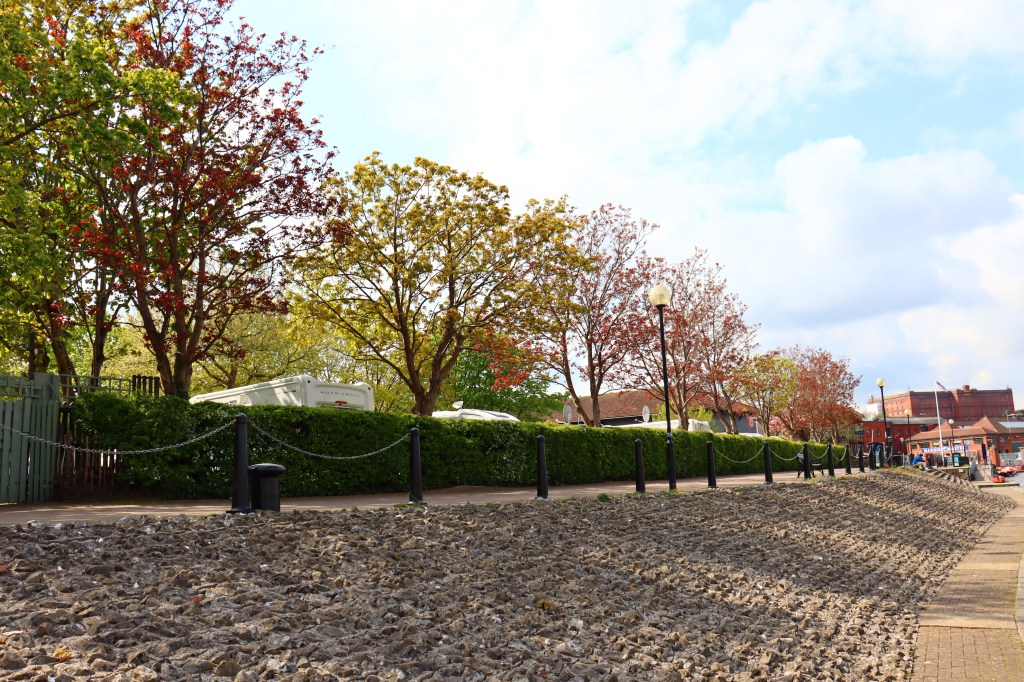
It was a great shock when I was made aware of the application then pending on the Baltic Wharf Caravan Club site, particularly because when I used to do landscaping and gardening for a livelihood in the late eighties and early nineties, I had helped plant trees on that site, and carefully undertaken structural pruning and maintenance. And now a planning application was threatening to fell 80 of them.

“The Baltic Wharf trees were at least 35 years old, providing numerous ecological ‘services’ to the area”

As I made further enquiries, it turned out that there were over 590 objections to the application, with six statements in support. Six!! The trees represented over a quarter of the tree cover in the immediate area. They were at least 35 years old, providing numerous ecological “services” to the communities of Bristol.

And then the terrible shock of a unanimous – yes unanimous – planning committee decision to go ahead without amendments to the felling of the trees, with no objection from the responsible tree officer.

This left me realising many things. How naïve I have been about the problems nature, and especially trees, face in this lovely city. How we need to struggle and advocate for every one. Trees offer so many positive benefits for all creatures, including humans. I reflect on the wonderful life in ‘our’ lime tree.  Pigeons, starlings, sparrows, crows, squirrels. Life in all its varied forms. Leaves, blossoms, growth.

And perhaps most of all, I recognise that in Bristol, in 2024, there is perhaps an equal if not greater task to planting new trees. To protect the ones we have, and love. And to share that love with as many people, in our local communities and beyond, that we can.

“Maybe we can teach even more people how important it is to retain trees and how we should never allow a good tree in a good place to be arbitrarily felled”

My partner and I began our life in Bristol in St Werburghs, starting the City Farm there in 1980. As it got going, with great help from some wonderful City Council officers in the planning and parks departments, we planted trees with children from six local primary schools. Those children, I hope, will always carry the memory of that planting. And I hope they go and visit the trees – now over 40 years old and flourishing in the wondrous environment of the City Farm.

It is about a will, an attitude, a set of values. Above all, it is about respect for our fellow plants and creatures, who share this planet and this city with us.

Interested in becoming a Tree Champion like Paul? Click below to learn more.

Our 2024 tree giveaway – free saplings for planting

Last year we were able to provide – free of charge – over 2,000 tree saplings for tree lovers to plant in and around Bristol…. and beyond!

This year we plan to give away pedunculate oak (Quercus Robur) and downy birch (Betula Pubescens), each native and supporting lots of wildlife.

Would you like some to plant out in 2024? We have 2,000 to give away.

First come, first served, tho!

Stop Press – We have now distributed all available trees, so this offer is now closed. Thanks for all your support.

Watch out for our offer next year!

Few of us will forget that 2023 was the hottest year ever recorded and far exceeded previous temperature records, both locally and nationally, coming close to the average world temperature of 1.5C that we have all been challenged to avoid!

The Met Office reports that in early September 2023, the UK experienced a significant heatwave with daily maximum temperatures exceeding 30°C somewhere in the UK for seven consecutive days from 4th to 10th and reaching 31 to 32°C across south-east England. While this heatwave would not have been particularly unusual had it occurred during the high summer months (July or August), this was, for September, the longest run of days exceeding 30°C on record.

We all know the value of trees in sequestering carbon, and they still represent the most effective and widespread means of removing CO2 from the atmosphere. For instance, a single mature oak tree is the equivalent of 18 tonnes of CO2 or 16 passenger return transatlantic flights. However, it is in our cities that trees provide the greatest benefits; cleaning our air, reducing flooding, improving our physical and mental health, and, crucially, reducing temperatures during heat waves.

Our cities suffer additional problems during heat waves, with all of the concrete and tarmac absorbing a lot of energy from the sun and releasing it as heat. This “heat island” effect can raise temperatures by as much as an additional 12C. Trees can reduce, or even eliminate, this effect, partly through shade but also actively cooling the air by drawing up water from deep underground, which evaporates from the leaves… a process called evapotranspiration. According to the US Department of Agriculture, this cooling effect is the equivalent to 10 room sized air con units. This cooling greatly enhances our resilience to the dangerous heat waves that are predicted to increase in severity and frequency.

Also, Trees improve air quality by absorbing both gaseous (e.g., NO2) and particulate pollution. They reduce traffic noise and flooding and improve physical and mental wellbeing.

Thus, trees are a crucial, but often ignored, element in increasing our resilience to climate change. It is therefore disappointing that neither the council’s Climate Emergency Action Plan or the ‘Adaptation to a changing climate’ section of the recent draft Bristol Local Plan review make any mention of trees.

We are one of the most biodiversity depleted countries in the world, and have lost nearly 70% of our biodiversity since the industrial revolution. Trees are vital in supporting biodiversity, with oak trees capable of supporting over 2,300 different species, including birds, mammals, invertebrates, mosses, lichen and fungi.

What is Bristol Tree Forum doing to help?

It is said that the best time to plant a tree is 20 years ago, and the second best time is now.

As well as advocating the retention of life-saving trees in our city, Bristol Tree Forum have been encouraging tree planting by holding an annual tree giveaway since 2020. In that year we purchased 1,600 oak saplings from Maelor Forest Nurseries which we distributed free of charge. In 2021/2022 we initially gave away 600 white birch and 400 alder, as well as 900 oak saplings, the latter thanks to a partnership with the Arkbound Oakupy project. We were then contacted by the Forest of Avon Trust who had a surplus of 4,500 tree saplings, over 4,000 of which we were able to distribute through our network of tree planters. Overall, that year we gave away around 6,000 trees including 1,600 oak, 740 silver birch, 860 white birch, 55 grey birch, 600 alder, 100 alder buckthorn, 950 rowan, 45 Scots pine, 60 sweet chestnut, 300 sycamore, 50 spindle and 630 wild cherry. Last year, we manage to distribute 2,102 trees.

Trees planted in Bristol. Trees were also planted as far afield as West and North Wales, South Devon and Wiltshire.
Just some of the trees given away in 2021/22

Flushed with the success of last year’s project, we have ordered another two thousand saplings – pedunculate oak (Quercus Robur) and downy birch (Betula Pubescens) – which we are ready to give away. Each species is a native tree of great benefit to wildlife and is tolerant of urban and rural conditions.

Trees can be ordered using the form below

We will get delivery in late February, when the trees can be collected from a site in Redland, Bristol.

The saplings come bare-rooted (i.e. out of the soil) and need to be planted as soon as possible after collection, although the viability of the trees over winter can be extended by storing the trees with the roots covered in damp soil. The form below is to find out who would like to have saplings for planting and how many, and for you to provide basic contact details (email and/or phone number) for us to organise collection of the trees. Contact details will not be used for any other purpose.

Our 2022 AGM is being held on…

Monday, 7 November 2022 starting at 6:00 pm – City Hall, College Green, Bristol

Our Agenda

  1. Introduction from Chair, Mark Ashdown
  2. Finding our remarkable UK & Irish urban trees – Paul Wood
  3. Panel Discussion between Paul Wood and Andy Bryce
  4. Our Tree Champions
  5. Bristol’s emerging local plan
  6. Election of officers and financial report
  7. AOB

We are looking forward to seeing you there.

Paul Wood

Paul is the author of three books: London’s Street Trees: A Field Guide to the Urban Forest; London is a Forest; London Tree Walks: Arboreal Ambles Around the Green Metropolis and is the editor of the Great Trees of London map. He has a lifelong passion for nature, especially trees, and was formerly a trustee of the London Wildlife Trust. He is currently working on a book about 1,000 remarkable urban trees throughout the UK and Ireland, to be published by Penguin in 2023.

Paul regularly leads walks and gives talks about trees in urban areas. As well as London, Paul has led walking tours around the streets of Bath, Sheffield, Dublin and even Philadelphia.

Andy Bryce

Andy is the Trees and Woodlands Manager at Bristol City Council. He manages Bristol’s team of tree officers and is responsible for managing our existing tree stock. Andy joined BCC in November 2021 having previously worked as an arborist at The National Arboretum, Westonbirt, latterly as its Collections Manager.  Andy has worked in arboriculture for over 20 years, six of which were as an arborist in Bristol.  Andy’s current research interest is tree pests and diseases.

BTF 2020 Newsletter

Because we could not hold our AGM this year, we have decided to publish a number of articles highlighting issues that have been prominent over the past year. We hope you find them of interest.

Sadly, it has not been possible to hold our annual AGM this year, so we have postponed it until next Spring. Subject to the state of any COVID 19 restrictions against us meeting, we will let you know when we have been able to find a new date as soon as we can.

In the meantime, we have decided to publish a number of articles highlighting issues that have been prominent over the past year. We hope you find them of interest.

We wish all our followers a very happy holiday season and all the very best for the New Year.


In defence of Bristol’s trees – Mark Ashdown

Why are we felling so many trees in Bristol when the city’s stated aim is to double tree canopy cover by 2046? To achieve this aim, we will need to stop felling existing trees, failing to replace those that have to be felled trees AND see at least a five-fold increase in our current tree-planting rate!


Miyawaki or Tiny forests – Chris Wallace

Miyawaki or Tiny Forests are a promising approach to rewilding urban areas and we look forward to being involved in future schemes. However their contribution to overall tree canopy is limited by their size.


Don’t Stop The (Christmas) Rot – In praise of Ivy Guest Editor, Nick Gates, Naturalist

There is a weird craze amongst a certain type of well-meaning nature lover. It involves taking an axe, leatherman or small saw, and severing limbs. Not at random, but of one of our favourite and most important Christmas plants. Ivy.


On the Verge – Planting for the future Guest Editor, Nick Haigh

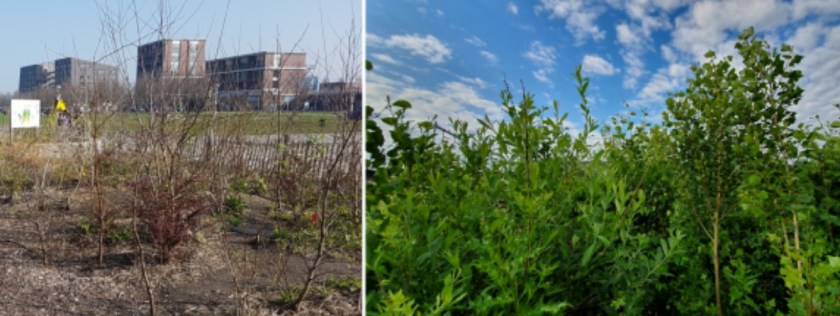
The A4320 Bike Path Verge is a tree planting initiative between Bristol’s Lawrence Hill roundabout and Stapleton road; currently a bare stretch of grass, void of plants and animals, it will soon be turned into a wildlife, carbon-capturing haven, with thanks to support from the Bristol Tree Forum.


Bristol City Council’s Tree Management Policy – has it changed, or did we misunderstand it all along? Stephanie French

Why does Bristol City Council have one standard when it comes to protecting its own trees, but another standard when it comes to trees protected with a TPO or growing in a Conservation Area?


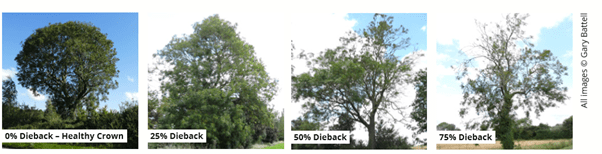
Dealing with Ash Die Back disease Guest Editor, Victoria Stanfield Cert. Arb & For

It was shocking to see the prevalence of the disease in our area when the trees were in full leaf this Summer, a large number of the trees which had been showing some sign of the disease in 2019, had deteriorated dramatically over the Winter months and come back into leaf with less than 50% of their canopy cover.


Trees and Planning: Artists’ Impressions and Heritage Statements Stephanie French & Vassili Papastavrou

Plans with delightful illustrations of tree-filled spaces around new developments, either showing existing trees retained or new trees planted, are so often a ‘misdirection’, drawn in to make you think that everything will be alright and is acceptable, and that it doesn’t matter really. Please don’t be fooled. You need to read the detail.


The Morley Square arboretum Chris Wallace

Morley Square is the only privately owned square in Bishopston. The deeds of the 28 houses around the square, including ours, state that the house owners have the rights of access to the square and the responsibility for its maintenance. One of our main concerns are the trees, some impressively large, mapped here on BristolTrees. Although only covering half an acre, the square contains 29 species of tree, a minor arboretum.


New Developments should be built around existing trees Vassili Papastavrou

We always see glib promises that more trees will be planted than are removed, with the insinuation that the environment will be better afterwards. In our experience, replanting often fails or, if it does survive, produces meagre results, and take years to replace what is lost, assuming it ever does. It is perfectly possible to build around existing trees.


Our 2020 Blogs


Shocking treatment of Lower Ashley Road trees shows urgent need for Bristol Planning rethink – January 18, 2020


Council no longer manages trees on educational sites – Part II – January 27, 2020


The trees at Stoke Lodge Park and Playing Fields – a letter to the Council -February 5, 2020


A Manifesto for protecting Bristol’s existing Urban Forest – February 13, 2020


In Defence of Dead Wood – February 21, 2020


Congratulations BCC on its successful Defra Urban Tree Challenge Fund bid! -February 26, 2020


Tree replacement and carbon neutrality – March 31, 2020


A letter to our Councillors – May 4, 2020


Bristol City Development – Where did all the Green go? – July 9, 2020


Wales and West Utilities helps to protect Bristol’s precious trees – July 10, 2020


Trees valued at over £4.6m are under threat at Bonnington Walk, Lockleaze – July 18, 2020


Bristol Tree Forum tree planting campaign – free Oak saplings available for planting – October 26, 2020


Bristol Tree Forum tree planting campaign – free Oak saplings available for planting

STOP PRESS

We delighted to report that nearly 1,600 tree orders have been received. We have bought another 600 trees to cover the extra orders and expect delivery soon.

Many thanks to all of you who have placed an order. We shall soon let you know when and where you can collect your trees.

Due to COVID-19 restrictions and delays in government funding, there has been postponements and cancellations of many major tree planting projects. As a result, large numbers of tree saplings are due for destruction in tree nurseries. This includes 750,000 two year old English oak tree saplings at the Maelor Forest Nursery in Wrexham.

Rather than see these trees destroyed, Bristol Tree Forum has purchased 1,000 of the oak saplings for free distribution to anyone able to plant them, whether this is one tree or a hundred.

We will get delivery early in November. The trees can be collected from a site in Redland, Bristol and a few collection dates will be organised hopefully to suit all. They should be planted as soon as possible afterwards.

The saplings are between 10cm and 90cm high. They come bare-rooted (i.e. out of the soil) and need to be planted as soon as possible after collection, although the viability of the trees over winter can be extended a little by storing the trees with the roots covered in damp soil.

This form is to find out who would like to have saplings for planting and how many, and for you to provide basic contact details (email and/or phone number) for us to organise collection of the trees. Contact details will not be used for any other purpose.

Why plant a tree?

A single mature oak tree is the equivalent of 18 tonnes of CO2 or 16 passenger return transatlantic flights.

Despite advances in carbon capture technology, the most efficient and cost-effective way to sequester carbon from the atmosphere is to plant trees.

Recent scientific reports calculate that planting trees wherever we can, without occupying land used for other purposes, would absorb up to two thirds of the carbon emitted in the last century.

Oak trees can support over 2300 different species, including birds, mammals, invertebrates, mosses, lichen and fungi.

Trees improve air quality by absorbing both gaseous (e.g. NO2) and particulate pollution.

Trees reduce traffic noise and flooding, reduce excessive heat in cities and improve physical and mental wellbeing.

Wales and West Utilities helps to protect Bristol’s precious trees

Wales and West Utilities has been congratulated by the Bristol Tree Forum, and thanked mightily for their understanding and practical approach to a possible future environmental catastrophe at one of their installations in Bristol.

Stoke Lodge Playing Field is a 26-acre site in Stoke Bishop in Bristol. In the north west corner of the field is a gas “kiosk” which houses gas pressure regulation equipment. It was built in 2009, replacing a smaller installation nearby which was not on the same land. It is the responsibility of Wales and West Utilities.

Many locally and nationally notable trees grow on the parkland, a number of them getting quite old now, and in need of some love and our protection.

The access to the compound is over the roots of some of these important trees, most of which are the subject of Tree Preservation Orders. Protected trees surround the compound, and their roots, which are very superficial (as is the way with tree roots) and in places even exposed, are at risk of damage from vehicles driving over them and parking on them.

The W&W gas kiosk

Tree Roots

Tree roots extend radially in every direction to a distance equal to at least the height of the tree (assuming no physical barriers) and grow predominantly near the soil surface.

Typically, 90% of all roots, and virtually all the large structural supporting roots, are in the upper 60cm of the soil.

Soil disturbance within the rooting area should be avoided, whenever and wherever possible as this can significantly adversely affect tree health and tree stability. 

Associated with roots are much finer, thread-like, mycorrhizae. Mycorrhizae are symbiotic fungi which grow on or in roots, an association which is mutually beneficial to both the tree and the fungus. They are extremely efficient at nutrient absorption, especially phosphorus, and many trees cannot survive without them.

Diagram of a typical tree root system:

Cars, lorries and vans are heavy. They leak oil and hydraulic fluids from braking systems and power steering pipework and pumps. They also leak windscreen washer fluids. These chemicals are toxic for trees.  In the root area of a tree soil compaction caused by vehicles and the deposit of toxic or impermeable materials should be avoided. The nearer to the trunk these things take place the greater is the damage done and the greater the loss of roots.

Local residents are very protective of the trees – this whole Parkland is hugely important for them, and they have taken its care to their hearts.

Vans and lorries from Wales and West attend the site, both for routine maintenance visits and for any “emergencies”.

Recently one of the residents noted a Wales and West van parked on the exposed roots of one of the trees, so they contacted the Company to point out the dangers for the tree’s future that could be caused by this.

The response from a manager at the Company was immediate and most gratifying. Within hours a site meeting had been arranged with the W&W Manager, the Resident and the BTF BS9 Tree Champion in attendance – all suitably socially-distanced!

The Manager listened to everything we said. He told us that Wales and West had not previously been aware of the importance of these trees, nor aware of the peculiarities of the siting of the compound in relation to the trees.

He went on to say that he would do everything he could to inform future Wales and West employees visiting the site of the sensitive nature of the ground they would have to drive over, and that they would keep traffic passing over the root areas to a minimum, allowing only one vehicle to park on site at a time, parking any others required nearby on the highway. The one vehicle needed would not park under the canopies of the trees. It is possible for one vehicle to park clear of tree canopy areas.

He arranged for good quality signs to be affixed to their entrance gate and to the fence enclosing the kiosk, so that Wales and West operatives would be aware of the need to avoid damage to tree roots at this particular site.

This is the sign W&W attached.

The Bristol Tree Forum has been working hard in recent years, with local residents and their representatives, to encourage Bristol City Council, as owners of the land and as Landlord, to ensure that Tree Preservation Order regulations are complied with by their tenant using the Playing Field, and if necessary enforced. We have had some limited success. This made the attitude and actions of Wales and West Utilities all the more overwhelming.

So, we would like to thank W&W’s manager again for his actions on behalf of the trees, and to compliment Wales and West Utilities for supporting an ethos which encourages community engagement and action like this.

Postscript

The sign (see above) riveted to the main entrance gate onto the site and to the gas kiosk has been removed. It looks like the rivets have been drilled out, rather than the sign being removed by snapping it off, so it must have taken some effort and maybe even some planning to do this. The sign appears to have been taken away.

Who could possible think that doing this ‘vandalism’ could be for anyone’s benefit? It cannot have been Bristol City Council and it is hard to imagine who else would do such a thing. We are investigating.

Post Postscript

Wales & West have now told us that they removed the sign, saying “We put them in the wrong place. Now moved to the right place as agreed with the leaseholders of the land.” What leaseholders? As far as we know this bit of land is not leased. It belongs to Bristol City Council.

Finally

This is the notice that was on the gate:

This is the sign W&W attached.

It is all about protecting precious trees and safeguarding our environment.

There is no single Leaseholder with control of this gate. It is owned by Bristol City Council and the use of the gate and the access to the Field it grants is shared between Cotham School and Wales and West Utilities (W&W), two Leaseholders who use separate parts of the land beyond the gate. We do not know who asked W&W to remove the notice from the gate, but we are bound to ask what reasonable person, with any regard at all for trees, the environment and climate change, would ask W&W to remove it from a shared gate that they may not control, and why would they? Own up please?!

The trees at Stoke Lodge Park and Playing Fields – a letter to the Council

5th February 2020

Dear Bristol City Council Parks Department,

As you are aware, we have been expressing our continuing concerns about the welfare of the trees growing at Stoke Lodge Park and Playing Fields for the best part of a year now.

At the moment, our particular concerns are threefold:

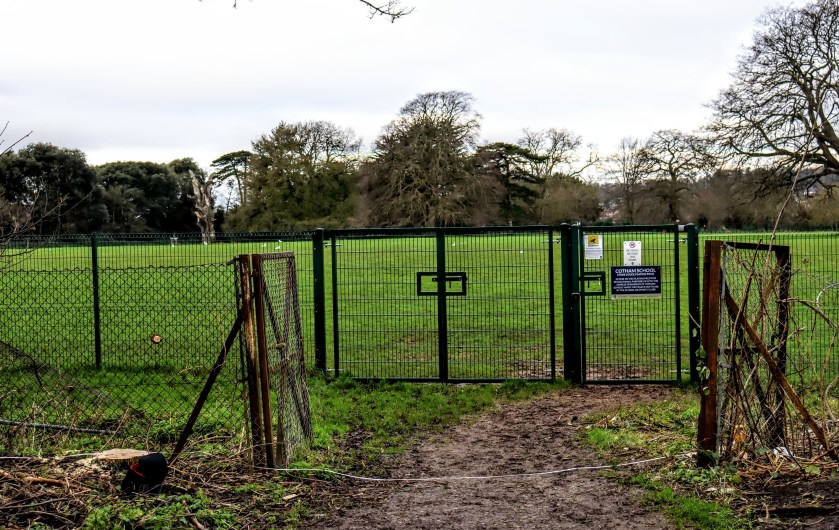
  1. The potential for damage to trees caused by pedestrians being obliged to pass over their root zones and under their canopies since Cotham School erected its boundary fence last year.
  2. The potential for damage being caused to the trees growing within the new fence being caused by the school’s grass mowing regime.
  3. The potential for damage to trees caused by vehicles passing over their root zones and under their canopies.

To a large extend, our concerns about issue three may have been allayed by the school’s adoption of a new access point at the eastern end of the fields, but we will have to see how this develops.

The new vehicle access point at the eastern end.

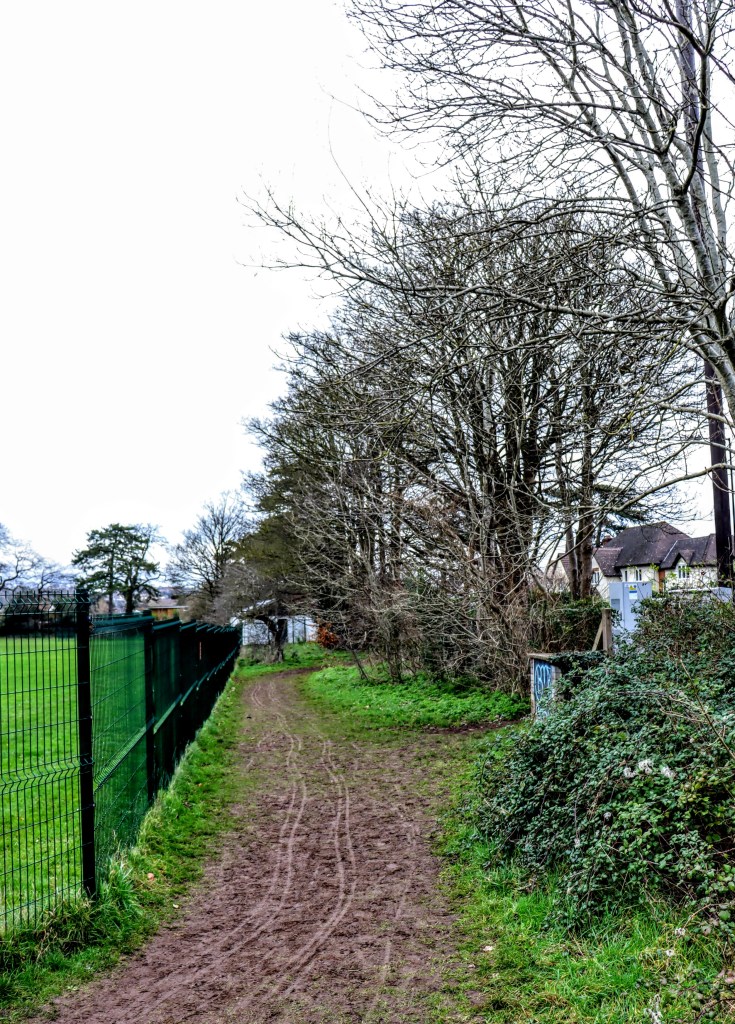
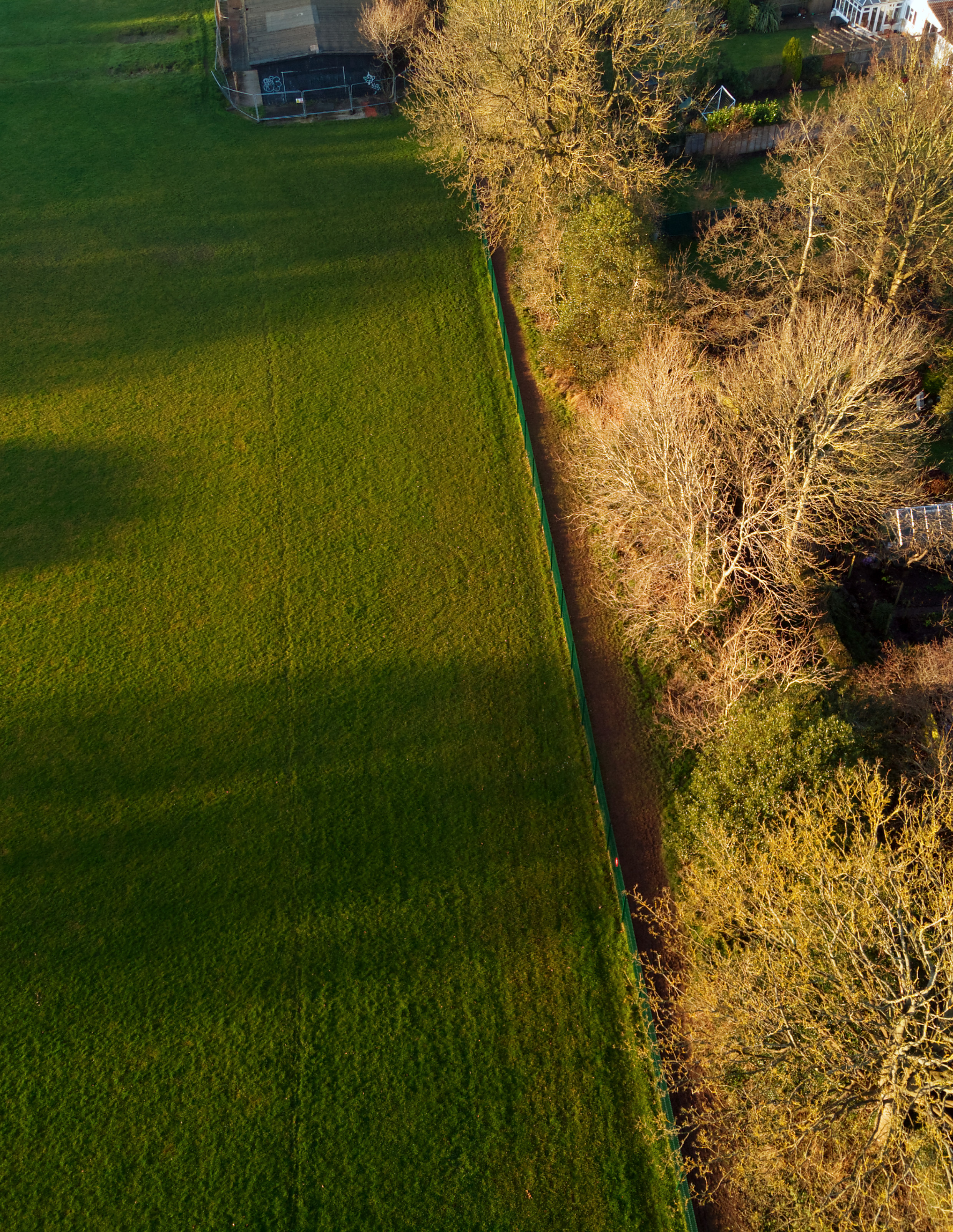
As for the other two issues, we attach images showing how the very muddy and disturbed path running around the outside of the school’s fence is causing disruption to the root zones of a number of trees – these are not all the trees being affected by this.

The eastern end of the fields.
The path leading to the Pavilion on the northern boundary.
created by dji camera
The path leading to the Pavilion.

These images show how the current mowing regime encroaches within the root zone of one of the Turkey oaks inside the fence.

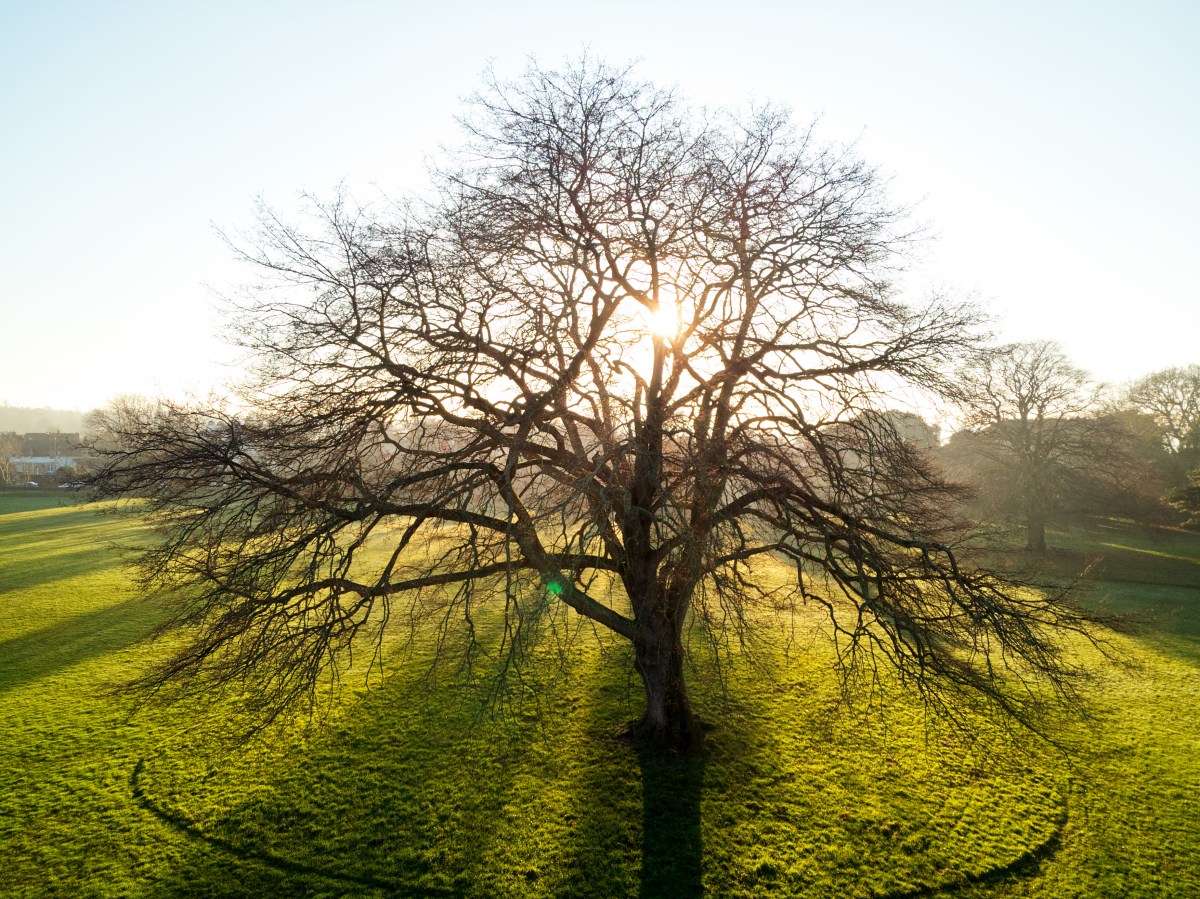
The Turkey growing at the eastern end of the playing fields seen from above.
The Turkey growing at the eastern end of the playing fields – the mowing line is clearly visible.

Here is a video which shows the mowing issue more clearly.

In our view, something needs to be done about this before any damage being caused becomes irreversible.

Can you advise me what action the Council plans to take to protect these trees, please?

Best Regards,

The Bristol Tree Forum