On Thursday 26 September 2024 Waterstones at The Galleries launched Our City. This book chronicles community activism in Bristol through multiple campaigns described in eighteen individually authored chapters.
Suzanne Audrey pulled the whole project together, edited the book and contributed the introduction and conclusion. The book is well worth buying. It tells a story of the diversity and resilience of Bristol communities when faced with threats usually emanating from the council which should be looking after them. The Bristol Tree Forum was asked to contribute. During the launch event, contributors were each given three minutes to describe their work. This is what we said:
Saving Bristol’s Urban Trees by Vassili Papastavrou
In Bristol we are seeing the loss of hundreds of important urban trees each year. They cannot be replaced and it will create a city that is unliveable – we need them to keep us cool now.
I’d like to illustrate the problem with two willow trees which grew not far from here. Two years ago, during National Tree Week, they were chainsawed by Bristol City Council. Highly visible and next to Temple Meads, the trees should have had Tree Preservation Orders but the council does not TPO its own trees, claiming that it is a responsible landlord and that its trees are safe.
I was brought up in Cambridge. Along the banks of the river Cam, willows are such a feature of the city that no one in their right mind would consider chopping them down. But in Bristol they were removed without a moment’s thought.
The removal was filmed by Martin Booth and got a lot of coverage but in reality it was just another ordinary day of tree removal in Bristol. Martin tweeted, “This is so sad to watch. One of Bristol’s most beautiful trees, a majestic weeping willow is being chopped down this morning”.
Trees compete for space with other uses of the city. In Bristol mature urban trees are given lowest priority, so when plans come up, trees are removed. As this incident demonstrates, they have zero value to the Local Planning Authority or the council.
The willows never went in front of the Planning Committee where there could have been a debate as this was a “delegated decision”. Effectively Bristol City Council was giving planning permission to itself in a backroom deal. The planning application was snuck through with no mention of the trees in the title, no arboricultural report from the council, no tree officer report from the local planning authority. The council passed judgement on itself.
And after the deed had been done, was there any recognition that a terrible act had been committed? An inquiry to make sure that this kind of thing would never happen again?
Silence. For in Bristol there is no one in a position of power who cares about retaining important urban trees.
Paul Sander-Jackson, who helped to plant the Baltic Wharf trees, returns to Bristol shocked to learn that they will now be felled.
We came back to live in Bristol nearly two years ago. After living in Somerset for 32 years, and in Bristol 12 years before. Much has changed in the city, but much has remained – the best bits, and especially the trees.
Our new home backs on to Oldbury Court – which has an astonishing range of trees and plants, as well as a river and rocks and old quarries. Our garden has a lime tree – probably about 80 to 90 years, just outside its boundary fence.
In Somerset, we became very involved, in the later stages of life there, in planting new trees and woodlands, hedges and copses. The organisation we were involved with – Reimagining the Levels – has been responsible for planting over 100,000 trees in the past few years. But that is addressing a major problem in Somerset – a tree cover of only between 6% and 7%.
Coming back to Bristol, I wondered where my energy should go. But a few months ago, an old friend mentioned that I might like to get involved in Bristol Tree Forum. The rest is (personal) history. My partner and I are now joint Tree Champions for the Frome Vale ward.
It was a great shock when I was made aware of the application then pending on the Baltic Wharf Caravan Club site, particularly because when I used to do landscaping and gardening for a livelihood in the late eighties and early nineties, I had helped plant trees on that site, and carefully undertaken structural pruning and maintenance. And now a planning application was threatening to fell 80 of them.
“The Baltic Wharf trees were at least 35 years old, providing numerous ecological ‘services’ to the area”
As I made further enquiries, it turned out that there were over 590 objections to the application, with six statements in support. Six!! The trees represented over a quarter of the tree cover in the immediate area. They were at least 35 years old, providing numerous ecological “services” to the communities of Bristol.
And then the terrible shock of a unanimous – yes unanimous – planning committee decision to go ahead without amendments to the felling of the trees, with no objection from the responsible tree officer.
This left me realising many things. How naïve I have been about the problems nature, and especially trees, face in this lovely city. How we need to struggle and advocate for every one. Trees offer so many positive benefits for all creatures, including humans. I reflect on the wonderful life in ‘our’ lime tree. Pigeons, starlings, sparrows, crows, squirrels. Life in all its varied forms. Leaves, blossoms, growth.
And perhaps most of all, I recognise that in Bristol, in 2024, there is perhaps an equal if not greater task to planting new trees. To protect the ones we have, and love. And to share that love with as many people, in our local communities and beyond, that we can.
“Maybe we can teach even more people how important it is to retain trees and how we should never allow a good tree in a good place to be arbitrarily felled”
My partner and I began our life in Bristol in St Werburghs, starting the City Farm there in 1980. As it got going, with great help from some wonderful City Council officers in the planning and parks departments, we planted trees with children from six local primary schools. Those children, I hope, will always carry the memory of that planting. And I hope they go and visit the trees – now over 40 years old and flourishing in the wondrous environment of the City Farm.
It is about a will, an attitude, a set of values. Above all, it is about respect for our fellow plants and creatures, who share this planet and this city with us.
Interested in becoming a Tree Champion like Paul? Click below to learn more.
Last year we were able to provide – free of charge – over 2,000 tree saplings for tree lovers to plant in and around Bristol…. and beyond!
This year we plan to give away pedunculate oak (Quercus Robur) and downy birch (Betula Pubescens), each native and supporting lots of wildlife.
Would you like some to plant out in 2024? We have 2,000 to give away.
First come, first served, tho!
Stop Press – We have now distributed all available trees, so this offer is now closed. Thanks for all your support.
Watch out for our offer next year!
Few of us will forget that 2023 was the hottest year ever recorded and far exceeded previous temperature records, both locally and nationally, coming close to the average world temperature of 1.5C that we have all been challenged to avoid!
The Met Office reports that in early September 2023, the UK experienced a significant heatwave with daily maximum temperatures exceeding 30°C somewhere in the UK for seven consecutive days from 4th to 10th and reaching 31 to 32°C across south-east England. While this heatwave would not have been particularly unusual had it occurred during the high summer months (July or August), this was, for September, the longest run of days exceeding 30°C on record.
We all know the value of trees in sequestering carbon, and they still represent the most effective and widespread means of removing CO2 from the atmosphere. For instance, a single mature oak tree is the equivalent of 18 tonnes of CO2 or 16 passenger return transatlantic flights. However, it is in our cities that trees provide the greatest benefits; cleaning our air, reducing flooding, improving our physical and mental health, and, crucially, reducing temperatures during heat waves.
Our cities suffer additional problems during heat waves, with all of the concrete and tarmac absorbing a lot of energy from the sun and releasing it as heat. This “heat island” effect can raise temperatures by as much as an additional 12C. Trees can reduce, or even eliminate, this effect, partly through shade but also actively cooling the air by drawing up water from deep underground, which evaporates from the leaves… a process called evapotranspiration. According to the US Department of Agriculture, this cooling effect is the equivalent to 10 room sized air con units. This cooling greatly enhances our resilience to the dangerous heat waves that are predicted to increase in severity and frequency.
Also, Trees improve air quality by absorbing both gaseous (e.g., NO2) and particulate pollution. They reduce traffic noise and flooding and improve physical and mental wellbeing.
Thus, trees are a crucial, but often ignored, element in increasing our resilience to climate change. It is therefore disappointing that neither the council’s Climate Emergency Action Plan or the ‘Adaptation to a changing climate’ section of the recent draft Bristol Local Plan review make any mention of trees.
We are one of the most biodiversity depleted countries in the world, and have lost nearly 70% of our biodiversity since the industrial revolution. Trees are vital in supporting biodiversity, with oak trees capable of supporting over 2,300 different species, including birds, mammals, invertebrates, mosses, lichen and fungi.
What is Bristol Tree Forum doing to help?
It is said that the best time to plant a tree is 20 years ago, and the second best time is now.
As well as advocating the retention of life-saving trees in our city, Bristol Tree Forum have been encouraging tree planting by holding an annual tree giveaway since 2020. In that year we purchased 1,600 oak saplings from Maelor Forest Nurseries which we distributed free of charge. In 2021/2022 we initially gave away 600 white birch and 400 alder, as well as 900 oak saplings, the latter thanks to a partnership with the Arkbound Oakupy project. We were then contacted by the Forest of Avon Trust who had a surplus of 4,500 tree saplings, over 4,000 of which we were able to distribute through our network of tree planters. Overall, that year we gave away around 6,000 trees including 1,600 oak, 740 silver birch, 860 white birch, 55 grey birch, 600 alder, 100 alder buckthorn, 950 rowan, 45 Scots pine, 60 sweet chestnut, 300 sycamore, 50 spindle and 630 wild cherry. Last year, we manage to distribute 2,102 trees.
Trees planted in Bristol. Trees were also planted as far afield as West and North Wales, South Devon and Wiltshire.
Just some of the trees given away in 2021/22
Flushed with the success of last year’s project, we have ordered another two thousand saplings – pedunculate oak (Quercus Robur) and downy birch (Betula Pubescens) – which we are ready to give away. Each species is a native tree of great benefit to wildlife and is tolerant of urban and rural conditions.
Trees can be ordered using the form below
We will get delivery in late February, when the trees can be collected from a site in Redland, Bristol.
The saplings come bare-rooted (i.e. out of the soil) and need to be planted as soon as possible after collection, although the viability of the trees over winter can be extended by storing the trees with the roots covered in damp soil. The form below is to find out who would like to have saplings for planting and how many, and for you to provide basic contact details (email and/or phone number) for us to organise collection of the trees. Contact details will not be used for any other purpose.
We urge the Bristol City Council Cabinet to reject the current draft. More nuanced rules, that meet identified real needs, need now to be developed following a proper consultation with Bristol’s allotmenteers. The PGSS must be also integrated into the new Local Plan so that all the sites that have been identified are protected either as Local Green Space or as Reserved Open Green Space and given proper planning weight when decisions about their future use and development are made.
We are particularly concerned that the draft rules relating to trees on allotments are too narrowly drawn and will result in the loss of allotment tenants’ ability to make the best use of the particular conditions of their plot. We urge the relaxation of these proposed limits on the number and types of trees which can be planted.
Food growing as part of the draft Parks and Green Spaces Strategy
We are concerned that the Strategy for Food Growing and Allotments has been included as Chapter 6 of the draft Parks and Green Spaces Strategy (PGSS). This is a departure from the 2008 PGSS, which makes it clear that such spaces are not included, since they are not public spaces: ‘The Strategy does not consider green spaces that are not freely accessible to the public, including allotments, city farms, school grounds, or Sites of Nature Conservation Interest in private ownership.’
The proposed PGSS recognises that: ‘There are other green spaces managed by the council that are not included because they do not offer full public access for recreation …’ [our underlining]. Given that allotments and other land used for growing food (including grazing land) are subject to private tenancies, with rental payments and mutual rights and obligations agreed between tenant and Council, it is hard to understand why they have been included in the strategy proposal.
We need to recognise the importance of this specific type of land use and ensure that it is not made an ancillary element in the PGSS. It deserves greater attention, which is why we suggest that it should have been integrated into and protected by the current proposals for the new Local Plan (as, indeed, Parks and Green Spaces should also be) rather than treated as an add-on to the proposed PGSS.
In particular, the current status of and strategy for market gardens, smallholdings and grazing land (and other land not used for food growing), which have an area greater than all current allotments combined, get only passing consideration. Little or no thought is given to the opportunities these sites present for nature recovery, biodiversity enhancement and other environmental gains.
Instead, we are told that these sites:
… have limited benefit beyond the individual users … and many smallholdings tend to use less than 10% of their site for food growing … we now need to review our current landholding agreements so that we can start to explore opportunities to repurpose land to diversify our food growing spaces and ensure land is being used effectively to meet Bristol’s food growing targets. … Once suitable land has been identified we will review how these opportunities are promoted to ensure that the system of securing land is fair and equitable. We are particularly interested in opportunities that will not only ensure land is being sustainably and efficiently managed but that also delivers social value and benefits the residents of Bristol.
In the face of the demand for allotments and the need to increase local food production, which has led at least in part to the proposed changes in the tenancy agreement, these areas must surely warrant greater protection than is given them in the proposed PGSS. These areas also contain many trees (often veterans) and other ecologically sensitive habitats, and many are in SNCIs. It is vital that these matters are properly considered when planning any change of use of such land. This ought to be addressed properly in the proposed new Local Plan, not in this draft strategy.
Trees on allotments
Trees on allotments fall into two categories: those within allotment plots and those on allotment sites but outside the plots.
Trees outside allotment plots
From our analysis of data on the Council’s Open Data site, we estimate that allotment sites total some 105 hectares when community orchards are included. However, only about 87 hectares of these sites are productive. This means that around 17% of allotments, some 18 hectares, are unproductive. We welcome the clarification in the new tenancy agreement that trees in these unproductive areas remain in the care of the Council and may not be damaged by tenants.
Trees within allotment plots
Proposed allotment Rule 4.0 Trees deals with trees growing within allotment plots. We distinguish between newly planted trees and existing trees below.
New trees
Regulation 4.4 limits the height of trees to 2.5 metres (a common constraint in other councils). The limit in Regulation 4.3 of one tree per allotment sized between band B and band C is far too restrictive, particularly since the majority of plots fall within these bands.
Rule 3.1 requires that the tenant uses at least 75% of the plot for ‘a cultivated crop of vegetables, fruit bushes [not fruit trees], ornamental flowers, and herbs.’
Rule 3.3 states that fruit trees will occupy the non-cultivated area of the plot (which may be no more than 25% of the plot) unless they are underplanted with a productive crop, in which case they will be counted as being part of the cultivated area. No trees are permitted on band A or Micro Plots, nor is any consideration given to whether it is possible to underplant ‘a productive crop’. This implies that the food value of the tree does not warrant the space they occupy. According to the RHS, having fruit trees on an allotment adds both structure and permanence, while fruit tree crops have a higher value than many other allotment crops and are easier to manage.
The transitional arrangements require that all trees, except the permitted dwarf rootstock fruit trees, be removed from plots within three years, though mature trees may be permitted.
These rules devalue the role of trees on allotments, not only for their contribution to the ecology of the area but also their food production value. These rules also effectively exclude such fruit-tree-growing techniques as cordons, espaliers or step-over planting.
Regulation 4.3 also constrains the type of fruit trees that may be grown. Since only rootstocks M27 and M26 are allowed (though not the intermediate M9 rootstock), it seems that that only apple trees may be grown, even though dwarfing rootstocks are available for a number of other fruit trees such as Pear, Quince (Quince C), Cherry (Gisela 5), Plum (including Gages and Damsons), Peach and Apricot (VVA-1, Pixy).
The exclusion of hazel and other non-fruit trees (most trees bear fruit) removes the ability of tenants to grow valuable nut crops or to provide locally grown stakes through coppicing – a good way to reduce our carbon footprint. This restriction also precludes the use of allotment space for growing trees from seed with a view to planting them out elsewhere, at a time when there is a great need for locally grown trees for local tree planting.
Established trees
Fruit trees
Many fruit and other trees are already growing on many allotment sites. They provide not only good-value food, but they also provide biodiversity, a rich ecological resource for insects, birds and mammals and are important legacy features of the site. The allotment and its users have adapted to the presence of these trees and their removal would not only be counterproductive to the value of the site and cause distress to tenants but would also risk damaging the soil and the allotment more broadly.
Non-fruit trees
Although such trees may not have obvious value for food production, other considerations apply. We agree that allotments should not be taken over by trees, resulting in the reversion of productive land to woodland and the attendant loss of statuary allotment protection for such land. However, it would be a mistake to create rules which put biodiversity, nature and ecology in conflict with food production; trees are crucial for biodiversity, which in turn is essential for the productivity of the places where we grow food.
Site-appropriate regulations
Allotment plot conditions both within allotment sites and across Bristol vary widely. The gradient and aspect of each plot, its soil type, soil depth and historical development all pose different challenges to tenants, requiring a localised approach to the best way to utilise a site. Imposing a one-size-fits-all set of regulations, based on some notional idealised allotment plot, will not provide sufficient scope to allow for these variations. Tenants’ associations also need to be able to vary the regulations to fit their local conditions. Indeed, arguments in favour of the distribution of local decision making, which we endorse, have recently been made by the Bristol Mayor.
A key factor in calculating the value of a habitat under the new Statutory Biodiversity Metric is to work out its size. In the case of trees, their habitat size can be of critical importance to the calculation of their biodiversity valuation which will, in turn, help to preserve our precious tree habitats.
As a result, individual trees in an urban setting are often the most important habitat present.
Unfortunately, developers may be tempted to allocate all trees on their planned development site (especially those in groups) to Woodland and forest habitats rather than to Individual trees habitat, because this gives the trees and the site a lower biodiversity value. An example of this is the proposed development by Goram Homes of Hengrove Park in Bristol, as shown in the image above and discussed below. The whole site was granted outline planning permission in October 2019.
Unfortunately, the Statutory Biodiversity Metric User Guide (the Metric) definitions of these habitats are ambiguous and can make such allocations hard to counter, even in settings that are clearly urban.
The User Guide defines two broad tree habitats types whose areas are measured in hectares (ha):
Woodland and forest
Individual trees
Defining woodland and forest habitat
There are conflicting definitions of ‘woodland’. The Metric User Guide does not define Woodland and forest habitat.
However, the UK Habitat Classification, UKHab, upon which the Metric is based, defines it as ‘Land with 25% or more cover of trees that are five metres or more in height.’ This definition doesn’t mention the minimum land area required.
‘a minimum area of 0.5 hectares under stands of trees with, or with the potential to achieve, tree crown cover of more than 20% of the ground. Areas of young trees, which have the potential to achieve a canopy cover of more than 20%, will also be interpreted as woodland and mapped. The minimum width for woodland is 20 m, although where woodlands are connected by a narrow neck of woodland less than 20 m wide, the break may be disregarded if less than 20 m in extent.‘
Bristol City Council also uses area to define woodland in its 2008 Biodiversity Action Plan (Chapter 5, page 65), which states that ‘this action plan covers all woodlands over 0.5 hectares in extent found in Bristol.‘ As this is a local policy, and aligned with the NFI definition, we have adopted it.
The habitat area of Woodland and forest habitats is based on its total measured canopy area.
Defining individual trees habitat
The Metric User Guide (page 53) advises when to record Individual trees habitat:
Individual trees are classed as ‘urban’ or ‘rural’. You should consider the degree of ‘urbanisation’ of habitats around the tree and assign the best fit for the location.
Use the broad habitat type ‘Individual trees’ to record:
individual rural trees
individual urban trees
lines, blocks or groups of trees found within and around the perimeter of urban land.
In all circumstances ‘Individual trees’ should be used to record ancient and veteran trees, regardless of location. This could include ancient and veteran trees within hedgerows, ‘rural’ lines of trees and woodlands.
Other clarifications
Do not use the hedgerow module classifications ‘line of trees’ and ‘ecologically valuable line of trees’ to record linear formations of trees in the urban environment.
These classifications should only be used for rural lines of trees. Trees within overgrown non-native and ornamental hedges (for example, leylandii) should not be classified as individual trees, or as lines of trees. Record these as nonnative ornamental hedges within the hedgerow module.
Trees recorded as individual trees that will be removed for any purpose, including development, disease, or safety must be recorded in your baseline and recorded as lost.
Do not otherwise record individual trees if they occur within a habitat type characterised by the presence of trees, unless specified within the section on ‘recording individual trees at baseline’, which covers:
trees within private gardens
removal of trees within hedgerows
removal of trees within rural lines of trees
removal of trees within orchards and wood-pasture and parkland
Recording individual trees at baseline
The biodiversity metric uses set values to represent the area of individual trees depending on their diameter at breast height.
This value is a representation of canopy biomass, and is based on the root protection area formula, derived from BS 5837:2012.
Table 14 sets out class sizes of trees and their area equivalent.
The User Guide then deals with specific instances where individual tree habitats also need to be recorded:
Recording baseline trees within private gardens
A private garden is a garden within the curtilage of a privately owned or tenanted dwelling house. Private gardens can contain important features for biodiversity, including mature trees and hedgerows.
record all medium, large and very large trees within private gardens as individual trees
Recording baseline trees within hedgerows and lines of trees
if any medium, large or very large trees within a hedgerow or ‘rural’ line of trees are being removed, record these in the area baseline as individual trees
the removal of trees may influence the linear value of hedgerows and ‘rural’ lines of trees within the hedgerow module
Recording baseline trees within orchards and wood-pasture and parkland
if any medium, large and very large trees within these habitats are being removed, record these in the area baseline as individual trees
this does not change the way in which you would record the area of orchard or wood-pasture and parkland area habitat (see ‘Recording habitat mosaics’ section)
Calculating the number of post-development trees required
Post-development size classes
When planting trees post-development size class is determined by the size of the tree at site-planting. When using the tree helper:
record newly planted individual trees as ‘small’, unless ‘medium’ size or above at the time of site-planting
record trees planted with a DBH less than 7.5 cm as ‘small’
You should not:
record natural size increases of retained trees within post-development sheets
record natural size increases of planted trees within post-development sheets
The post-development private garden has no public access, and biodiversity net gains cannot be legally secured. As these gains cannot be secured you should only record created private gardens as either:
‘urban – vegetated garden’; or
‘urban – unvegetated garden’
You should not:
record the creation of any other new habitats within private gardens
record enhancement of any habitat within private gardens
However, habitats which are recorded in the baseline and remain within a private garden may be recorded as retained.
A garden within the curtilage of a privately owned or tenanted dwelling house. The post-development private garden has no public access, and biodiversity net gains cannot be legally secured.
How these rules affect the tree habitat area calculation
As a result, this approach places a higher value on the areas of all but the largest Individual trees habitats than those that form part of a Woodland and forest habitat. The following graph shows this, with RPA, derived from DBH, representing the canopy biomass of both broad habitats.
We analysed 12 recent planning applications involving 2,116 trees, 612 (29%) of which were identified for removal. Using the Metric User Guide, they have a combined habitat area of 20.2 ha. If they are measured by canopy area it would only be 8.3 ha (41% of their habitat size). If their combined Root Protection Areas (RPA) were used, they would cover only 8.6 ha (43% of their habitat size).
On the basis that all these trees are in poor condition and have no strategic significance, we calculate that, with the minimum 10% biodiversity net gain now required, a total of 1,925 new trees would need to be planted to replace the habitat lost by the removal of these 612 tree – a ratio of just over 3:1.
To illustrate how this can affect actual applications, here’s a pending application by Goram Homes at Hengrove Park in Bristol. The area edged in red is the development site.
This next image shows how the applicant’s ecologists have defined each habitat: the woodland and forest habitats are shown as a diamond pattern on a dark green background. They cover 2.44 ha.
They’ve also identified 0.19 ha of Individual trees habitat, that is, trees not growing within the woodland and forest habitats.
Area 8 in the south of the site (0.99 ha) might legitimately be designated Woodland and forest habitat, but, given that all the remaining trees are growing separately and in groups in an urban park, they should be designated UrbanIndividual tree habitat.
The site is complex, with many trees growing in groups but, by excluding the trees in area 8 and treating all the other onsite trees as UrbanIndividual tree habitat, we calculate that their habitat area is 6.42 ha. This is 4.78 ha more than the applicant’s calculation. This difference will clearly have a significant impact on the final biodiversity net gain calculation, valuing these habitats at 34.07 area habitat units (or 2,989 Small size trees) as opposed to the applicant’s 12.11 (or 1,063 Small size trees).
To give the applicant their due, they at least attempted to calculate the tree habitat area. We have seen other applications where the trees were simply ignored, or were classified as another habitat – bramble scrub in one case, or the method by which the Individual trees habitat area was calculated bore no relationship to the evidence submitted. We must remain ever vigilant against such tricks.
This blog was amended on 09 May 2024 to include the comments of the Nature Conservation Officer dated 03 May 2024 about whether the trees on the Hengrove Park development site are Individual trees habitat or Woodland and forest habitat. The officer writes:
This blog was amended on 14 February 2024 following the obligation for most planning applications to achieve at least 10% biodiversity gain becoming obligatory on 12 February 2024.
Further changes have been made following updates published in July and August 2024, in particular the clarification of the application of BNG in private gardens.
We believe the time has come to revise the Bristol Tree Replacement Standard (BTRS), to reflect our changing understanding of the vital importance of urban trees to Bristol and how they contribute to biodiversity gain.
The current BTRS Standard, adopted nearly a decade ago in July 2014, provides a mechanism for calculating the number of replacements needed for any trees that are removed for developments. It was ground-breaking in its time as it, typically, required more than 1:1 replacement of trees lost to development.
Since then, Defra has published the statutory version of the Biodiversity Metric (SM) (on 29 November 2023), which became mandatory on 12 February 2024. In addition, Bristol has adopted Climate and Ecological Emergency Declarations, so an updated BTRS would be an important part of implementing these declarations. It would require all new developments, subject to some exceptions, to achieve a Biodiversity Net Gain (BNG) of at least 10%. Where developments are exempt, BTRS will still apply.
Although Councillors rejected our proposals for a new Standard at their meeting on 31 October last, we’ve revisited our July 2023 proposals and recast our calculations. These proposals, set out below, provide a mechanism for complying with the new requirements and align the BTRS with the BNG provisions of the EA 2021.
The purpose of the BTRS is that it should only ever be a last resort and not the default choice – which, unfortunately, it has become. When considering any development involving established trees, the presumption should always be that trees will be retained. If this is not possible, then the impact of the proposed development must be mitigated. Only if this is impossible, should compensation for their loss be considered. This is the meaning of the Mitigation Hierarchy, as set out in paragraph 180 a) of the National Planning Policy Framework, which states:
If significant harm to biodiversity resulting from a development cannot be avoided (through locating on an alternative site with less harmful impacts), adequately mitigated, or, as a last resort, compensated for, then planning permission should be refused.
This is reflected in the Bristol Core Strategy, policy BCS9(page 29),which states that:
Individual green assets should be retained wherever possible and integrated into new developments.
This is repeated in the proposed replacement for BCS9 – Policy BG1: Green infrastructure and biodiversity in new development(page 124) – which ‘aims to ensure that green and blue infrastructure and provision for nature is incorporated into new development’ so that, among other things:
The provision of green infrastructure in new development should … Retain and incorporate important existing green infrastructure such as trees (Policy BG4 ‘Trees’), hedgerows and water features …
It is a shame that the requirement is only an aspiration, not an obligation.
Background
Under the new proposed policy – BG4: Trees (page 131) – trees lost to development will be replaced using this table:
Table 1 The proposed BG4 tree replacement table.
However, when the balance of EA 2021 takes effect, the current version of the BTRS will not, in most cases, be enough to achieve the 10% BNG minimum required for nearly all developments. A new Section 90A and Schedule 7A will be added to the Town and Country Planning Act 1990 and will set out the level of BNG required.
Under the statutory framework for biodiversity net gain, subject to some exceptions, every grant of planning permission is deemed to have been granted subject to the condition that the biodiversity gain objective is met (“the biodiversity gain condition”). This objective is for development to deliver at least a 10% increase in biodiversity value relative to the pre-development biodiversity value of the onsite habitat. …
Many development proposals will aim to achieve more than the minimum 10% gain voluntarily. Others may not but will still need to achieve much more in order to comply with the SM trading rules (page 140). This is based on the habitat type lost and its distinctiveness. In the case of Individual tree habitats – Urban or Rural – losses must be replaced within the same broad habitat (i.e. more Individual trees) or with a habitat of a higher distinctiveness.
However, for the sake of certainty, we propose only using the minimum 10% BNG required.
Our proposed new BG4 (BTRS) model
We propose that the table in BG4 be amended to reflect the requirements of the EA 2021 and SM and that the BG4 table (Table 1 above) be replaced with Table 2 below:
Table 2 Our proposed BG4 tree replacement requirement
The Replacement Trees Required number is based on the habitat area of each of the four SM tree category sizes (Table 13 below), divided by the area habitat of one BNG 4.0 Small category tree (see section 3 below) plus a 10% net gain. This is rounded up to the nearest whole number (since you can’t plant a fraction of a tree).
The reasoning for our proposal is set out below:
1. Applying the Biodiversity Metric to Urban trees
Use the broad habitat type ‘Individual trees’ to record trees where:
they are found as an individual or as part of a group;
are over 7.5cm in diameter at breast height (DBH).
Individual trees should also be recorded where they meet the definition of an irreplaceable habitat but would not otherwise be recorded.
Do not otherwise record individual trees if they occur within an area habitat type characterised by the presence of trees, examples of these are:
woodlands
orchards
wood-pasture and parkland
Individual trees are classed as ‘urban’ or ‘rural’. You should consider the degree of ‘urbanisation’ of habitats around the tree and assign the best fit for the location.
2. Calculating Individual trees habitat
Table 13 in the SM User Guide is used to calculate the ‘area equivalent’ of individual trees:
The biodiversity metric uses set values to represent the area of trees depending on their diameter at breast height. This value is a representation of canopy biomass, and is based on the root protection area formula, derived from BS 5837:2012.
You should report the number of individual trees within your project and input tree count into the ‘tree helper’ within the biodiversity metric tool to generate area values for data input. For multi-stemmed trees, use the DBH of the largest stem. You should:
account for each individual tree within a group or block of trees.
record the habitat underneath the tree canopy separately.
not reduce any area generated by the tree helper.
not deduct the area of individual trees from other habitats.
make clear in the user comments how many trees contribute towards the total area.
Recording trees within private gardens
You should assess most individual trees that are recorded in private gardens. You should record:
any medium, large and very large trees as individual trees
any small trees that are ancient or veteran
Recording trees within hedgerows
You should assess most individual trees that are recorded within hedgerows. You should record:
any medium, large and very large trees as individual trees
any small trees unless they are ancient or veteran.
You must assess the linear value of hedgerows within the hedgerow module separately.
Individual Tree habitats have medium distinctiveness and so, under Rule 1 of SBNG, ‘Losses must be replaced by area habitat units of either medium band habitats within the same broad habitat type or, any habitat from a higher band from any broad habitat type.’
3. Forecasting the post-development area of Individual trees
The SBNG User Guide provides this guidance:
You should use the tree helper to calculate the area for created trees.
You should categorise most newly planted individual trees as ‘small’, unless the tree is medium sized or above at the time of planting.
You should not factor in the age of nursery stock when using the ‘creation in advance’ function. The ‘creation in advance’ function should only be used where trees are planted in advance of the development (for example, as screening or as structural landscaping).
Exceptions
You cannot count:
newly planted trees within private gardens
natural size increases of baseline trees
trees planted as part of hedgerow creation or enhancement as individual trees.
Our calculations are based on Small category replacement trees being planted as per the SM guidance.
4. The likely impact of this policy change
We have analysed tree data for 1,038 surveyed trees taken from a sample of BS:5837 2012 tree surveys submitted in support of previous planning applications. Most of the trees in this sample, 60.5%, fall within the SM Small tree category, 32.9% are within the Medium tree category, 5.4% are in the Large tree category with the balance, 1.3%, being categorised as Very Large.
Table 4 below sets out the likely impact of the proposed changes to BG4. It assumes that all these trees were removed (though that was not the case for all the planning applications we sampled) and replaced with SM Small category trees:
When the Development Control Committee last met to discuss the Council’s application to extend the cemetery at South Bristol into the SNCI at Yew Tree Farm on 6 September 2023, we were disturbed to hear the Chief Planner’s interpretation of the meaning of ‘harmful impact’, as set out in the Local Plan policy, DM19 – ‘Development which would have a harmful impact on the nature conservation value of a Site of Nature Conservation Interest will not be permitted.’
As we received no reply at the time, we took the opportunity to ask again when the Committee reconvened to make its decision on 29 November 2023. We asked two questions – see page 9 of the Public Forum. As the responses still didn’t really satisfy, we asked two supplementary questions:
When you say, ‘the site’, what do you mean? Is it within the redline boundary or something else such as within the SNCI’s boundary?
You say ‘The crucial additional clarification to highlight, is that to be in alignment with this policy it is NOT the overall biodiversity gain that is determinative. There rather needs to be an assessment that establishes whether there is harm with reference to the specific characteristics that make the site special.’
Does this mean that the replacement of one habitat which forms part of the ‘specific characteristics that make the site special’ – such as a replacing the Grassland Habitat that forms part of the current SNCI designation with a Lake Habitat that does not form part of the current SNCI designation, or that the provision of offsite mitigation measures to compensate for onsite habitat losses (in this case -6.44%) – would not be acceptable?
These were the replies:
To question 1
By ‘the site’, it’s the site as set out in the application document, so it’s the SNCI as contained in the application document the area in the redline boundary.
To question 2 (as it is quite complex, we have reproduced it verbatim)
You need to take the application as a whole and where it is demonstrated as that with regard to the features, particularly the grassland, that there is no impact ultimately or, if anything, a slight enhanced impact.
We intervened to ask – So you are saying that the substitution of the grassland habitat for a lake habitat…?
I am not saying that at all, I am saying that the grassland, actually that there is more grassland and that’s what the ecology report also says – more grassland of the type for which the SNCI is designated will be there through this application than before… within the redline boundary.
Anyone who wants to develop land must produce a location plan of the area proposed for development, delineated by a red line – the so-called ‘redline boundary’.[1]
When planning permission is granted, only the area within the redline boundary may be developed (though ancillary works may take place elsewhere).
Here is the location plan for the South Bristol Cemetery Extension application:
The South Bristol Cemetery Extension location plan (North is at the top)
The redline boundary here is quite complex because it’s made up of two burial areas, in the north and south, and an attenuation pond to collect runoff from the northern burial ground through a series of drains (the southern burial ground runoff will drain straight into Colliter’s Brook to the west). The area within the blue line is also owned by the Council and so is under their control.
The redline boundary is also important when it comes to calculating the biodiversity value (BNG) of the development site. All the habitats within the redline boundary are treated as ‘onsite’, while those outside the boundary are treated as ‘offsite’.
So, when we are told that ‘… there is more grassland and that’s what the ecology report also says – more grassland of the type for which the SNCI is designated will be there through this application than before… within the redline boundary,’ it’s just the onsite area that’s being referred to. This is important, as we show below.
The headline results shown in the most recent BNG 3.1 calculation relied on by the Council[2] show that 6.44% of the baseline onsite area biodiversity will be lost as a result of the development (see Figure 1).
Figure 1: The BNG 3.1 Headline BNG results.
Figure 2 shows the net losses of the onsite grassland habitat:
Figure 2: Grassland Area & Habitat Unit analysis (HUs)
Under the BNG Trading Rules, Medium Distinctiveness grassland habitats may only be replaced with the other Medium Distinctiveness grassland habitats or with habitats of a Higher Distinctiveness. So, in order to achieve the net 2.93% BNG which the Council claims will result from the development, it will be necessary to compensate for these losses by crediting 3.25 Habitat Units of High Distinctiveness Lakes habitat by creating the attenuation pond.
This is not what we are told is happening and it certainly cannot be said that: ‘… there is more grassland … of the type for which the SNCI is designated … within the redline boundary,’ This is plainly untrue and, even on the Chief Planner’s definition (which we do not accept), it is clear that this application will ‘have a harmful impact on the nature conservation value of a Site of Nature Conservation Interest.’ This is contrary to DM19.
What’s more, even if the proposed offsite habitat mitigations were taken into account, there’d still be a net loss of -0.47 HU of Medium Distinctiveness grassland habitat (see Figure 4 below).
Figure 4: Net Medium Distinctiveness habitat losses
There’s one other serious flaw in the application, which was not brought to the attention of the Development Control Committee at its meeting. There’s a shortfall of -0.11 Habitat Units of the High Distinctiveness habitat, Species-rich native hedgerow with trees. Lost High Distinctiveness habitats may only be replaced like-for-like. This has not happened. As a result, the application is in breach of the BNG Trading Rules and should not have been approved.
We have brought this to the attention of the Council and the LPA.
These are just some of the important reasons why we say that the Development Control Committee was wrong to grant this flawed application.
The Mayor has now published the next iteration of the proposed new Local Plan (LP). This will be brought before you at Full Council on 31 October next. The Mayor recommends (item 8) that, under Regulation 19 of the Town and Country Planning (Local Planning) (England) Regulations 2012, the draft LP will be formally published in order for representations to be made and then submitted to the Secretary of State for examination.
The sustainability appraisal documents are published on the Local Plan Review web page.
In our opinion the proposed LP is not yet ready for further consultation, let alone independent examination, for the following reasons:
It does not contain enough detailed information about the sites in the adopted LP to allow for a proper consultation or independent examination.
Protection for green spaces has been reduced, contrary to adopted Council policy.
Despite the recent Ecological and Climate Emergency Declarations, this draft provides fewer environmental protections than the adopted LP.
Comments on earlier drafts appear largely to have been ignored, rendering the consultation process flawed.
Our response in detail
Section 20 (2) of the Planning and Compulsory Purchase Act 2004 states that the authority must not submit the proposed LP unless they think the document is ready for independent examination. In our view, the proposed LP is not yet ready for further consultation, let alone independent examination. Our reasons are set out in detail below:
A proper consultation has not been conducted. In a 2001 judgement Lord Woolf defined a proper consultation as containing four elements.[1] The final element is that ‘the product of consultation must be conscientiously taken into account when the ultimate decision is taken’. You have not responded to our carefully considered comments on both the 2019 and the 2022 consultations on earlier drafts of the LP and there is no evidence that the Local Plan Working Party even discussed them. We do not know how many other organisations who submitted comments were also ignored, because these have not been published.
When the 2019 document, New Protection for Open Space, was published for consultation, a schedule with maps was produced so that consultees could see which sites were being proposed and with what designation – Local Green Space (LGS) or Reserved Open Space (ROS). No such document has been produced in this version, which means that there is no easy way for consultees to see what has been changed, added or removed – save for slavishly working though the only document showing the new designations set out in 08.3 Appendix A3 Policies Map. Whilst this may be sufficient for those interested only in the information at ward level, it is nigh on impossible for those with a city-wide interest.
An interactive GIS map of the proposed Bristol Local Plan Policies Map should be made available to facilitate examination. The pdf version provided has 38 layers in the Key and many sites have multiple designations, which makes it very difficult to interpret. The current Local Plan Policies map does this.
Whilst the document Appendix 3 Assessing the effects of the Publication Version Policies, cross-references, to a limited extent, how some proposed new policies relate to policies in the adopted LP, there is no equivalent schedule for the adopted policies which will be removed – Core, Site Allocation and Development Management Policies (SADMP) and ancillary Supplementary Planning Documents (SPDs) etc. – nor any comprehensive cross-tabulation showing which of the adopted LP policies have been transferred to the proposed LP and which have not.
No schedule has been prepared showing those sites protected under the adopted LP and whether they will be protected under the proposed LP. For example, SADMP DM17 currently provides protection for sites designated as Important Open Spaces, Unidentified Open Spaces and Urban landscapes. It appears that DM17 will be removed but that these current protections will not be adopted in the proposed LP. We have mapped 523 Important Open Space sites covering over 2,000 hectares. As far as we can see, some 1,000 hectares of these and all Unidentified Open Spaces and Urban landscapes, will no longer have any protection. If this is the case, then the proposals should make this clear. Our recent article, Will Councillors Honour Their Promise To Protect Bristol’s Green Spaces? addresses our wider concerns.
SNCIs are currently given protection from development under SADMP DM19. This states that ‘Development which would have a harmful impact on the nature conservation value of a Site of Nature Conservation Interest will not be permitted’. It is proposed that DM19 will be removed in its entirety. Under proposed new policy BG2: Nature conservation and recovery, this protection has been changed to read: ‘Development which would have a significantly harmful impact on local wildlife and geological sites, comprising Sites of Nature Conservation Interest (SNCIs) and Regionally Important Geological Sites (RIGS) as shown on the Policies Map, will not be permitted.’ This is a dilution of the current protection enjoyed by SNCIs (and RIGS); the phrase ‘significantly harmful’ is a subjective judgement and undermines the current protection provided, especially when the Chief Planning Officer has recently advised Councillors that damage to an SNCI which is offset by onsite mitigations under the Biodiversity Metric is not harm.
Whilst we are very pleased to see that our campaign to have all those Sites of Nature Conservation Interest (SNCIs) which were allocated for development in 2014 (save for BSA1305 – why?) has succeeded and have had their Site Allocations removed, we are concerned to note that not all of the 108 sites (not 85 as is wrongly suggested) have also been designated as LGS – some are ROS and some have no designation at all. No explanation has been given for this.
No schedule of the sites identified in BG2 has been produced. As we have pointed out, there are 108 SNCIs, not the 85 stated in Appendix 1: Sustainability Appraisal Updated Scoping Report 2023 A1-4 (at page 26). A schedule of all these sites will enable consultees to identify and locate them.
In September 2021 the council unanimously resolved to protect the Green Belt and Bristol’s green spaces. Despite this, around 30 of the 96 sites proposed for residential development are green spaces (nearly 40 hectares) and three areas in our urban Green Belt are proposed to be removed from the Green Belt for development. No new green or open spaces are proposed.
Proposed policy BG4: Trees is deeply flawed. As currently drafted it will allow developers to offset tree losses by using habitats that are not allowed under BNG 4.0. If allowed this will result in the hollowing out of Bristol’s trees and frustrate the One City plan to increase tree canopy (see Annex A below).
The proposal that replacement trees ‘should be located as close as possible to the development site’ will still allow developers remove trees to build, because all they need to do is pay compensation for their replacement with no concern for where they are to be planted. This will result in trees and their biodiversity being lost from those areas under greatest development pressure, with any offsite compensation being exported to already green suburbs and creating even greater tree inequalities.
It is proposed that development which would result in the loss of ancient woodland, or ancient or veteran trees, will not be permitted, but neither Bristol’s known veteran trees nor its 11 ancient woodlands are mapped or expressly protected on the Bristol Local Plan Policies Map.
No express protection is given for other urban woodlands that are not ancient (woods that have not existed continuously since 1600), are not in a conservation area or are not protected with a TPO.
Our request
Bristol City Council has recently declared both Climate and Ecological Emergencies and resolved to protect our green spaces. The Environment Act 2021 with its still-to-be-published regulations (which will be fully implemented in 2024 together with a proposed new version of the National Planning Policy Framework) will provide even greater environmental protections and the next iteration of the One City Plan aspires to achieve a significant increase of tree canopy. Yet, against all this, the proposed new Local Plan will result in reduced protection for the environment when compared with the current, adopted Local Plan.
In light of this, we ask you to reject the Mayor’s recommendation until the above crucial issues have been addressed and insist that Bristol’s nature does not continue to suffer yet more decades of decline but is properly protected.
The Bristol Tree Forum
24 October 2023
Annex A – Email to BCC Specialist Planning Policy Officer 21 October 2023
Dear Michael,
I see that the latest iteration of the proposed Local Plan has been published. We are examining it and will comment in due course, but we have to express serious concerns about the proposed new wording of Policy BG4: Trees.
We are disappointed that our proposal for BTRS has not been adopted, but we are also very concerned that this paragraph in particular, will provide developers with an opportunity to avoid replacing lost trees at all: ‘Where the tree compensation standard is not already met in full by biodiversity net gain requirements (policy BG3 ‘Achieving biodiversity gains’), for instance because biodiversity net gain requirements do not apply to the development or because biodiversity gains are provided through a different habitat type, development will still be expected to meet the tree compensation standard on-site or off-site through an appropriate legal agreement.‘
As you know, most trees in an urban environment will be classified as broad Individual tree habitat under BNG 4.0. This broad habitat has only two sub-types – rural and urban – and can only be replaced with the same broad habitat type (Individual tree) or by a more distinctive, High or Very High habitat. This means that other Medium (e.g. most woodland habitats) or Low distinctiveness habitats cannot be used without breaking the BNG 4.0 trading rules – as BG4 currently suggests it can. These High or Very High distinctiveness habitat types are rare, especially in the urban space.
In this case, developers (who will not have the space to create all the Individual tree habitat that BNG 4.0 will demand**) will offer these or Individual tree habitats elsewhere and, because there are no such sites in Bristol, will offset the BNG losses out of the city, resulting in the hollowing out of Bristol’s trees and frustrating the One City plan to increase tree canopy.
We suggest that the proposed wording could also make BG4 unworkable because it is contrary to the BNG 4.0 rules and guidance. We suggest that you delete the words ‘or because biodiversity gains are provided through a different habitat type.’
Can you clarify whether the current Bristol Tree Replacement Standard SPD will remain, please. Is there a list of proposed deprecated policies and SPDs etc. available?
** For example, one small single dwelling development we are looking at which would require five BTRS trees to be planted to replace the three lost, will require 148 BNG 4.0 Small category trees to be planted to achieve a net gain of just 10%. There is not enough room on the site to plant the five BTRS trees, let alone 148.
Subsequent email to BCC Local Plan Team Manager 26 October 2023
Dear Colin,
I am sure you have seen our request to councillors in advance of next week’s Extraordinary Full Council meeting to adopt the Mayor’s recommendation to allow the draft Local Plan to progress to Regulation 19/20 consultation and then to independent examination. If not, I attach a copy.
We Bristolians are as much entitled to know which of their places (and a Local Plan is surely all about place) will not be protected under a new Local Plan as they are to know which will be. Yet, as far as we can see, this information has not been published with the papers laid before Councillors. Please correct me if I am wrong.
For example, we are aware that, under the 2019 document, New Protection for Open Space, it was proposed that Important Open Spaces, currently protected under SADMP DM17, would be replaced with new policies for Local Green Space (LGS) and Reserved Open Space (ROS) (para 2.13). It was obvious then that this would result in a large number of sites, currently protected under this part of DM17, losing this protection because they were not going to be designated as either LGS or ROS nor given any other protections. You will recall that it took us quite some time to get a list of these deprecated sites which we then listed in Appendix A of our response to that consultation. We have no idea whether our representations were considered. From what we have seen, it appears that, if they were, then they were ignored.
It also appears that those other places also given protection under DM17 – Unidentified Open Spacesand Urban landscapes – will also no longer be protected under the new plan, though this has not been expressly stated as far as we can see. It may well be that other place protections have also been quietly dropped and not replaced, but we cannot tell. This is why we are calling for the following schedules (preferably geolocated) to be published before the next stage of the consultation begins:
All proposed LGS/ROS designations.
All sites (places) currently protected under the adopted Local Plan and how they will be protected (or not) under the new LP.
Currently adopted policies which will be removed – Core, Site Allocation and Development Management Policies (SADMP) and ancillarySupplementary Planning Documents (SPDs) etc. – cross-tabulated to show which of these policies have been transferred to the proposed LP and which have not.
All sites proposed to be protected under BG2.
All known veteran and ancient trees and woodland within the city boundaries.
If this information is not provided then it will be impossible for those who wish to respond to the consultation to make an informed decision whether or not to accept what is being proposed and the whole consultation process will, we suggest, be fatally flawed.
I have also heard it suggested that, should Councillors not approve the Mayor’s recommendation then the current adopted Local Plan will lapse and allow developers to proceed as they wish. You know as well as I do that this is not correct. It may well be that, on appeal, developers may argue that Paragraph 11d of the NPPF applies because the Local Plan is out-of-date (Homes England argued this in the recent Brislington Meadows appeal), but this is a very different matter from what I understand has been suggested. Hopefully you will ensure that Councillors are not misled if this is repeated.
I look forward to hearing from you.
[1] R v North & East Devon Health Authority, ex parte Coughlan [2001] QB 213, [2000] 3 All ER 850, 97 LGR 703
We were very disturbed to hear your advice to Councillor Pearce at last night’s Development Control Committee B meeting to consider the expansion of South Bristol Cemetery on to land used by Yew Tree Farm, a Site of Nature Conservation Interest (SNCI). You advised Councillor Pearce that the definition of ‘harm’ under SADMP DM19 was based on the net (not gross) harm caused after mitigation had been considered.
You seemed to be using Biodiversity Net Gain (BNG) as the proxy for harm, so that the reported net gain of nearly 3% was sufficient to conclude that there was no ‘harmful impact’ as defined by DM19.
Bristol Local Planning Policy DM19 plainly states that ‘Development which would have a harmful impact on the nature conservation value of a Site of Nature Conservation Interest will not be permitted.’ It could not be clearer.
If your interpretation of this is correct (and we say it cannot be), it will effectively nullify any policy protection for SNCIs or indeed, any other existing green infrastructure and all SNCIs could be developed in a free-for-all. We set out our reasoning below.
The Mitigation Hierarchy
The Mitigation Hierarchy, as enshrined at paragraph 180 a) of the NPPF, states:
When determining planning applications, local planning authorities should apply the following principles:
a) if significant harm to biodiversity resulting from a development cannot be avoided (through locating on an alternative site with less harmful impacts), adequately mitigated, or, as a last resort, compensated for, then planning permission should be refused;
On your interpretation, the first element of this cascading test, avoidance, will never have to be applied. Instead, you need only consider the second element, mitigation, for it is only then that ‘harm’ can be assessed. This cannot be the intention of this provision.
Green spaces protection
The effect of your approach is to make a nonsense of the prohibition against causing any ‘harmful impact’ to an SNCI as conferred by DM19. It effectively nullifies the special protection given to these sites. Here is the full DM19 policy wording:
On your interpretation, the whole section relating to Sites of Nature Conservation Interest may as well be deleted, as it adds nothing to the more general policy set out above.
The section relating to wildlife corridors is also rendered meaningless if there can now be no net ‘harmful impact’.
The same conclusion must also apply to the protection of Urban Landscapes under SADMP DM17, another feature which ‘contributes to nature conservation in Bristol’, on your interpretation. Your interpretation might also be extended to the other Existing Green Infrastructure identified in DM17.
Achieving BNG means there is no ‘harm’
When the Environment Act 2021’s requirement for all developments to achieve at least 10% biodiversity net gain takes effect later this year, it must follow that schemes which achieve this will have caused no ‘harm’ under your definition.
How then should this be interpreted if the net gain can only be achieved through offsite mitigation (as will often be the case)? Even in this scenario, it seems that there can never be any circumstance where an SNCI can suffer a harmful impact because it must always be mitigated by the requirement to achieve at least 10% BNG. It is even possible to imagine that the SNCI status of the target site will be lost as a result of the development, yet, as you see it, this will not be ‘harm’.
You are in effect stating that no SNCI in Bristol now has any greater protection than any ‘other habitat, species or features, which contribute to nature conservation in Bristol’ and the whole special status of SNCIs has become meaningless.
This cannot be what was intended when SNCIs were created and given special protection under the Local Plan.
We urge you to reconsider your advice.
Our statement to the Planning Committee can be read here.
Following discussions with the Council about our recent proposal to revise BTRS, we have drafted a new version which we believe will strengthen tree protection across the city even further if it is adopted into the proposed new Local Plan.
Revisions are shown in red.
The latest version of the Biodiversity Metric (BNG 4.0), just published by Natural England,[1] is likely to become mandatory when the balance of the Environment Act 2021 comes into force later this year. We have revisited our June 2022 proposals and reviewed our calculations. We have met with Bristol City Council Officers and discussed possible alternatives with them. Here is the revised version.
The Bristol Tree Replacement Standard[2] (BTRS), adopted a decade ago, provides a mechanism for calculating the number of replacements for any trees that are removed for developments. It was ground-breaking in its time as it, typically, required more than 1:1 replacement of trees lost to development and within one mile of the development.
The presumption when considering any development involving established trees should always be that trees will be retained. The application of BTRS should only ever be a last resort. Providing funds in exchange for trees that are removed on development sites should not be the default choice which it seems to have become. In addition, in many instances, the locations of the promised replacement trees are not specified and the trees are never planted. As a result, section 106 tree replacement funds continue to accumulate to the 2023 figure of approximately £800K. This figure as barely changed over the years we have been monitoring it.
The starting point for any decision on whether to remove trees (or any other green asset for that matter) is the Mitigation Hierarchy. Paragraph 180 a) of the National Planning Policy Framework sets it out as follows:
If significant harm to biodiversity resulting from a development cannot be avoided (through locating on an alternative site with less harmful impacts), adequately mitigated, or, as a last resort, compensated for, then planning permission should be refused.[3]
BTRS is and should always be ‘a last resort’. This is reflected in the Bristol Core Strategy, policy BCS9 adopts this approach and states that:
Individual green assets should be retained wherever possible and integrated into new developments.[4]
However, with the development of a new Local Plan for Bristol, we believe that the time has come for BTRS to be revised to reflect our changing understanding of the vital importance of urban trees to Bristol in the years since the final part (SADMP[5]) of the Local Plan was adopted in 2014.
In addition, Bristol has adopted Climate and Ecological Emergency Declarations so a new BTRS will be an important part of implementing these declarations. Nationally, the Environment Act 2021[6] (EA 2021) will come force later this year. This will require nearly all developments to achieve a Biodiversity Net Gain (BNG) of at least 10%. Our proposal provides a mechanism for complying with this new requirement and so aligns BTRS with the BNG provisions of the EA 2021.
Background
Under current policy – BCS9 and DM17[7] – trees lost to development must be replaced using this table:
Table 1 The Current DM17/BTRS replacement tree table.
However, when the balance of EA 2021 takes effect, the current version of BTRS will not, in most cases, be sufficient to achieve the 10% BNG minimum that will be required for nearly all developments. A new section 90A will be added to the Town and Country Planning Act 1990 and set out the level of BNG required (see Schedule 14 of EA 2021[8]).
The Local Government Association says of BNG that it:
…delivers measurable improvements for biodiversity by creating or enhancing habitats in association with development. Biodiversity net gain can be achieved on-site, off-site or through a combination of on-site and off-site measures.[9] GOV.UK says of the Biodiversity Metric that: where a development has an impact on biodiversity, it will ensure that the development is delivered in a way which helps to restore any biodiversity loss and seeks to deliver thriving natural spaces for local communities.[10]
This aligns perfectly with Bristol’s recent declarations of climate and ecological emergencies and with the aspirations of the Ecological Emergency Action Plan,[11] which recognises that a BNG of at least 10% net gain will become mandatory for housing and development and acknowledges that:
These strategies [the Local Nature Recovery Strategies] will guide smooth and effective delivery of Biodiversity Net…
Our proposed new BTRS model
We propose that the Bristol Tree Replacement Standard be amended to reflect the requirements of the EA 2021 and BNG 4.0 and that the BTRS table (Table 1 above) be replaced with Table 2 below:
The Replacement Trees Required number is based on the habitat area of each of the three BNG 4.0 tree category sizes (Table 8-1 below) divided by the area habitat of one BNG 4.0 Small category tree (see section 3 below) plus a 10% net gain. This is rounded up to the nearest whole number – you can’t plant a fraction of a tree.
Replacing lost woodland
The current BTRS model does not deal effectively with the loss of woodland where it is impractical to measure individual tree sizes. Under BNG 4.0 these habitats are treated as Woodland and forest habitat and their habitat area is measured by the area they cover. We propose using the same method and adding 10% to allow for biodiversity net gain. The ratio will be 1 to 1.1 so that a woodland of, say, one hectare must be replaced with one which is 1.1 hectares.
The definition of a woodland is as set out in the UK Habitat Classification[12], w Woodland and forest: ‘Land with more than 25% cover of trees more than 5m in height.’
Replacing lost trees with hedgerows
The aim of BTRS is to replace lost tree habitat and canopy. Planting hedgerows cannot do this.
Whilst the planting of hedgerows is always to be encouraged, especially native species hedgerows, proposals to replace trees lost to development with hedging is very rarely a suitable solution and will not be permitted unless the developer is able to show that there are exceptional reasons for doing so. The planning arboricultural officer will need to agree the exceptional circumstances.
If a replacement hedgerow is permitted, this cannot be credited towards any BNG 4.0 calculation relating to trees. Hedgerows are a different habitat type, being linear as opposed to area based as trees are.
Making the BTRS calculation transparent
Often, years pass before trees lost to development are replaced and often the lost trees are only shown in the subsequent s106 agreement[13] as a single sum which was calculated years before and indexed to allow passage of time since the adoption of the Supplementary Planning Document (SPD) in January 2013.[14]
We would like to see a schedule set out in the S106 agreement and/or as a planning condition which itemises:
The number and identity (using Id used in the BS5837:2012 survey) of each tree to be removed.
The number and species of the trees to be planted on the development site.
The number and species of the trees to be planted on public land.
Which offsite trees are in to be planted open ground and which in hard standing.
The agreed location and species of each offsite replacement tree which and should be within one mile radius of the lost tree.
Trees planted under BTRS should not replace lost public trees, such as street trees removed in the normal course of tree management.
Like for like replacement. Compensation for the loss of large-form trees should result in large-form trees being planted.
Require that replacement trees or trees damaged as a result of the development that die within five years of planting will be replaced at the developer’s expense – This is the standard condition for trees planted on a development site.
The reasoning for our proposals is set out below:
Applying the Biodiversity Metric to Urban trees
The most recent Biodiversity Metric[15] (BNG 4.0) published by Natural England this April, defines trees in urban spaces as Individual trees called Urban tree habitats. The User Guide states that:
Individual trees may be classed as ‘urban’ or ‘rural’. Typically, urban trees will be bound by (or near) hardstanding and rural trees are likely to be found in open countryside. The assessor should consider the degree of ‘urbanisation’ of habitats around the tree and assign the best fit for the location.
Individual trees may also be found in groups or stands (with overlapping canopies) within and around the perimeter of urban land. This includes those along urban streets, highways, railways and canals, and also former field boundary trees incorporated into developments. For example, if groups of trees within the urban environment do not match the descriptions for woodland, they may be assessed as a block of individual urban trees.
Calculating Individual trees habitat
Table 8-1 in the BNG 4.0 user guide is used to calculate the ‘area equivalent’ of individual trees:
Note that the tree’s stem diameter will still need to be ascertained using BS:5837 2012,[16] and that any tree with a stem diameter (DBH) 7 mm or more and of whatever quality (even a dead tree, which offers its own habitat benefits) is included. Under the current DM17/BTRS requirement, trees with a DBH smaller than 150 mm are excluded, as are BS:5837 2012 category “U” trees. This will no longer be the case.
The Rule 3 of the BNG User guide makes it clear that like-for-like replacement is most often required, so that lost Individual trees (which have Medium distinctiveness) are to be replaced by Individual trees rather than by other habitat types of the same distinctiveness.[17]
Forecasting the post-development habitat area of new Individual trees
The BNG 4.0 User Guide provides this guidance:
8.3.13. Size classes for newly planted trees should be classified by a projected size relevant to the project timeframe.
most newly planted street trees should be categorised as ‘small’
evidence is required to justify the input of larger size classes
8.3.14. When estimating the size of planted trees consideration should be given to growth rate, which is determined by a wide range of factors, including tree vigour, geography, soil conditions, sunlight, precipitation levels and temperature.
8.3.15. Do not record natural size increases of pre-existing baseline trees within post-development calculations.
Our calculations are based on ‘small’ category replacement trees being planted.
Retain the community benefits of green assets
The current requirement that any off-site tree replacements are within a one-mile radius of the site should be retained. Were tree replacements to be allowed at any distance from the site, the local community that has lost trees due to a development would likely not benefit from their replacements. If trees lost in tree-deprived areas were to be replaced in areas with more available space and often more trees, the result would be greater inequality in tree cover. Currently, the most socially and economically deprived areas in the city centre have the lowest tree cover, and as these areas are also under the most pressure from developments, to lose this localism in tree replacement would lead to a further deprivation in tree cover for these communities.
The likely impact of this policy change
We have analysed tree data for 1,038 surveyed trees taken from a sample of BS:5837 2012 tree surveys submitted in support of previous planning applications. Most of the trees in this sample, 61%, fall within the BNG 4.0 Small range, 38% are within the Medium range, with the balance, 1%, being categorised as Large.
Table 4 below sets out the likely impact of the proposed changes to BTRS. It assumes that all these trees were removed (though that was not the case for all the planning applications we sampled):
Our proposed changes to DM17 and BTRS are set out in Appendices 1 and 2.
Appendix 1 – Our proposed changes to DM17: Development Involving Existing Green Infrastructure…
Trees
All new development will integrate important existing trees[18].
Development resulting in the loss or deterioration of irreplaceable habitats (such as ancient woodland and ancient or veteran trees) will be refused, unless there are wholly exceptional reasons and a suitable compensation strategy exists.[19]
Where tree loss or damage is unavoidable to allow for sustainable development, replacement trees of an appropriate species will be provided in accordance with the tree replacement requirements set out in the Council’s Planning Obligations – Supplementary Planning Document. …
Trees
2.17.6 Due to their characteristics and value, Aged and Veteran trees are considered to be of relatively greater importance than other trees and even trees of a similar species. Aged trees, by definition, have developed characteristics associated with great age and often have particular landscape and townscape value. Veteran trees are considered to have particularly important nature conservation value. Both will often have significant visual amenity, and potentially historic and cultural importance. As such, their loss or harm will not be permitted, and the design and layout of development will be expected to integrate them into development.
2.17.7 Trees are considered valuable multifunctional green infrastructure assets. This policy seeks to protect the most valuable trees and in line with the Core Strategy approach to green infrastructure assets, mitigate for the loss of other important trees by securing replacement trees on-site or in the public realm. The tree compensation standard set out in this policy provides a suitable mechanism to determine the appropriate level of mitigation where loss of trees is proposed as part of development.
2.17.8 The council’s Planning Obligations Supplementary Planning Document sets out the circumstances when off-site tree provision will be necessary. Where trees are to be provided off-site, planning obligations will be sought to provide the appropriate number of replacement trees, utilising the approach set out in the Supplementary Planning Document.
Appendix 2 – Our proposed changes to BTRS
Trees – Policy Background
The justification for requiring obligations in respect of new or compensatory tree planting is set out in the Environment Act 2021, Policies BCS9 and BCS11 of the Council’s Core Strategy and in DM 17 of the Council’s Site Allocations and Development Management Policies.[20]
Trigger for Obligation
Obligations in respect of trees will be required where there is an obligation under the Environment Act 2021 to compensate for the loss of biodiversity when Urban tree habitat is lost as a result of development.
Any offsite Urban tree habitat creation will take place in sites which are either on open ground or in areas of hard standing such as pavements and are located as close as possible to the site of the lost tree.
Where planting will take place directly into open ground, the contribution will be lower than where the planting is in an area of hard standing. This is because of the need to plant trees located in areas of hard standing in an engineered tree pit.
All tree planting on public land will be undertaken by the council to ensure a consistent approach and level of quality, and to reduce the likelihood of new tree stock failing to survive.
The trees planted will not replace lost public trees, such as street trees or trees in parks, removed in the normal course of tree management.
Level of Contribution
The contribution covers the cost of providing the tree pit (where appropriate), purchasing, planting, protecting, establishing and initially maintaining the new tree. The level of contribution per tree is as follows:
Tree in open ground (no tree pit required) £765.21
Tree in hard standing (tree pit required) £3,318.88[21]
The ‘open ground’ figure will apply where a development results in the loss of Council-owned trees planted in open ground. In these cases, the Council will undertake replacement tree planting in the nearest appropriate area of public open space.
In all other cases, the level of offsite compensation required will be based on the nature (in open ground or in hard standing) of the specific site which must be identified by the developer and is approved by the Council during the planning approval process. In the absence of any such agreement, the level of contribution will be for a tree in hard standing.
The calculation of the habitat required to compensate for loss of Urban trees is set out in Table 8-1 of the Biodiversity Metric (BNG), published by Natural England. This may be updated as newer versions of BNG become mandatory under the Environment Act 2021.
The following table will be used when calculating the level of contribution required by this obligation:
Were it is not reasonably practicable to ascertain the number or size of trees growing in a woodland, the level of compensation required will be 110% of the area covered by the trees, so that, for example, a woodland of one hectare will be replaced with one which is 1.1 hectares. The definition of a woodland is as set out in the UK Habitat Classification, w Woodland and forest: ‘Land with more than 25% cover of trees more than 5m in height.’[22]
The level of contribution required for planting trees in a woodland setting will be £[TBD] per 100 square metres.
Proposals to replace trees lost to development with hedging is very rarely a suitable solution and will not be permitted unless the developer is able to show that there are exceptional reasons for doing so and the planning arboricultural officer has agreed.
Planning obligations will contain the following:
The number and identity (using Id used in the BS5837:2012 survey) of each tree to be removed.
The number and species of the trees to be planted on the development site.
The number and species of the trees to be planted on public land.
Which offsite trees are in to be planted open ground and which in hard standing.
The agreed location and species of each offsite replacement tree which and should be within one mile radius of the lost tree.
Trees planted under BTRS should not replace lost public trees, such as street trees removed in the normal course of tree management.
Like for like replacement. Compensation for the loss of large-form trees should result in large-form trees being planted.
Require that replacement trees or trees damaged as a result of the development that die within five years of planting will be replaced at the developer’s expense.
[17] Table 3-2 Trading rules (Rule 3) to compensate for losses. Any habitat from a higher distinctiveness band (from any broad habitat type) may also be used. [18] Need to define what ‘important means.
[19] This is based on NPPF para. 180 c). We have inserted ‘will’ instead of ‘should’.
[20] These references may need to be changed to reflect any replacement policies adopted with the new Local Plan.
[21] These values should be updated to the current rates applicable at the time of adoption. The current indexed rates as of June 2023 are £1,171.79 & £5,082.29 respectively.
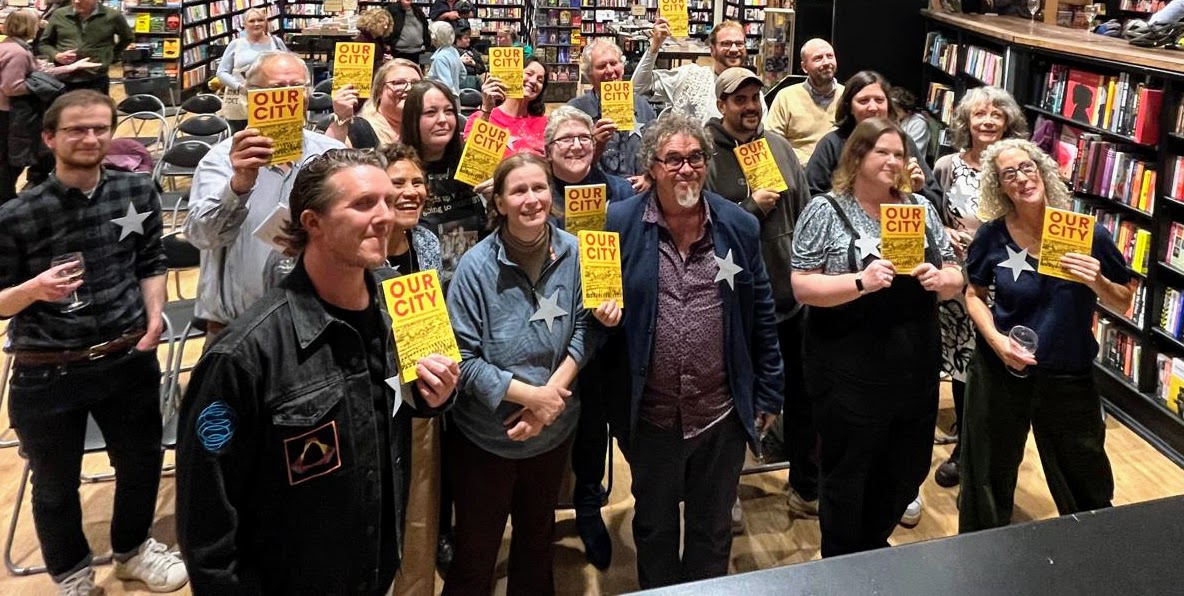

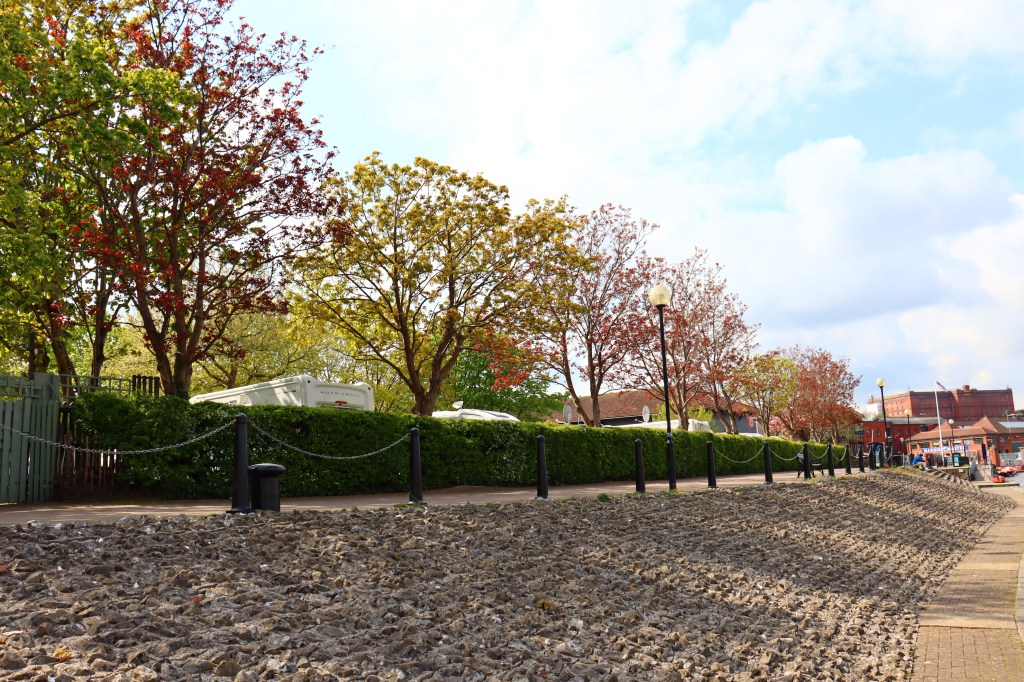
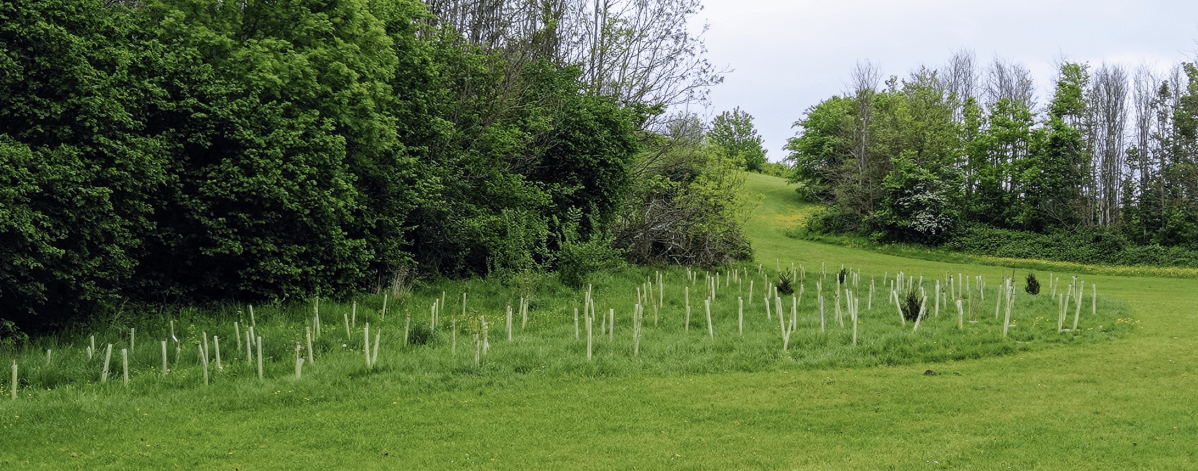
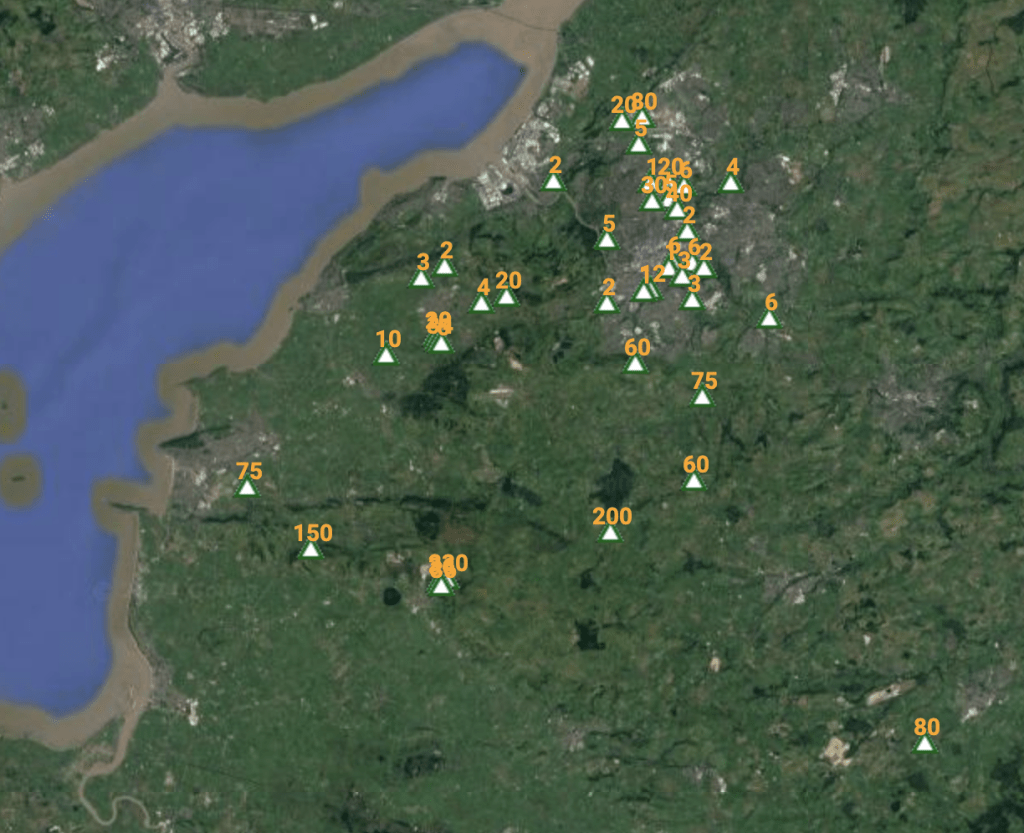

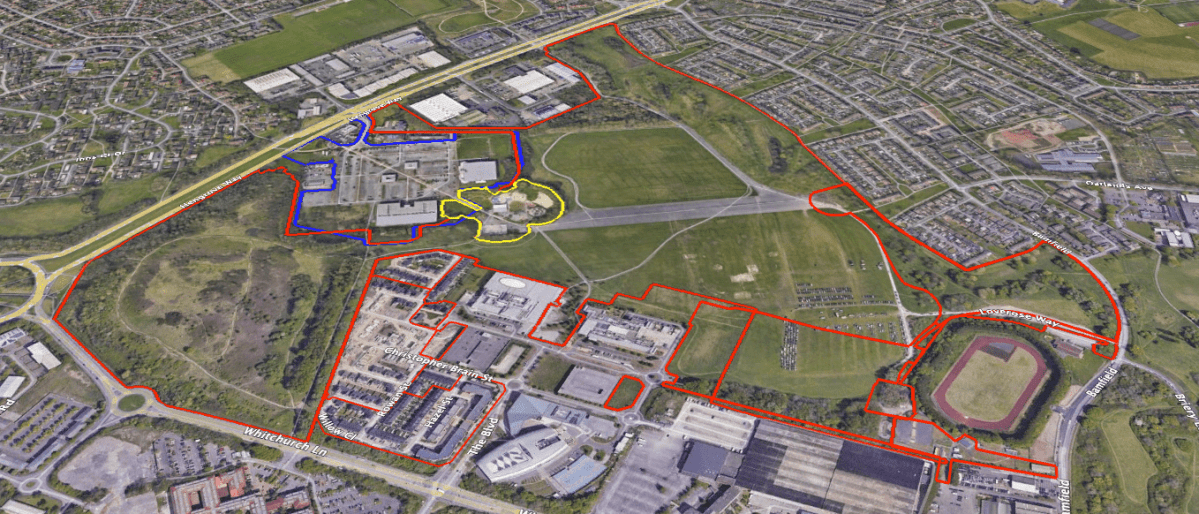
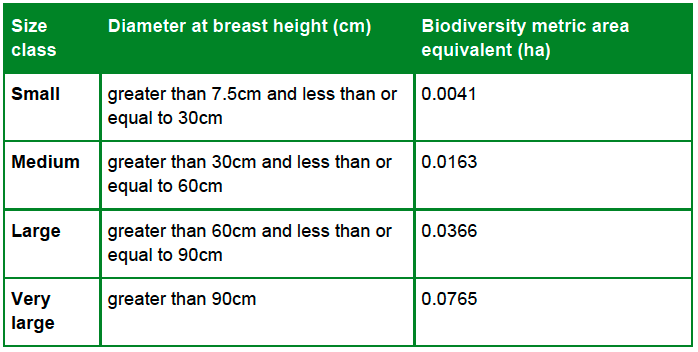
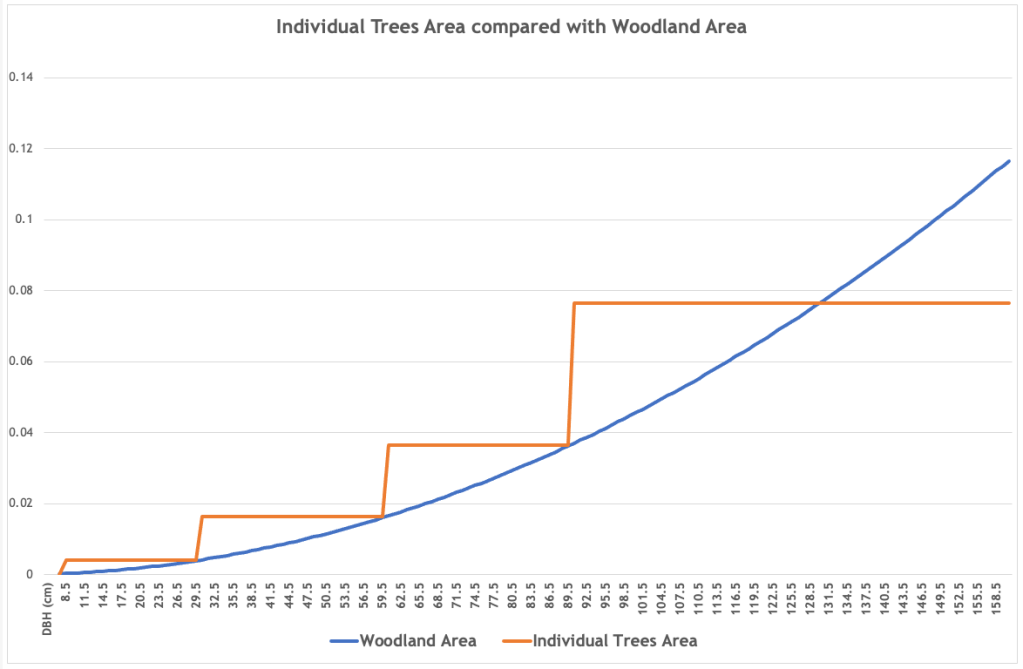
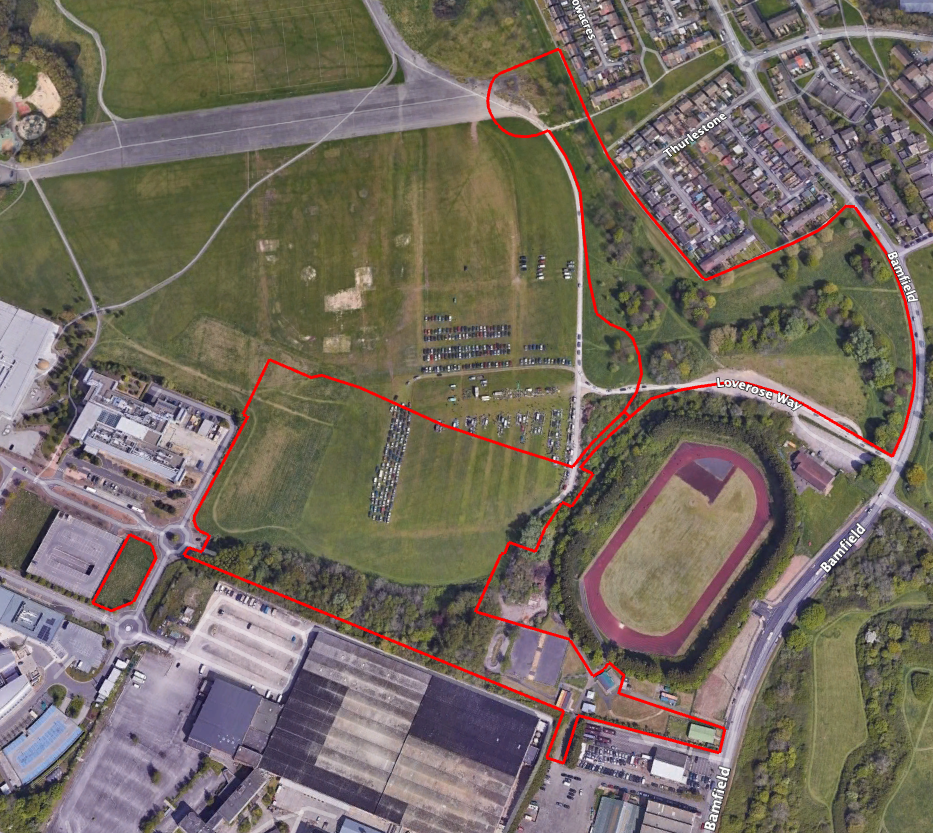
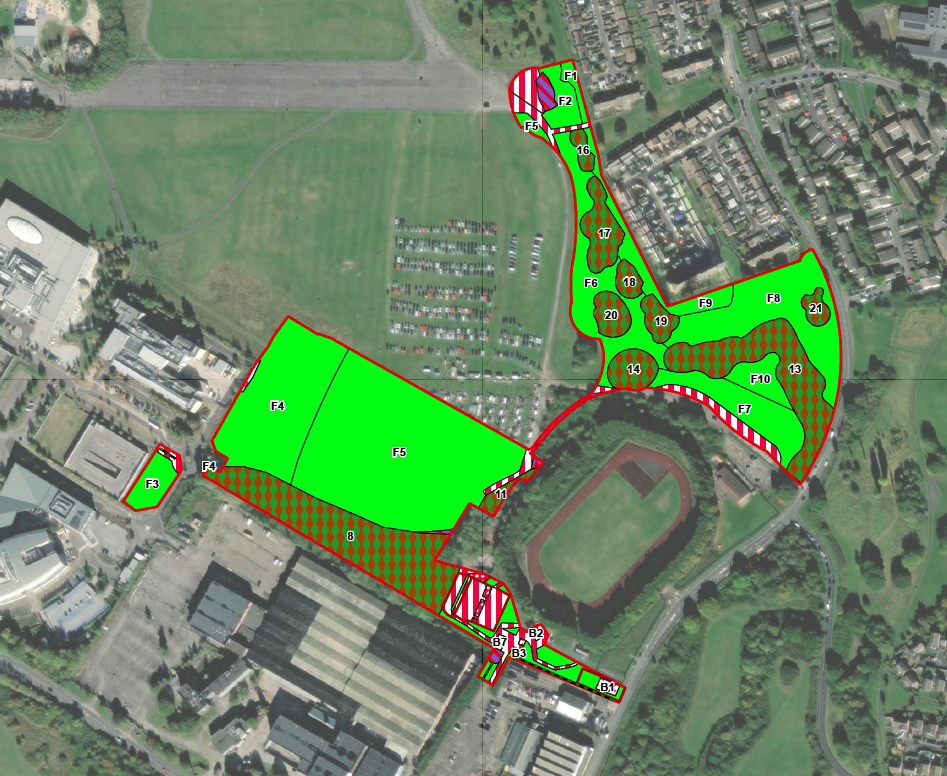
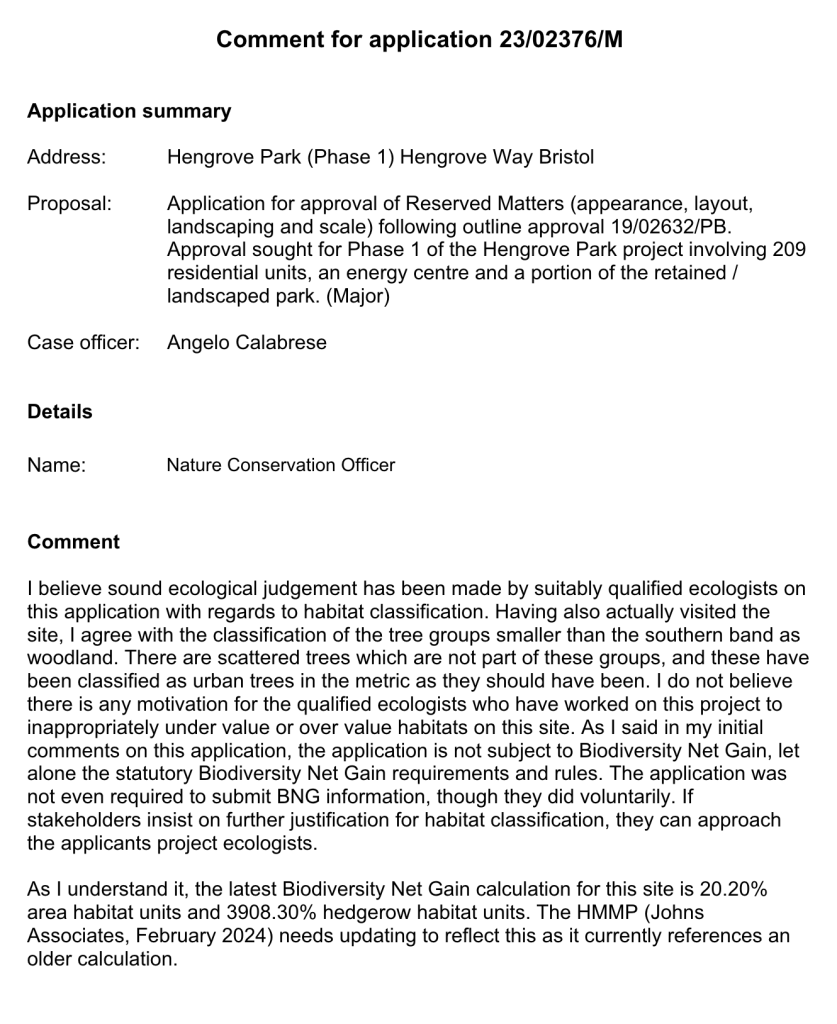
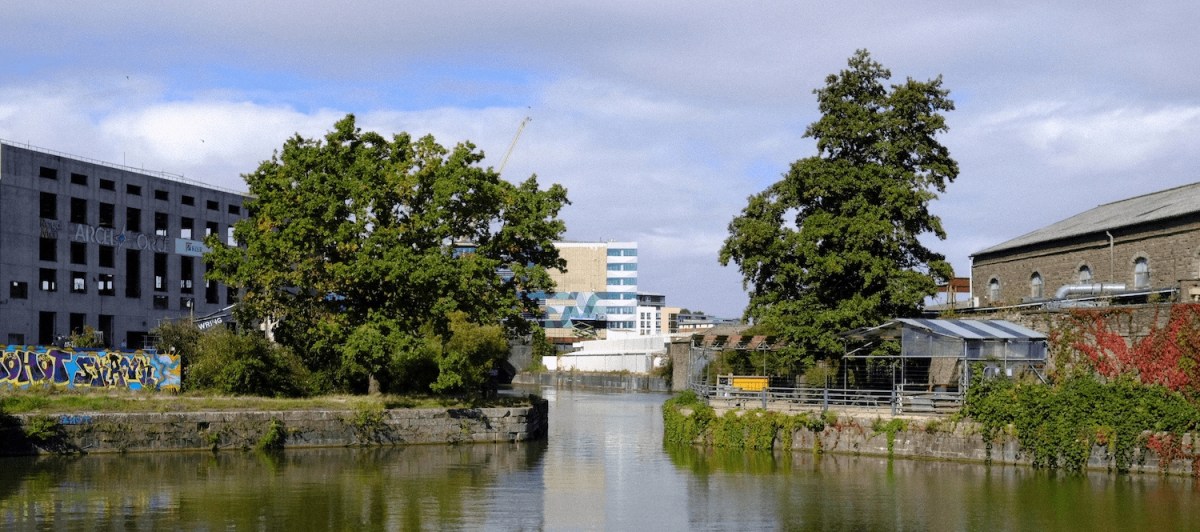
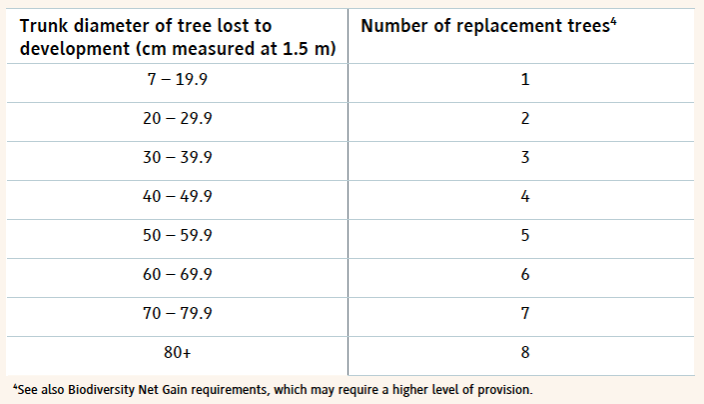

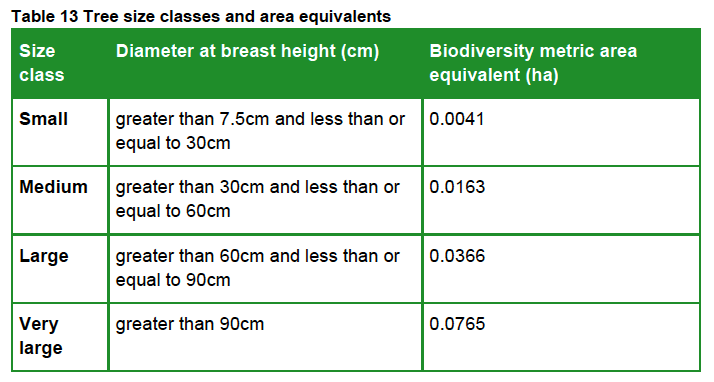
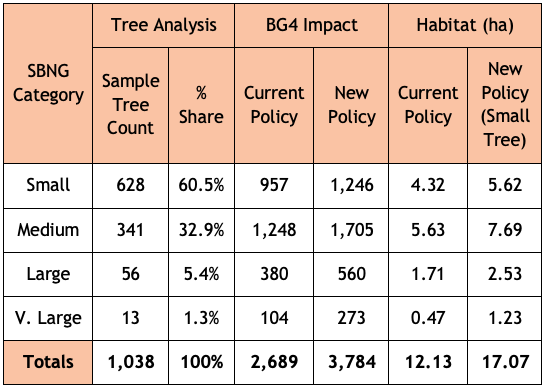
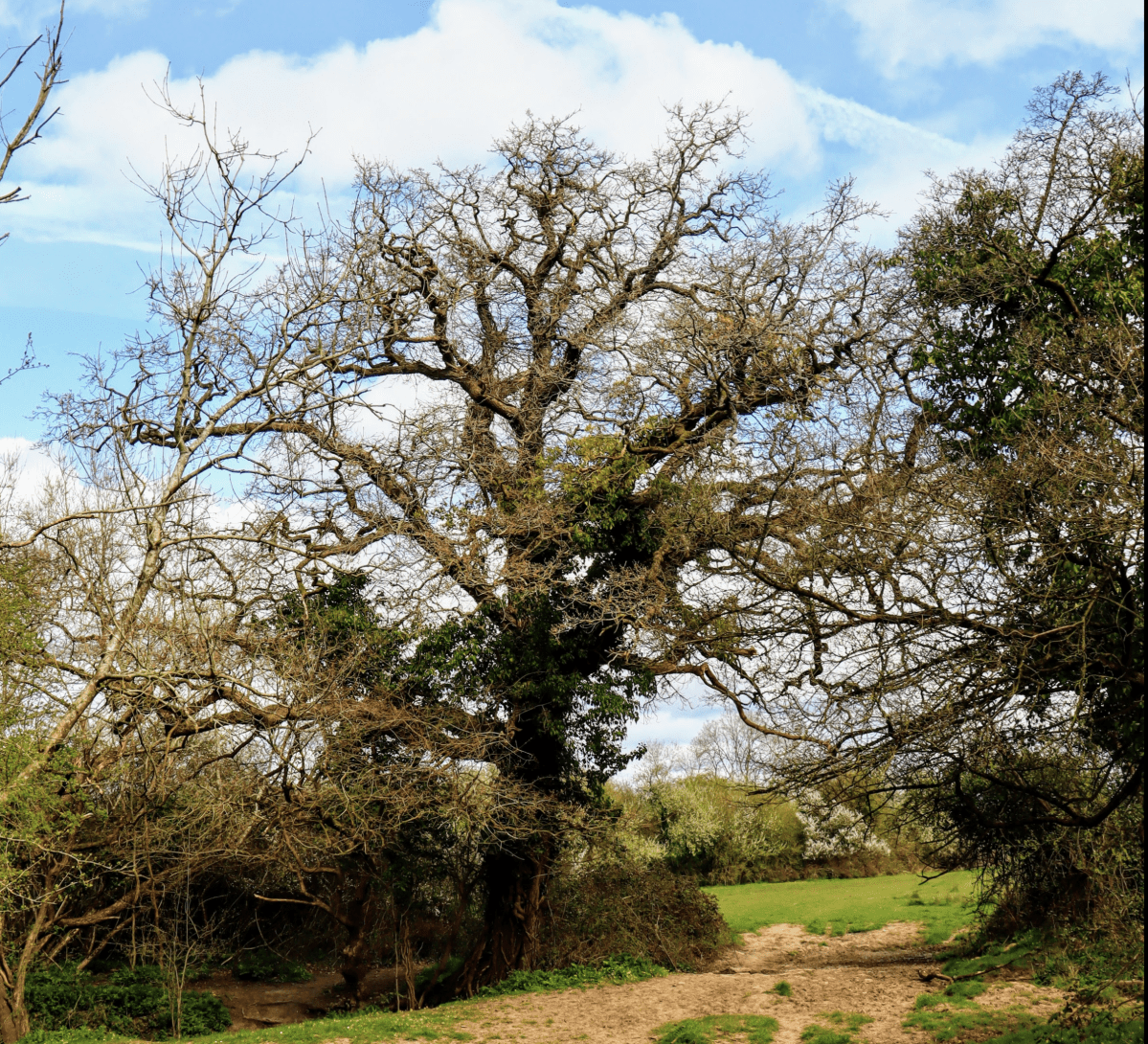
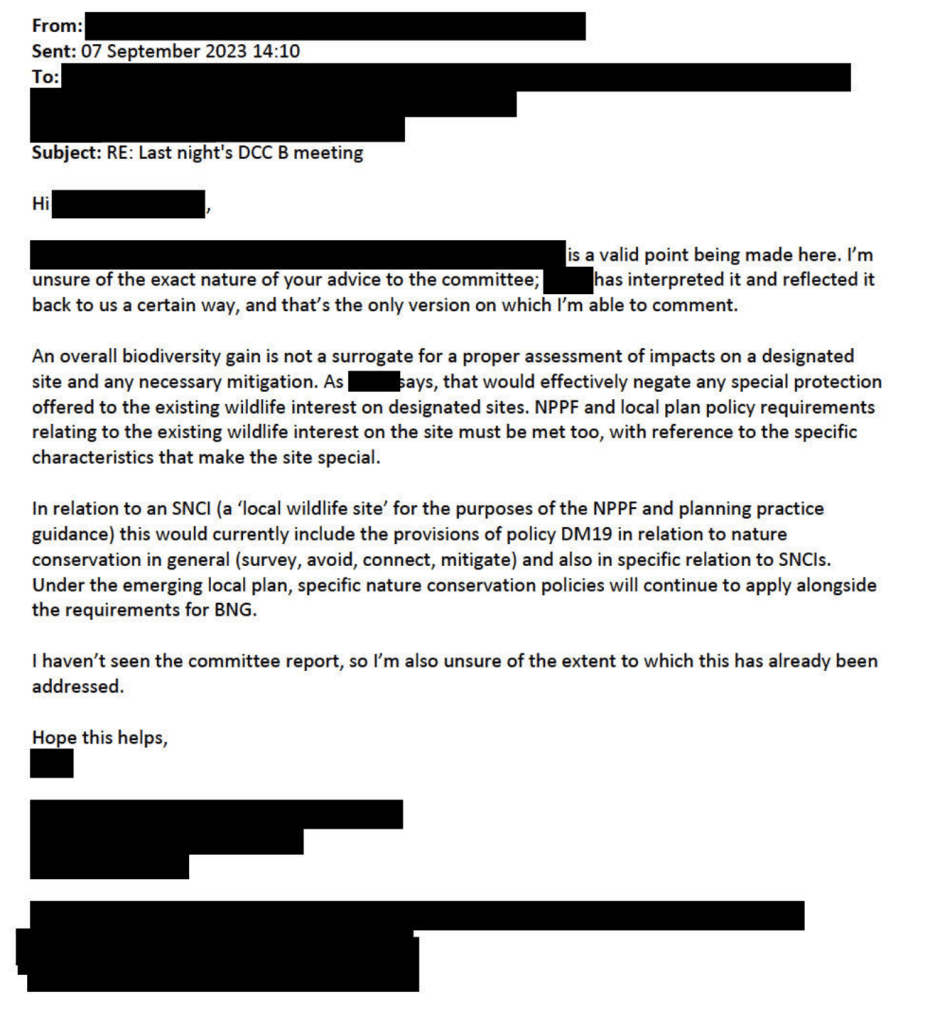
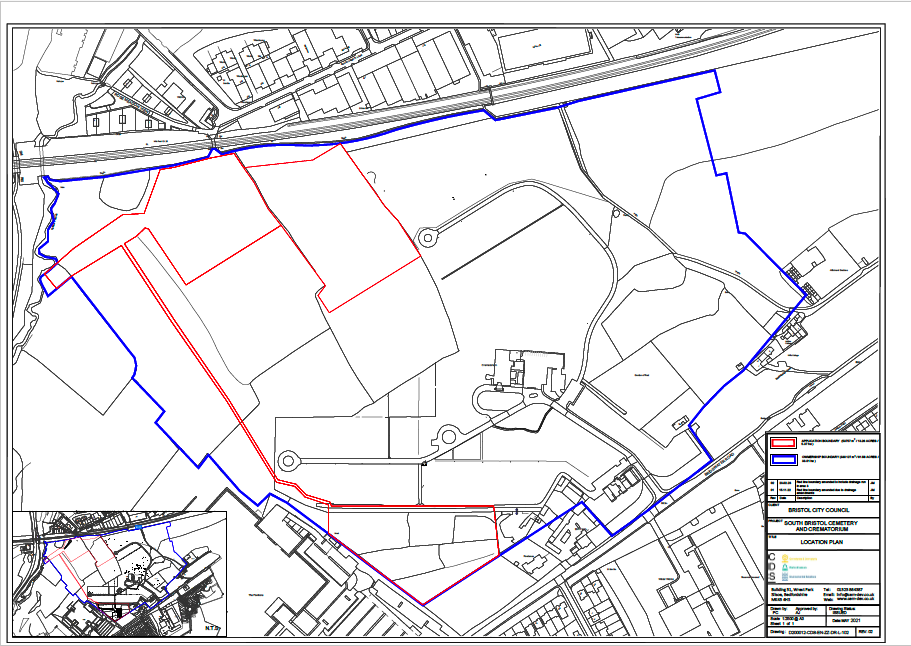
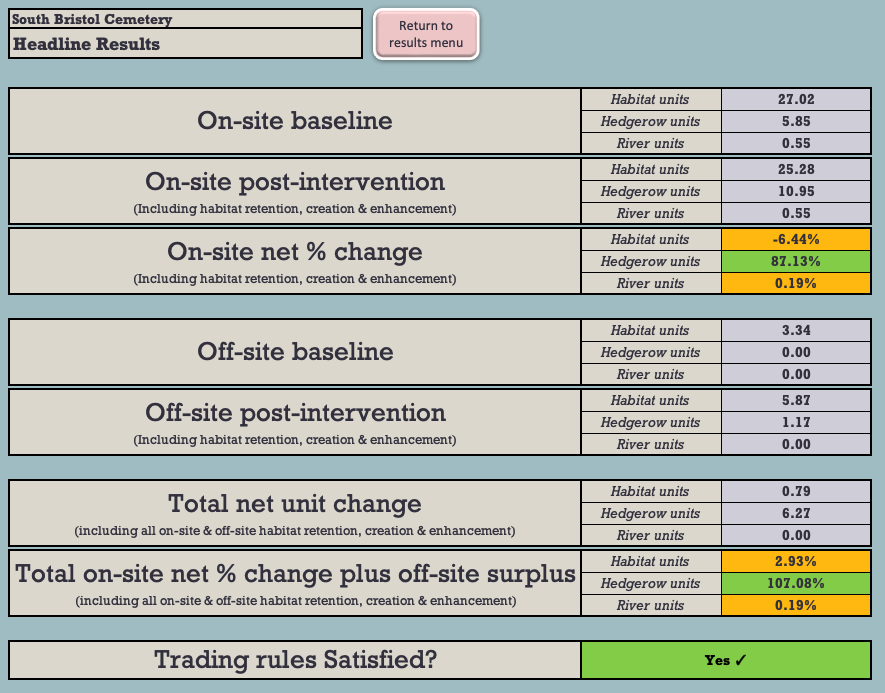
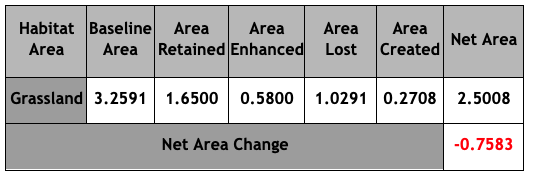
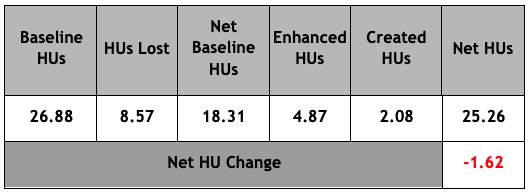
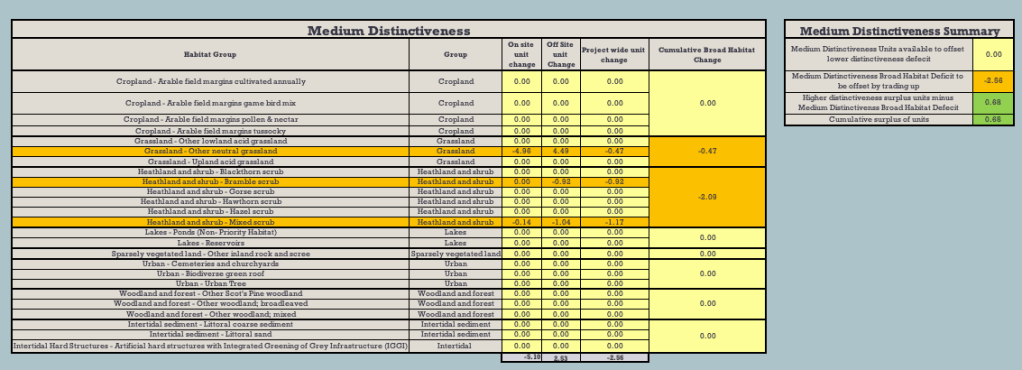
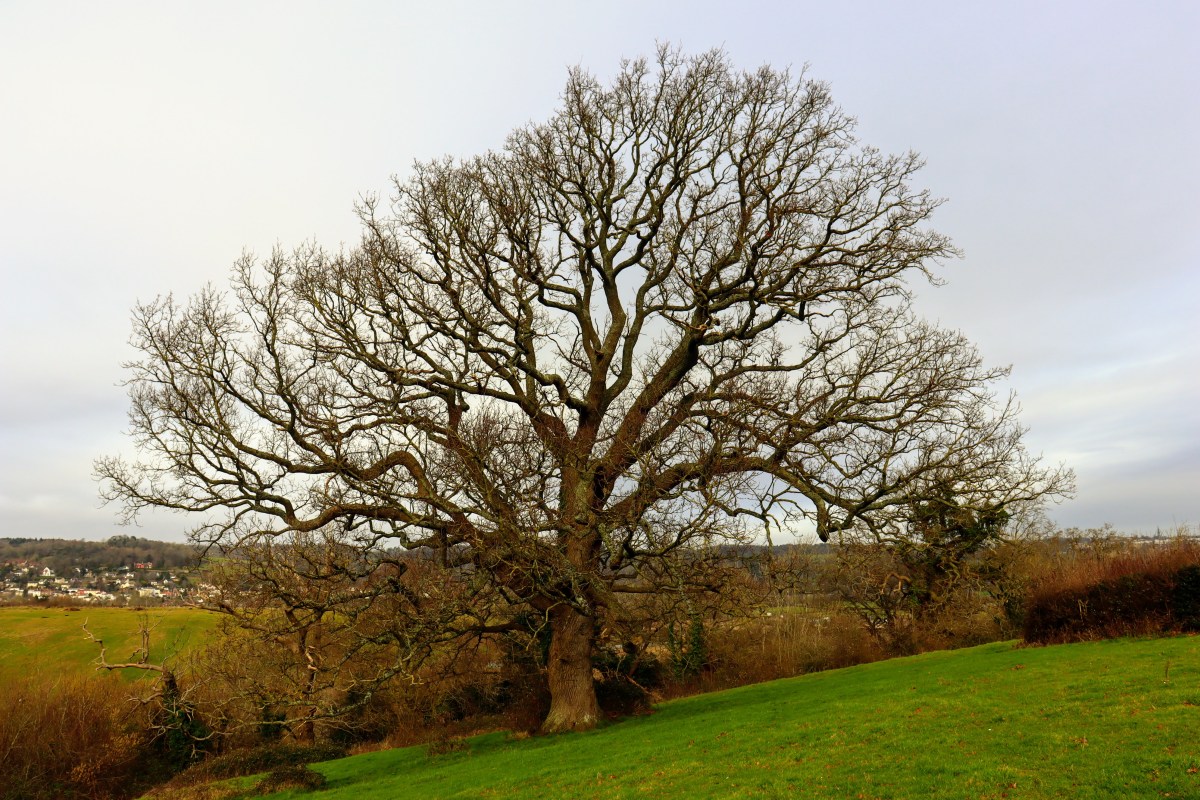
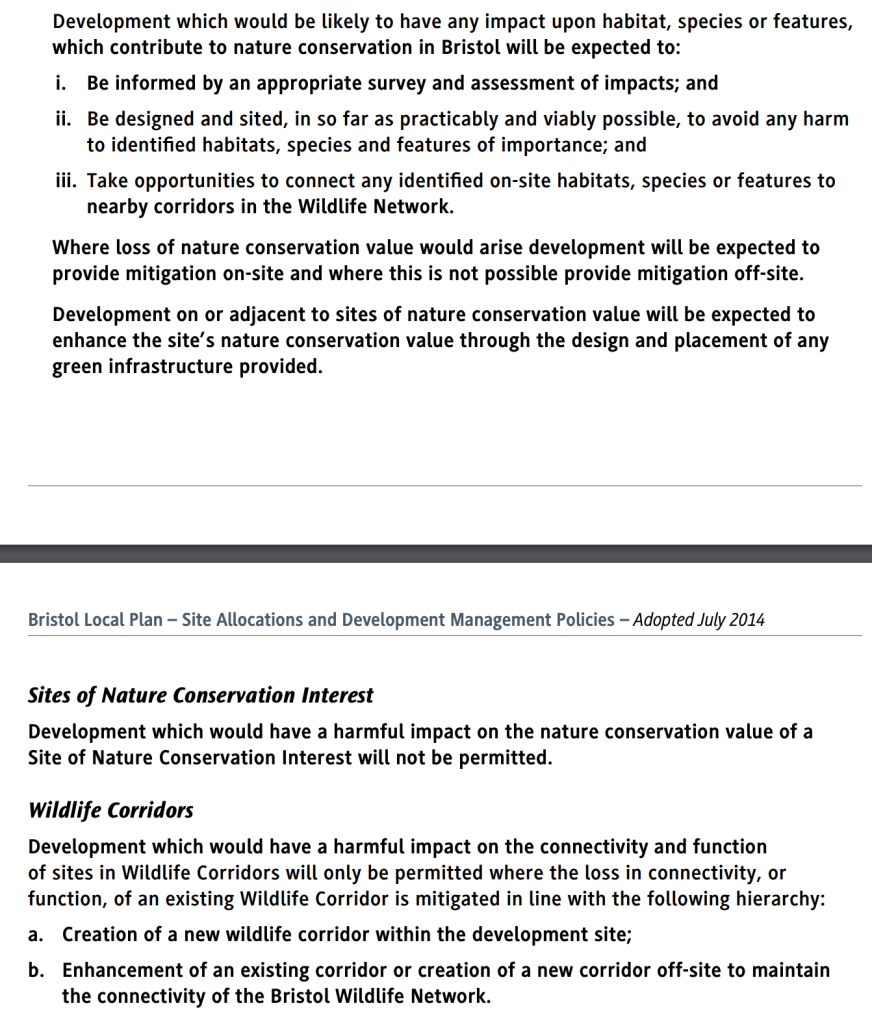
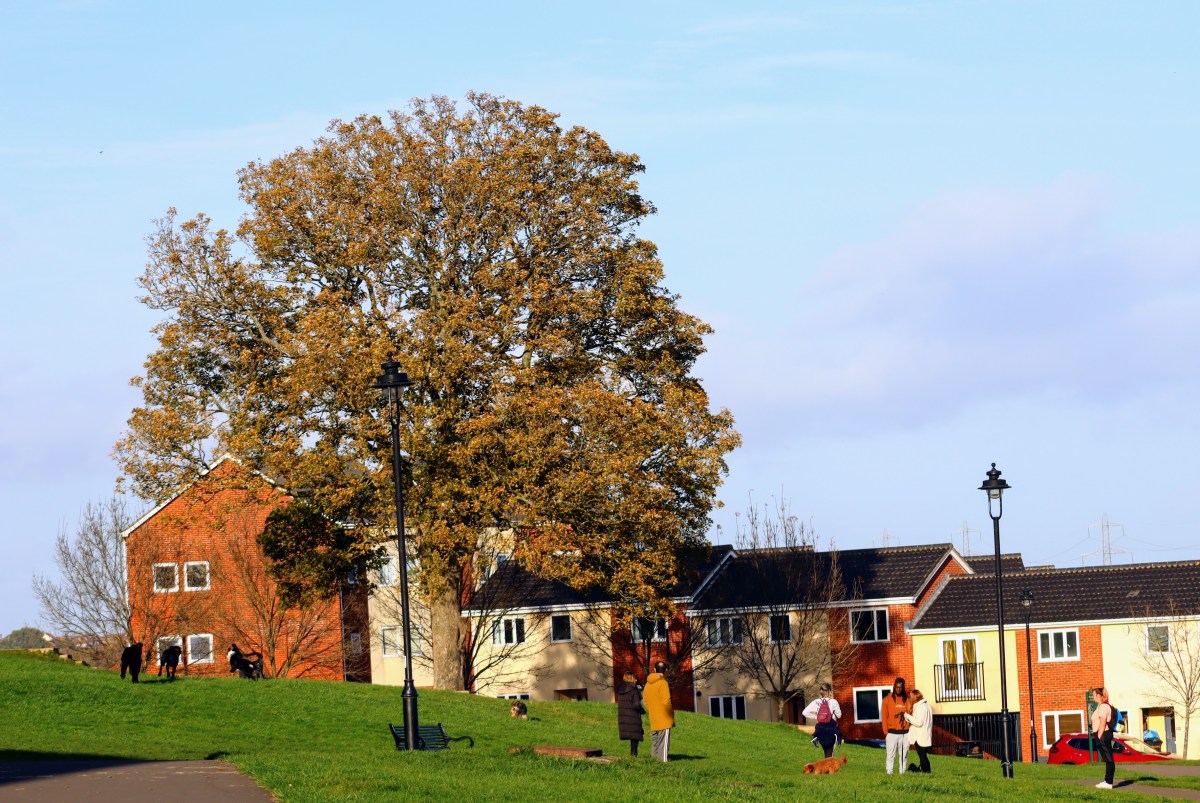
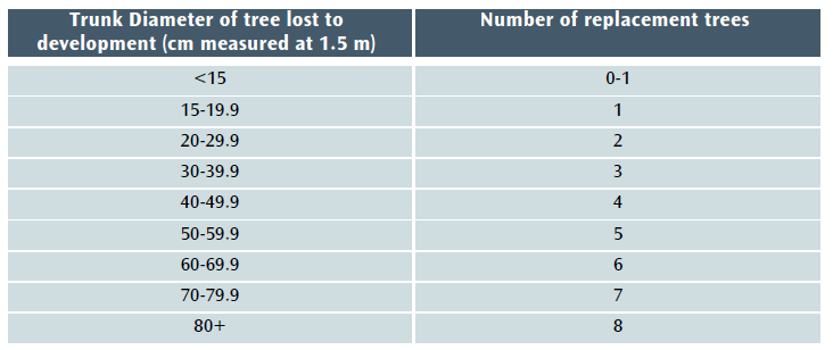
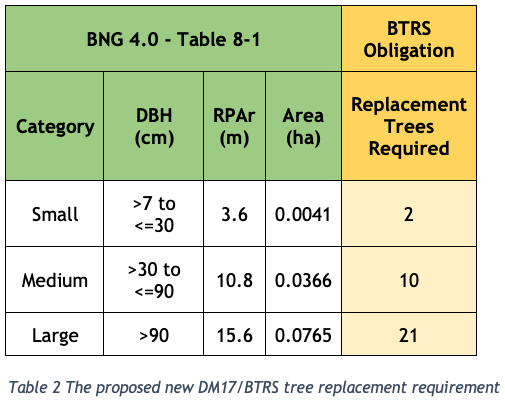
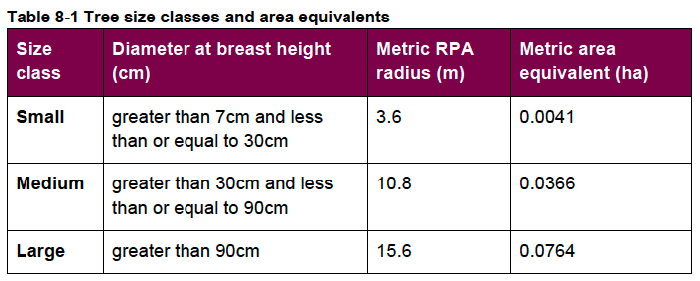
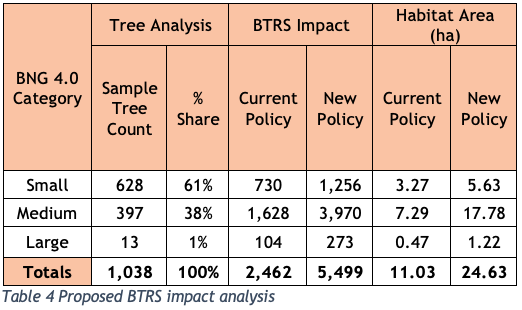
 bristoltreeforum.org