Bristol Tree Forum Annual Tree Giveaway 2025/26 – free saplings for planting

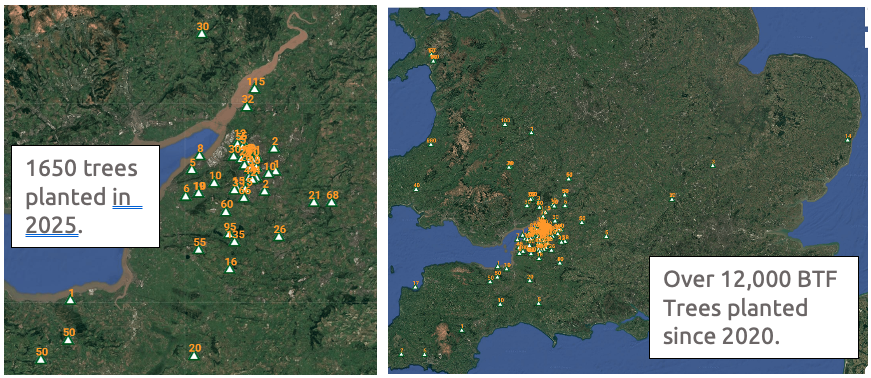
Once again, Bristol Tree Forum are giving away tree saplings. Since 2020, we have given away over 12,000 for tree lovers to plant around Bristol…. and beyond!

Perhaps one of the most significant things we can do to help protect our future environment, promote nature and make the world a better place for generations to come is to plant a tree. It may be that trees we plant today will continue to provide benefits for the environment, wildlife and people, for hundreds of years to come.
Planting trees is still the most effective and widespread means of removing CO2 from the atmosphere. For instance, a single mature oak tree is the equivalent of 18 tonnes of CO2 or 16 passenger return transatlantic flights. However, it is in our cities that trees provide the greatest benefits; cleaning our air, reducing flooding, reducing traffic noise, improving our physical and mental health, and, crucially, reducing temperatures during heat waves.

During heat waves, that are predicted to increase in both severity and frequency, the “heat island” effect can raise temperatures in cities by as much as an additional 12C over that found in surrounding rural areas. Trees can greatly reduce this effect, partly through shade but also by actively cooling the air by drawing up water from deep underground, which evaporates from the leaves… a process called evapotranspiration. According to the US Department of Agriculture, this cooling effect is the equivalent to 10 room sized air con units for each mature tree.

Thus, trees are a crucial, but often ignored, element in increasing our resilience to climate change.

The UK is one of the most nature depleted countries in the world, and have lost nearly 70% of our biodiversity since the industrial revolution. Trees are vital in supporting biodiversity. With national legislation now allowing around 60% of development sites to be exempt from the need to replace lost biodiversity, and this biodiversity permitted to be replaced anywhere in the country, our city trees are under greater threat than ever before. Furthermore, the proposed new Local Plan, which sets planning policy for the next decade or more, appears to reduce protection for Bristol’s green spaces, allowing these to be built upon.

Therefore, increasingly, it is up to us to protect nature, and what better way of doing this than to plant a tree?

 What is the Bristol Tree Forum doing to help?

It is said that the best time to plant a tree is 20 years ago, and the second best time is now.

Unfortunately, important mature trees are constantly being lost to development, damage and disease. Though these might easily be replaced by new trees, what is less easy is replacing the decades or even centuries that the tree has taken to grow, the carbon that the tree has sequestered, the ecosystems the tree supports and all of the other benefits trees provide. For these reasons, much of the work of the Bristol Tree Forum focuses on protecting our existing trees. These efforts are particularly crucial in the urban environment where our trees are under the greatest threat.

However, as well as advocating the retention of life-saving trees in our city, Bristol Tree Forum have been encouraging new tree planting by holding an annual tree giveaway since 2020; the ancient trees of the future are being planted today! Most of Bristol’s trees are sited in private land and gardens, so the trees we have are mostly thanks to the efforts of Bristol residents, and it is those residents we must look to if we want to increase our tree canopy.

Over the last five years, we have given away over 12,000 trees, with species as diverse as English and sessile oak, downy birch, silver birch, grey birch, alder, alder buckthorn, rowan, Scots pine, sweet chestnut, sycamore, spindle, wild cherry, apple, pear and plum.
This year’s Tree Giveaway has been made possible by the generous support of Maelor Forest Nurseries, based on the Welsh borders.

Thanks to Maelor, we are able to offer a variety of species of different mature stature and preferred habitats. This year we are giving away:

English oak (Quercus robur), hawthorn (Crataegus monogyna), beech (Fagus sylvatica), hornbeam (Carpinus betulus), grey alder (Alnus incana), and crab apple (Malus sylvestris).

We will get delivery of the saplings in mid to late February, when the trees can be collected from a site in Redland, Bristol.

The small saplings, or whips, come bare-rooted (i.e. out of the soil) and need to be planted as soon as possible after collection, although the viability of the trees over winter can be extended by storing the trees with the roots covered in damp soil.


To order your tree saplings:

Email: treegiveaway@bristoltreeforum.org with the subject “Tree Giveaway” and tell us:

  • Your name and email.
  • Your post code – for an approximate location of the planned planting sites, so that we can include these on our map.
  • How many of each species you would like – English oak, hawthorn, beech, hornbeam, grey alder, or crab apple.

We will email you to organise a collection date and time in February.

The 2025 Annual Tree Giveaway – free saplings available for planting

Many thanks for of of you who have asked for trees – over 1,200!

We have now closed the offer.

Planting a tree is, perhaps, one of the most significant things we can do to help protect our future environment, promote nature and make the world a better place for the generations to come. The trees we plant today will continue to provide benefits for the environment, wildlife and people, for hundreds of years.

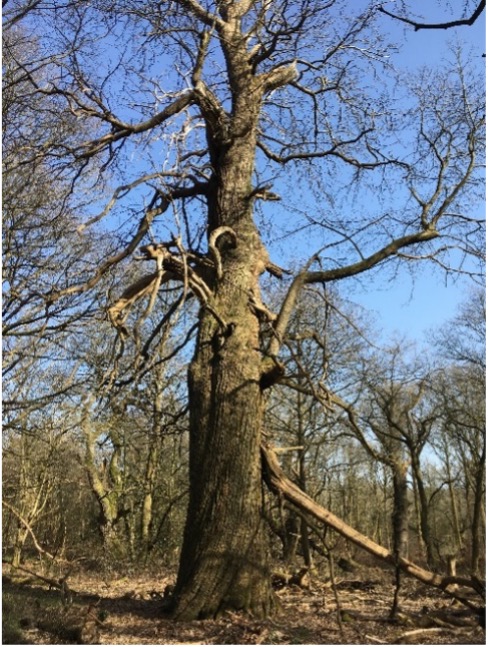
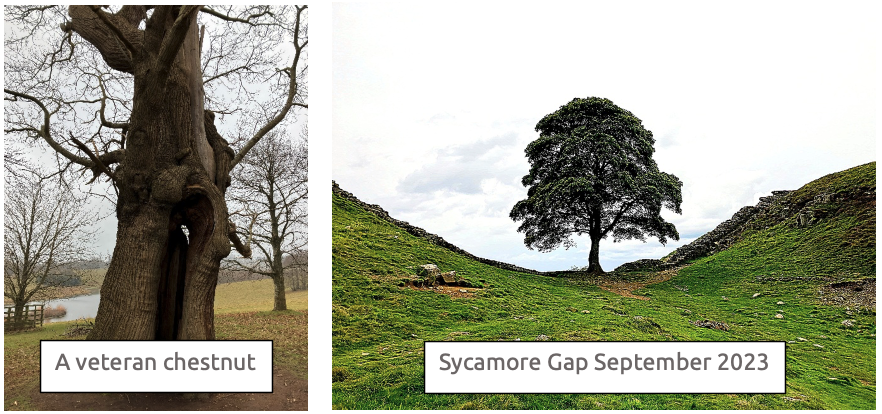
A veteran chestnut

We all know the value of trees in sequestering carbon, and they still represent the most effective and widespread means of removing CO2 from the atmosphere. For instance, a single mature oak tree is the equivalent of 18 tonnes of CO2 or 16 passenger return transatlantic flights. However, it is in our cities that trees provide the greatest benefits; cleaning our air, reducing flooding, improving our physical and mental health, and, crucially, reducing temperatures during heat waves.

Our cities suffer additional problems during heat waves, with all of the concrete and tarmac absorbing a lot of energy from the cooling sun and releasing it as heat. This “heat island” effect can raise temperatures by as much as an additional 12 degree centigrade. Trees can greatly reduce, or even eliminate, this effect, partly through shade but also actively cooling the air by drawing up water from deep underground, which evaporates from the leaves… a process called evapotranspiration. According to the US Department of Agriculture, this cooling effect is the equivalent to 10 room sized air con units for each mature tree. This cooling greatly enhances our resilience to the dangerous heat waves that are predicted to increase in severity and frequency.

A veteran Beech

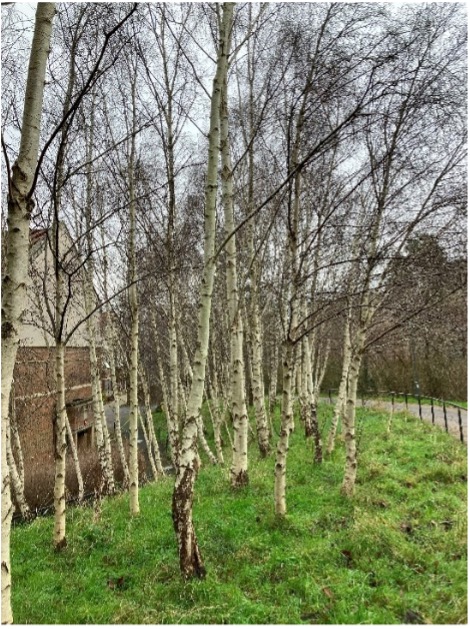
A stand of Silver birch

Also, Trees improve air quality by absorbing both gaseous (e.g., NO2) and particulate pollution. They reduce traffic noise and flooding and improve physical and mental wellbeing.

Thus, trees are a crucial, but often ignored, element in increasing our resilience to climate change.


What are the Bristol Tree Forum doing to help?

It is said that the best time to plant a tree is 20 years ago, and the second-best time is now.

Unfortunately, important mature trees are constantly being lost to development, damage and disease. Though these might easily be replaced by new trees, what is less easy is replacing the decades or even centuries that the tree has taken to grow, the carbon that the tree has sequestered, the ecosystems the tree supports and all of the other benefits trees provide. For these reasons, most of the work of the Bristol Tree Forum focuses on protecting our existing trees. These efforts are particularly crucial in the urban environment where our trees are under the greatest threat.

However, as well as advocating the retention of life-saving trees in our city, Bristol Tree Forum have been encouraging new tree planting by holding an annual tree giveaway since 2020; the ancient trees of the future are being planted today! Most of Bristol’s trees are sited in private land and gardens, so the trees we have are mostly thanks to the efforts of Bristol residents, and it is those residents we must look to if we want to increase our tree canopy.

Over the last four years, we have given away around 10,600 trees, with species as diverse as English and Sessile oak, Downy birch, Silver birch, Grey birch, Alder, Alder buckthorn, Rowan, Scots pine, Sweet chestnut, Sycamore, Spindle, Wild cherry, apple, pear and plum.

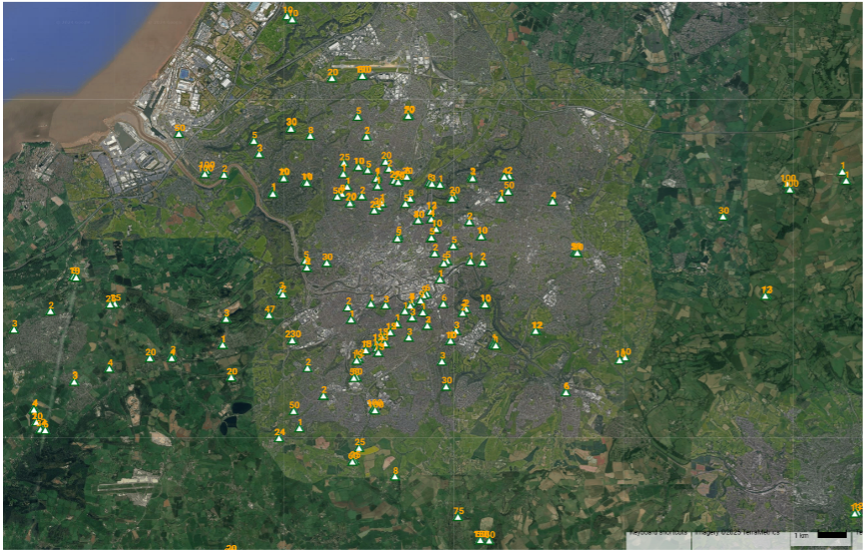
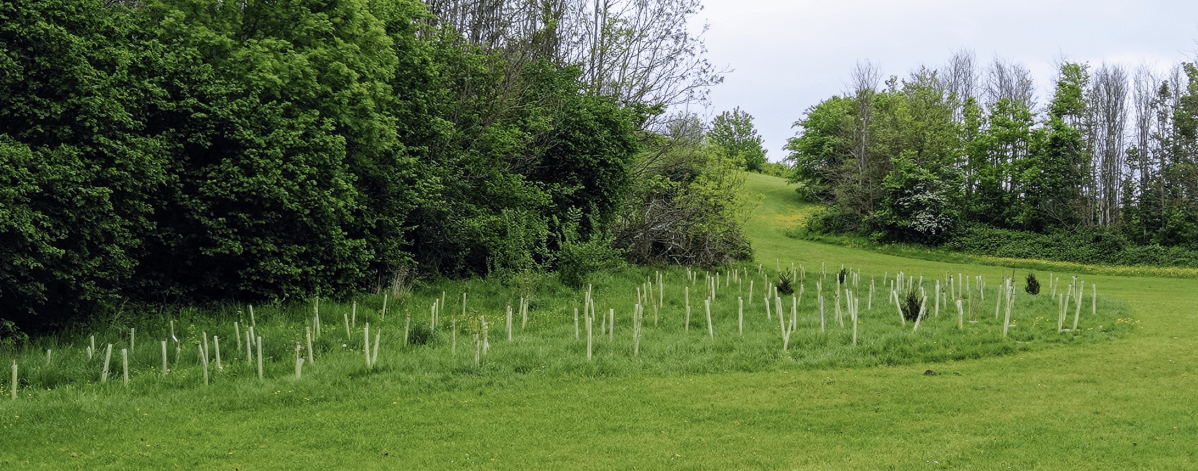
The trees planted to date.

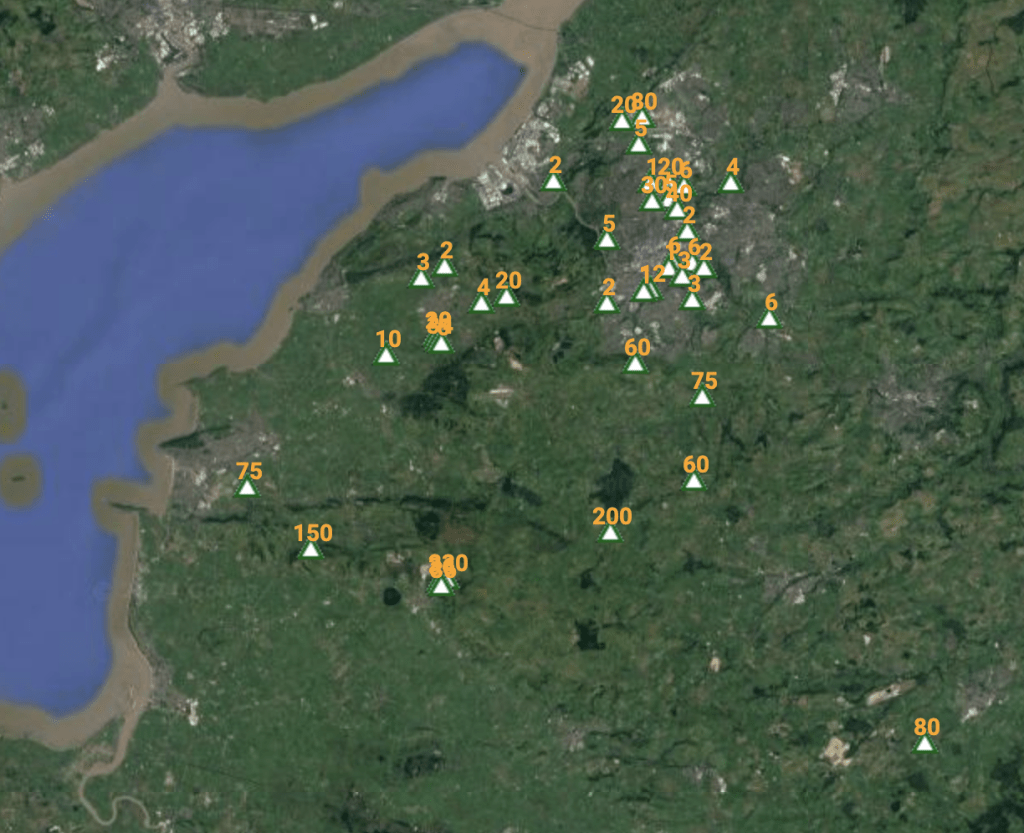
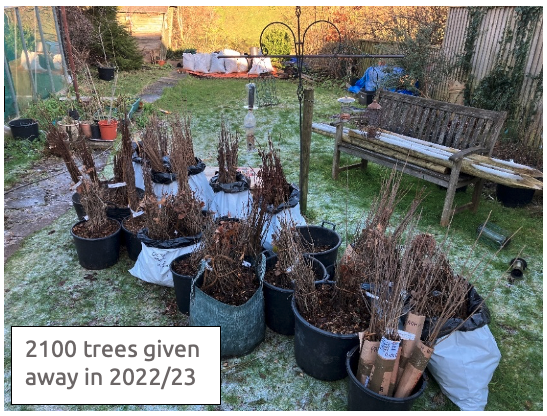
Trees given away in 2022 / 2023

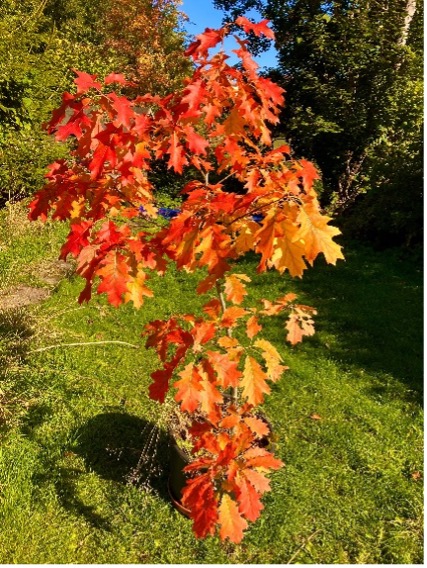
Red oak sapling

This year’s Tree Giveaway has been made possible by the generous support of Maelor Forest Nurseries, based on the Welsh borders, and Protect Earth whose aim is to plant, and help people plant, as many trees as possible in the UK to help mitigate the climate crisis.

Thanks to Maelor, we are able to offer a variety of species with a wide range of sizes and preferred habitats, including Pedunculate (English) oak, Red oak, Sweet chestnut, Silver birch, Sycamore, Hawthorn, Beech, Hornbeam, Wild cherry, Alder, Red alder, Field maple and Norway maple.


Trees can be ordered using the form below

We will get delivery of trees in February, when the trees can be collected from a site in Redland, Bristol. We will email you when they are ready.

The saplings come bare-rooted (i.e. out of the soil) and will need to be planted as soon as possible after collection, although the viability of the trees over winter can be extended by storing the trees with the roots covered in damp soil.

The form below is to find out who would like to have saplings for planting, which species, how many and where you plan to plant them.

Please provide your email so we can contact you organise collection of the trees. Your contact details will be kept private and will not be used for any other purpose than to process your request.


Our Giveaway offer has now been filled.

Thanks for all your support.

Our 2024 tree giveaway – free saplings for planting

Last year we were able to provide – free of charge – over 2,000 tree saplings for tree lovers to plant in and around Bristol…. and beyond!

This year we plan to give away pedunculate oak (Quercus Robur) and downy birch (Betula Pubescens), each native and supporting lots of wildlife.

Would you like some to plant out in 2024? We have 2,000 to give away.

First come, first served, tho!

Stop Press – We have now distributed all available trees, so this offer is now closed. Thanks for all your support.

Watch out for our offer next year!

Few of us will forget that 2023 was the hottest year ever recorded and far exceeded previous temperature records, both locally and nationally, coming close to the average world temperature of 1.5C that we have all been challenged to avoid!

The Met Office reports that in early September 2023, the UK experienced a significant heatwave with daily maximum temperatures exceeding 30°C somewhere in the UK for seven consecutive days from 4th to 10th and reaching 31 to 32°C across south-east England. While this heatwave would not have been particularly unusual had it occurred during the high summer months (July or August), this was, for September, the longest run of days exceeding 30°C on record.

We all know the value of trees in sequestering carbon, and they still represent the most effective and widespread means of removing CO2 from the atmosphere. For instance, a single mature oak tree is the equivalent of 18 tonnes of CO2 or 16 passenger return transatlantic flights. However, it is in our cities that trees provide the greatest benefits; cleaning our air, reducing flooding, improving our physical and mental health, and, crucially, reducing temperatures during heat waves.

Our cities suffer additional problems during heat waves, with all of the concrete and tarmac absorbing a lot of energy from the sun and releasing it as heat. This “heat island” effect can raise temperatures by as much as an additional 12C. Trees can reduce, or even eliminate, this effect, partly through shade but also actively cooling the air by drawing up water from deep underground, which evaporates from the leaves… a process called evapotranspiration. According to the US Department of Agriculture, this cooling effect is the equivalent to 10 room sized air con units. This cooling greatly enhances our resilience to the dangerous heat waves that are predicted to increase in severity and frequency.

Also, Trees improve air quality by absorbing both gaseous (e.g., NO2) and particulate pollution. They reduce traffic noise and flooding and improve physical and mental wellbeing.

Thus, trees are a crucial, but often ignored, element in increasing our resilience to climate change. It is therefore disappointing that neither the council’s Climate Emergency Action Plan or the ‘Adaptation to a changing climate’ section of the recent draft Bristol Local Plan review make any mention of trees.

We are one of the most biodiversity depleted countries in the world, and have lost nearly 70% of our biodiversity since the industrial revolution. Trees are vital in supporting biodiversity, with oak trees capable of supporting over 2,300 different species, including birds, mammals, invertebrates, mosses, lichen and fungi.

What is Bristol Tree Forum doing to help?

It is said that the best time to plant a tree is 20 years ago, and the second best time is now.

As well as advocating the retention of life-saving trees in our city, Bristol Tree Forum have been encouraging tree planting by holding an annual tree giveaway since 2020. In that year we purchased 1,600 oak saplings from Maelor Forest Nurseries which we distributed free of charge. In 2021/2022 we initially gave away 600 white birch and 400 alder, as well as 900 oak saplings, the latter thanks to a partnership with the Arkbound Oakupy project. We were then contacted by the Forest of Avon Trust who had a surplus of 4,500 tree saplings, over 4,000 of which we were able to distribute through our network of tree planters. Overall, that year we gave away around 6,000 trees including 1,600 oak, 740 silver birch, 860 white birch, 55 grey birch, 600 alder, 100 alder buckthorn, 950 rowan, 45 Scots pine, 60 sweet chestnut, 300 sycamore, 50 spindle and 630 wild cherry. Last year, we manage to distribute 2,102 trees.

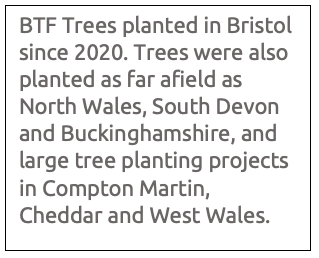
Trees planted in Bristol. Trees were also planted as far afield as West and North Wales, South Devon and Wiltshire.
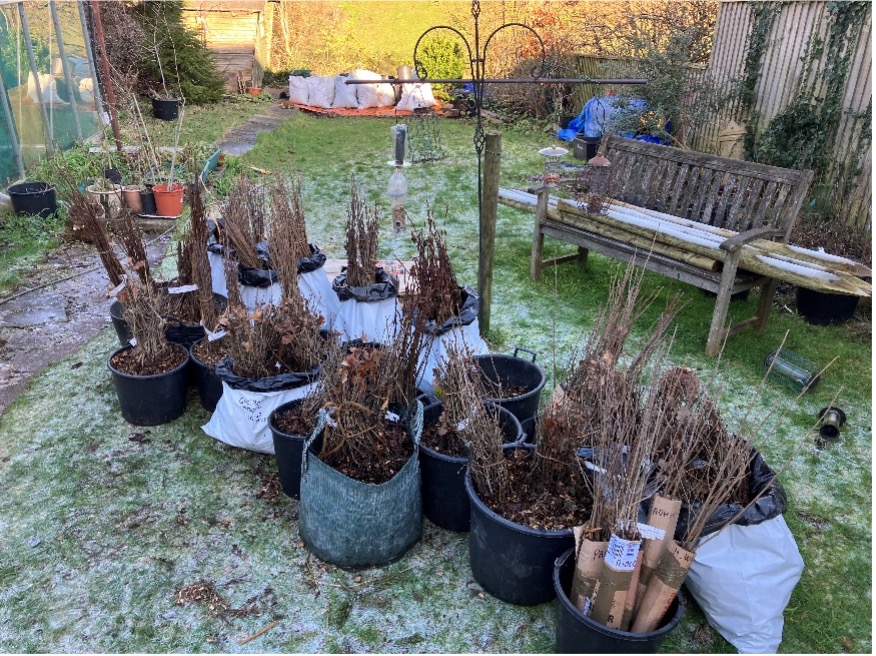
Just some of the trees given away in 2021/22

Flushed with the success of last year’s project, we have ordered another two thousand saplings – pedunculate oak (Quercus Robur) and downy birch (Betula Pubescens) – which we are ready to give away. Each species is a native tree of great benefit to wildlife and is tolerant of urban and rural conditions.

Trees can be ordered using the form below

We will get delivery in late February, when the trees can be collected from a site in Redland, Bristol.

The saplings come bare-rooted (i.e. out of the soil) and need to be planted as soon as possible after collection, although the viability of the trees over winter can be extended by storing the trees with the roots covered in damp soil. The form below is to find out who would like to have saplings for planting and how many, and for you to provide basic contact details (email and/or phone number) for us to organise collection of the trees. Contact details will not be used for any other purpose.

Bristol Tree Forum tree planting campaign – free Oak saplings available for planting

STOP PRESS

We delighted to report that nearly 1,600 tree orders have been received. We have bought another 600 trees to cover the extra orders and expect delivery soon.

Many thanks to all of you who have placed an order. We shall soon let you know when and where you can collect your trees.

Due to COVID-19 restrictions and delays in government funding, there has been postponements and cancellations of many major tree planting projects. As a result, large numbers of tree saplings are due for destruction in tree nurseries. This includes 750,000 two year old English oak tree saplings at the Maelor Forest Nursery in Wrexham.

Rather than see these trees destroyed, Bristol Tree Forum has purchased 1,000 of the oak saplings for free distribution to anyone able to plant them, whether this is one tree or a hundred.

We will get delivery early in November. The trees can be collected from a site in Redland, Bristol and a few collection dates will be organised hopefully to suit all. They should be planted as soon as possible afterwards.

The saplings are between 10cm and 90cm high. They come bare-rooted (i.e. out of the soil) and need to be planted as soon as possible after collection, although the viability of the trees over winter can be extended a little by storing the trees with the roots covered in damp soil.

This form is to find out who would like to have saplings for planting and how many, and for you to provide basic contact details (email and/or phone number) for us to organise collection of the trees. Contact details will not be used for any other purpose.

Why plant a tree?

A single mature oak tree is the equivalent of 18 tonnes of CO2 or 16 passenger return transatlantic flights.

Despite advances in carbon capture technology, the most efficient and cost-effective way to sequester carbon from the atmosphere is to plant trees.

Recent scientific reports calculate that planting trees wherever we can, without occupying land used for other purposes, would absorb up to two thirds of the carbon emitted in the last century.

Oak trees can support over 2300 different species, including birds, mammals, invertebrates, mosses, lichen and fungi.

Trees improve air quality by absorbing both gaseous (e.g. NO2) and particulate pollution.

Trees reduce traffic noise and flooding, reduce excessive heat in cities and improve physical and mental wellbeing.

A letter to our Councillors

Dear Bristol City Councillors,

We recognise the fundamental importance of the natural environment, the value that nature has in an urban setting and the global threat posed by the ongoing climate catastrophe. We also recognise that trees are a crucial component in all these concerns.

We are supportive of Bristol City Council’s declaration of a Climate Emergency and an Ecological Emergency and the goals detailed in the One City Climate Strategy, including the commitment to carbon neutrality by 2030 and doubling the abundance of wildlife by 2050. We are also supportive of their commitment to doubling the tree canopy by 2046.

However, we have a real concern that the commendable words are not being matched by effective actions.

A principle aim of the BTF is to promote the planting and preservation of trees in Bristol for the well-being of its citizens, the sustainability of urban habitation, the enhancement of nature in the cityscape and as our contribution to combating climate change (see A Manifesto for protecting Bristol’s existing Urban Forest).

A recurrent concern we have is the continued loss of trees as a result of environmentally insensitive developments that are not sympathetic to the City’s declared commitments outlined above. On the other hand, the BTF supports developments that favour a sustainable environment over high density occupancy, and those that prioritise retention of existing trees.

Bristol’s policy on replacing trees lost to development – adhering to the Bristol Tree Replacement Standard (BTRS) – is widely well regarded. As such, decision makers believe that tree loss is mitigated by subsequent tree replacement. However, recent studies undertaken by the BTF have shown that this is not the case over the timescales committed to by Bristol City Council and the Green Party.

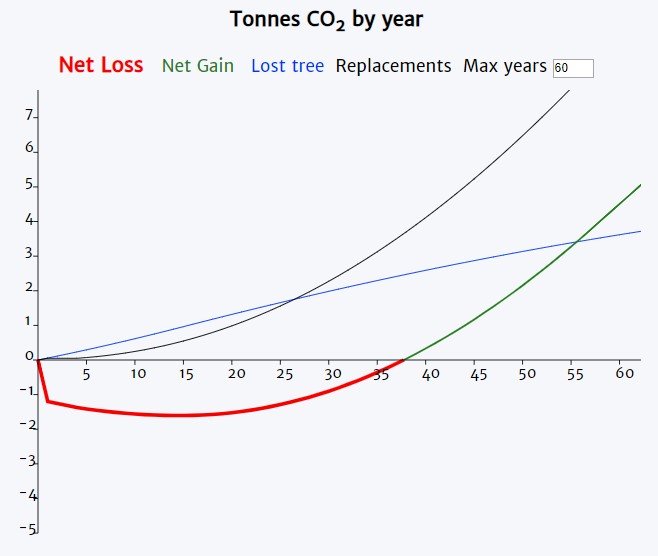
Typically, tree planting undertaken under the BTRS takes between 30 and 50 years to recover the biomass (and therefore the CO2e) lost by felling, well beyond the 10-year commitment on carbon neutrality, and even beyond dates set for doubling the tree canopy or doubling wildlife abundance.

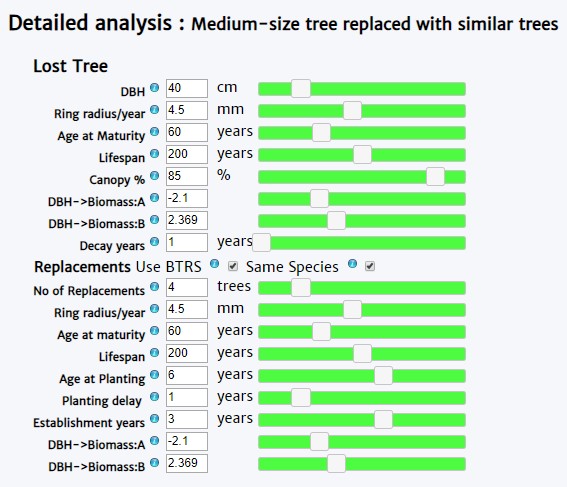
The BTF study has been developed into a versatile online tool for calculating the extent and timescale of the carbon deficit, with a wide range of inputs. This can be accessed via the link Tree Carbon Calculator, and we encourage you to try this yourself. See also the BTF blog Tree replacement and carbon neutrality.

In the example shown here, a mature tree felled in 2020 is replaced by four trees (as per BTRS) of the same species. The carbon released (2 tonnes CO2e) is not recovered until 2064, a full 34 years beyond the date Bristol aims to be carbon neutral.

This model can also be used to determine how many replacement trees are needed to recover lost carbon within a particular timescale. In the example shown, to be carbon neutral by 2030, a reasonable expectation as this is the declared aim of BCC, the felled tree would need to be replaced by 37 plantings of the same species. Scaled up to, for instance, 500 trees, new plantings would need to number 18,500 to mitigate the lost carbon.

This new information represents a fundamental change in the evidence base for tree replacements, and emphasises the need to retain existing mature trees, and not to consider replacement by new plantings as adequate mitigation.

We request that you consider this new information with urgency and make a commitment to oppose developments where mature trees are removed and tree replacements do not deliver carbon neutrality by 2030.

Congratulations BCC on its successful Defra Urban Tree Challenge Fund bid!

Dear Bristol City Council,

We want to put on record our congratulations for the successful bid that your Parks Strategy team led for Bristol City Council to the DEFRA Urban Tree Challenge Fund (UTCF).  It has been some time in the resolution, but it is great that we now know for sure that it has succeeded.

We are delighted that there will now be more funds available to plant and maintain trees in the streets and green spaces of local communities that have perhaps been been overlooked in the past.

Thanks to you and to your excellent tree planting team, the Council has built an enviable reputation for planting urban trees across the city. Long may it continue!

We look forward to helping you with the planning and consultation that will be needed for adding these UTCF trees to next winter’s tree planting season.

This will make an important contribution to doubling Bristol’s tree canopy cover over the next 25 years.

We also applaud your decision to involve us in the collaborative partnership preparing the initial bid. As the only group specialising in protecting and caring for Bristol’s urban forest, we are very pleased to have been able to:

  1. Survey a representative sample of some of the 1,471 sites you have identified across the city, thereby relieving overstretched BCC officers who simply didn’t have the time to undertake this work.
  2. Adapt our Trees of Bristol website to record the planned planting locations for both street trees and the woodland sites.
  3. Develop our Tree Care site which communities will be able to use for post-planting tree maintenance and care – an important part of match funding the UTCF grant.
  4. We have also developed a comprehensive network of ward-based tree champions who are ready to be involved both in engaging with their local communities in the planned consultation and in helping with the ongoing care of newly planted trees.

As you can imagine, it was a lot of work, but we believe that it provided the sort of detail that helped clinch the bid.

Now that the funding has been secured, we look forward to meeting with you and the other partners to help with the next important planning phase of engaging with local communities and getting trees actually planted come next winter.

When can we meet to help you take this further?

Bristol Tree Forum AGM 2019

Bristol Tree Forum is holding its annual general meeting on Monday, 4th November 6 pm at City Hall, College Green.

The theme will be Planting Trees for Bristol – a review of our past year’s successes, our plans for this winter’s planting season plus our planting plans for the longer-term.

A year on from the One City Plan commitment to double Bristol’s Tree Canopy, we’ve been working with partners to develop an action plan towards delivering this – but we need the support of the whole city.
Hear more about Replant Bristol: a new approach to bring together the great work already happening across the city and an invitation to join us.

Deputy Mayor, Councillor Asher Craig will tell us about the City’s ambitious plans for doubling tree canopy cover over the next 25 years.

Naseem Talukdar who is leading the 1,000 Trees for Bristol Initiative will talk about their plans to plant 1,000 trees at Southmead Hospital and at other Bristol sites.

Come along to hear more and maybe pledge your support.

And spread the word!