The Local Nature Recovery Strategy fails to deliver for Bristol

WEMCA’s Local Nature Recovery Strategy (LNRS) will fail to provide Bristol with the benefits promised for nature. While the new Biodiversity Net Gain (BNG) rules require most development in the city to increase biodiversity by at least 10%, unfortunately the LNRS will not apply to most potential development sites.

The West of England Mayoral Combined Authority (WECA as was) Local Nature Recovery Strategy was published to much fanfare last November. Defra’s blog, Kickstarting local nature recovery: a new strategy for the West of England, hailed it as the first in the country.

The LNRS is a locally led and evidence-based strategy which aims to target action and nature investment where it’s most needed. We’re told that the strategy will also focus on biodiversity net gain by increasing the strategic significance of specific habitats. However, it is hard to imagine how the LNRS will help to enhance biodiversity net gain in most, if not all, potential development sites in the city.

We might have been better off, at least as far as the application of biodiversity net gain to new development is concerned, by asking the LPA to specify alternative documents (such as those listed at the end of this article) for assigning strategic significance instead.


The issue

When calculating the impact of a proposed development on biodiversity, one factor taken into account is the strategic significance of any habitat found on a focus area for nature recovery site (coloured purple in the map above). If strategically significant habitats are created or enhanced, then their strategic significance is set to High in the Statutory Metric calculator tool and a 15% uplift to the calculation of its value is applied. Subject to which of the six LNRS areas is being considered, these are the strategically significant habitats in the city:

  • Ditches
  • Ecologically valuable lines of trees
  • Ecologically valuable lines of trees – associated with bank or ditch
  • Grassland – Floodplain wetland mosaic and CFGM
  • Grassland – Lowland calcareous grassland
  • Grassland – Lowland meadows
  • Heathland and shrub – Mixed scrub
  • Heathland and shrub – Willow scrub
  • Individual urban or rural trees
  • Lakes – Ponds (priority habitat)
  • Priority habitat (on the River Avon and the Riparian buffers)
  • Species-rich native hedgerow with trees – associated with bank or ditch
  • Species-rich native hedgerow with trees
  • Species-rich native hedgerows – associated with bank or ditch
  • Species-rich native hedgerows
  • Urban – Open mosaic habitats on previously developed land
  • Urban – Biodiverse green roofs
  • Woodland and forest – Lowland beech and yew woodland
  • Woodland and forest – Lowland mixed deciduous woodland
  • Woodland and forest – Other woodland; broadleaved
  • Woodland and forest – Wood-pasture and parkland

However, a detailed examination of the LNRS map reveals that not all parks and green spaces have been designated as focus area for nature recovery sites. It’s only those which are in one or both of the following:

  • a location where they can make a greater contribution to ecological networks
  • deprived areas with a lack of access to nature.

These designations were based on Bristol’s previous work on ecological networks within the city and where wildlife-friendly interventions are most likely to be feasible. This means that the existence, creation or enhancement of these special habitats outside these areas will not attract the 15% strategic significance uplift.


The BNG requirements

The now compulsory Statutory Metric Guide, used for calculating Biodiversity Net Gain (BNG), advises (at page 27) that: ‘Strategic significance is the local significance of the habitat based on its location and habitat type. You should assess each individual habitat parcel, both at baseline and at post-intervention, for on-site and off-site.

If the LPA has adopted an LNRS then only the High or Low strategic significance multipliers can be used (High – formally identified in local strategy = 1.15. Low – area compensation not in local strategy = 1). If it has not adopted an LNRS, then the Medium strategic significance multiplier may also be used (Location ecologically desirable but not in local strategy = 1.10).

Where an LPA has adopted an LNRS, all those sites which have not been identified as a focus area for nature recovery site will be designated as having Low strategic significance and so attract no uplift, even if they’ve been identified as important habitats in the Local Plan or in another strategic document adopted by the Council. These documents (used where an LPA has not adopted an LNRS) can include:

  • Draft Local Nature Recovery Strategies
  • Local Plans and Neighbourhood Plans
  • Local Planning Authority Local Ecological Networks
  • Parks and Green Spaces Strategies
  • Tree and Woodland Strategies
  • Area of Outstanding Natural Beauty Management Plans
  • Biodiversity Action Plans
  • Species conservation and protected sites strategies
  • Green Infrastructure Strategies
  • River Basin Management Plans
  • Catchment Plans and Catchment Planning Systems
  • Shoreline management plans
  • Estuary Strategies

Baseline habitats cannot be uplifted

Despite the BNG strategic significance guidance, Defra has stated that LNRS designations only apply to the creation or enhancement of post-development biodiversity mitigation habitats. They don’t apply if these habitats – called the baseline habitats – are found on the site before development begins.

This means that the 15% strategic significance uplift can only be applied where offsite biodiversity mitigation is being delivered in a focus area for nature recovery site. If these habitats are being delivered elsewhere, the uplift may not be applied.

However, even if the baseline habitats were included, it is unlikely to make any difference This is because the focus area for nature recovery sites identified in Bristol are, for the most part, located in public parks or green spaces, on river banks, in riparian buffers or on railway margins, none of which are likely ever to be developed or, in many cases, used to offset habitat lost to development elsewhere.

So far, no announcement has been made as to whether any of Bristol’s focus area for nature recovery sites will be made available for offsite habitat mitigation and the proposed new Local Plan does not commit to using these sites for this purpose.

This, combined with the challenge of finding LNRS suitable for offsite habitat mitigation, registering them as biodiversity gain sites and then managing them, effectively, in perpetuity, suggests that few feasible LNRS sites will be found, especially as many sites are also in demand for public access for recreation.

We set out the process used to assess the strategic significance of habitats on our blog, Assessing habitat parcels: strategic significance explained.
Our 2022 AGM is being held on…

Monday, 7 November 2022 starting at 6:00 pm – City Hall, College Green, Bristol

Our Agenda

  1. Introduction from Chair, Mark Ashdown
  2. Finding our remarkable UK & Irish urban trees – Paul Wood
  3. Panel Discussion between Paul Wood and Andy Bryce
  4. Our Tree Champions
  5. Bristol’s emerging local plan
  6. Election of officers and financial report
  7. AOB

We are looking forward to seeing you there.

Paul Wood

Paul is the author of three books: London’s Street Trees: A Field Guide to the Urban Forest; London is a Forest; London Tree Walks: Arboreal Ambles Around the Green Metropolis and is the editor of the Great Trees of London map. He has a lifelong passion for nature, especially trees, and was formerly a trustee of the London Wildlife Trust. He is currently working on a book about 1,000 remarkable urban trees throughout the UK and Ireland, to be published by Penguin in 2023.

Paul regularly leads walks and gives talks about trees in urban areas. As well as London, Paul has led walking tours around the streets of Bath, Sheffield, Dublin and even Philadelphia.

Andy Bryce

Andy is the Trees and Woodlands Manager at Bristol City Council. He manages Bristol’s team of tree officers and is responsible for managing our existing tree stock. Andy joined BCC in November 2021 having previously worked as an arborist at The National Arboretum, Westonbirt, latterly as its Collections Manager.  Andy has worked in arboriculture for over 20 years, six of which were as an arborist in Bristol.  Andy’s current research interest is tree pests and diseases.

Trees for Streets – will we see more trees being planted in more Bristol streets? Hopefully.

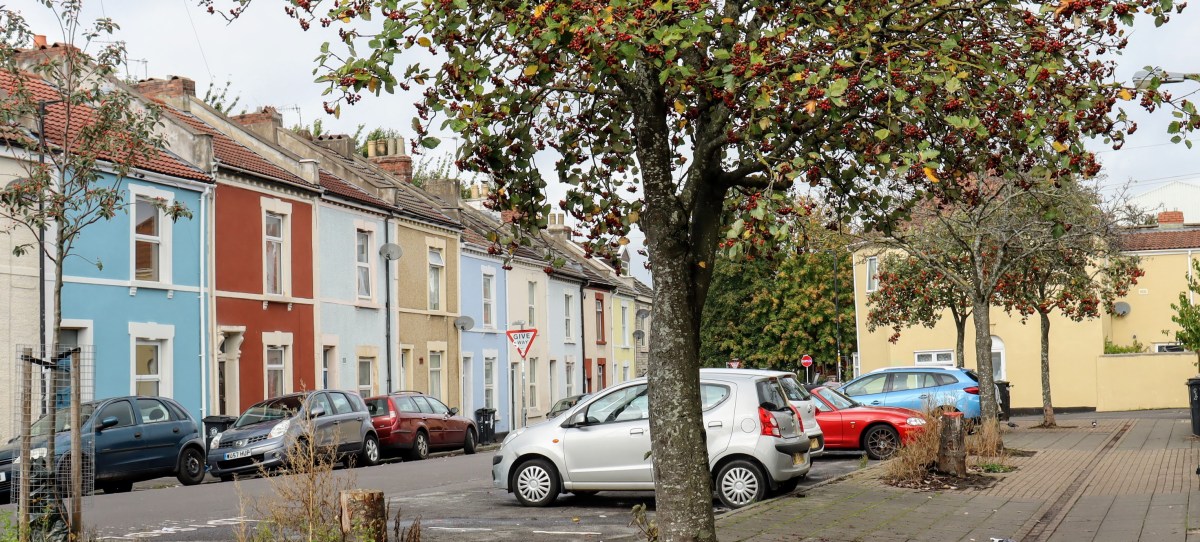
You will all have seen young trees planted in vacant tree pits in the streets of Bristol. These trees are replacement trees. There was once a tree growing there before – maybe some time ago.

These replacement trees are paid for by sponsorship, or by funds paid by Developers when they have felled trees on a building site and there is no room to replace the felled trees on the building site. In the latter case more than one tree has been “lost” – the one on the building site and the one that was previously in the tree pit.

In order to increase Bristol’s tree canopy – vital in this time of a climate emergency – we must see trees being planted in new places as well as getting all the “old” sites being filled more quickly.


Trees for Streets

To try to get this initiative going, Bristol has joined Trees for Streets.

Quotes from the Flyer for Trees for Streets

Bristol City Council has joined the Trees for Streets national street tree sponsorship scheme, which aims to plant thousands of additional trees in streets and parks across the city, by supplementing the council’s tree budgets through public and corporate sponsorship.

and

Trees for Streets is the National Street Tree Sponsorship Scheme from the urban tree charity Trees for Cities, funded by the government’s Green Recovery Challenge Fund and City Bridge Trust. The project uses technology to empower people and makes it easy for residents and organisations to get involved in greening their communities.

and

Our mission is to fund the planting of more than 250,000 additional street trees nationwide over the next ten years by hosting online tree sponsorship schemes on behalf of local councils and delivering local promotion and engagement activity to bring these schemes to life.

Comment

Bristol has long had a Tree Sponsorship scheme, run by TreeBristol (part of Bristol City Council).

In the 2021/2022 planting season £456,000 was spent by Bristol Council in planting of trees. A portion of this money is retained by BCC for maintaining the trees planted 55% of this money came from mitigation funds paid by Developers who had felled trees somewhere in the city in order to build on the land released. (So, the money was not being spent on NEW trees, just on replacements).

10% of that money came from sponsorship, with 6.5% coming from private sponsorship (individuals and groups) and 3.5% coming from business sponsorship. Even then a lot of that money was spent on replacing trees which had been lost i.e., not on providing trees in new sites. It is a difficult “sum” to achieve. Money from Developers is for the replacement of trees lost to development. The Bristol Tree Replacement Standard achieves an amount for replacement trees based on the size of the trees lost. Eventually the trees may grow to a size which more than compensates for the environmental value of trees lost. But it remains true that each replacement tree goes in to a tree site that has lost a tree formerly growing there – so the Council is spared the expense of replacing lost trees that it owned.

Representatives of the Bristol Tree Forum have attended two meetings now where this new scheme has been explained and described.

The Trees for Streets scheme is not going to fund the trees, nor plant the trees, so we would have worded the sentence “Our mission is to fund the planting of more than 250,000 additional street trees…….” slightly differently with instead “Our mission is to facilitate and organise the funding of the planting of more than 250,000 additional street trees…”

The Trees for Streets scheme is similar to Bristol’s former scheme in that it will provide a web based choosing and ordering and paying for system, whereby residents and organisations and businesses can find available tree sites for planting trees in Streets and Parks.

There are differences between the Trees for Streets Scheme and Bristol’s former scheme, and they are:

  • Bristol’s former sponsorship scheme was largely one of replacement for trees lost. A sponsor (an individual, a group or a business) would select, from the Council’s mapping, a site where formerly there had been a tree, and would pay for its planting. New site planting came from One Tree per Child (whips) or from national grants where Bristol would win a bid for a grant and spend the money.
  • The new scheme hopes to facilitate, through sponsorship, the planting of a new tree in a new site. These sites have to be found, and checked for Services (underground utility provision), and then put forward in the Council mapping for planting with a tree.
  • Residents, and other types of sponsor, will be able to suggest new sites for trees by answering the question “Where would you like to see a tree planted?” with their own suggestions.
    The sponsor would need to pay for the tree, but Trees for Streets might be able to assist with organising the funding, using their funding know how.
  • Initially this kind of new planting of Street Trees will only be possible in streets that currently have green verges, or in new sites in Parks.
  • (Trees in “hard ground” – pavements, plazas, city squares, etc. will need to be planted in engineered tree pits – and that is expensive. If a sponsor (which can be an individual, a group or a business) is prepared to meet that cost, then efforts will be made to agree suitable sites and then check them for Services and other criteria, such as the width of the pavement.)
  • Trees for Streets has national funding and this gives it an improved platform with web support and advertising which could see many more trees sponsored. Maybe businesses reached by the advertising will see a role in supporting tree planting in the more “tree poor” areas of Bristol?
  • Bristol is to offer residents the option to water their sponsored tree when it is outside their property – at a reduced cost (£160/tree v £295/tree).  It gives people an option at a lower cost – and it avoids trucks driving about with lots of water in a bowser.  It has worked elsewhere, and Bristol is going to try it.
  • DEFRA has provided funds for the setting up of Trees for Streets, and maybe future DEFRA grants will be channelled through this new national scheme. Bristol has, by making individual bids, obtained grants for tree planting from DEFRA in the past, and will still want to continue to make these bids for new funding for the actual purchase and planting of trees for new sites.

How it will work:

  1. Go to the Trees for Streets website at https://treesforstreets.org.bristol.
  2. Choose the location of your tree from the map or suggest a spot in a grass verge in your street or neighbourhood. The questions on the website take you through the choices.
  3. Answer a few questions about the location and you.
  4. If all works out your tree will be planted during the next available planting season.

Bristol Tree Forum’s Tree Champions are to be offered training from Bristol’s Tree Officers so that they can help residents, organisations and businesses with determining the suitability of sites that are suggested.

Bristol City Development – Where did all the Green go?

The Climate and Ecological Emergency

In 2018, with much fanfare, Bristol City Council (BCC) declared a Climate Emergency, the first UK city to do so, preceding the UK government by over a year. This has been followed up by the declaration of an Ecological Emergency, and a raft of sustainability aspirations detailed in the Bristol One City plan including doubling the tree canopy by 2046, doubling wildlife abundance by 2050, and City-wide carbon neutrality by 2030.

So why is it that so much of our informal green spaces are still being lost, and so many of our trees continue to be felled?

Is the BCC Development Office blocking Climate and Environmental Action?

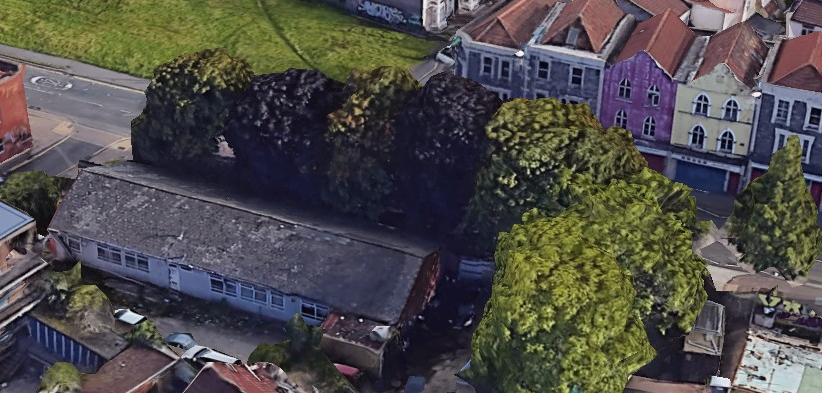
A clue to this came out of a recent planning application to build a 4-storey block of flats in St Paul’s, in a street with one of the highest illegal levels of pollution in Bristol, above recommended noise levels, in a known high flood risk area and on land thought to be contaminated.  It was shown that the planned development would increase pollution and noise levels. Furthermore, in an area with one of the lowest tree density in Bristol, five mature maple trees were to be felled, removing the last mitigation for noise, pollution and flooding in the street. The trees are on the very edge of the development site and could therefore have been retained, readily complying with BCS9 which states “Individual green assets should be retained wherever possible and integrated into new development”.

Bristol’s Planning policies are contained in two main documents:

These are supplemented by the Planning Obligations Supplementary Planning Document. All were variously adopted and implemented by the Council between 2011 and 2014.

Despite contravening core strategy planning policies on green infrastructure (BCS9, DM15), pollution (BCS23, DM33), climate change (BCS13), flood risk (BCS16), noise (BCS23, DM35) and health (DM14), the Development Office did everything in its power to promote and advocate this development.

The reasons for this became clearer when officers were asked during the Planning process specifically why they supported a development which breached so many core policies aimed at protecting the health of citizens, the environment and the City’s crucial green infrastructure.

The Head of Development Management responded, “With regard to this application, the policy aims of the Core Strategy could be seen as the delivery of housing (BCS5), including affordable housing (BCS17)”. Further, “Loss of green infrastructure will only be acceptable where it is…… necessary, on balance, to achieve the policy aims of the Core Strategy”.

The statement effectively says that, whilst the need for new and affordable houses remains, BCS5 and BCS17 can override other policies including those mentioned above. Thus, green infrastructure that could have been retained is ignored, pollution and noise levels above legal limits are permitted, and the worsening health of residents would be tolerated. This position seems to be contrary to that previously held, with development under BCS5 and BCS17 needing to be also in compliance with the other core policies. As there will always be a need for new homes and affordable homes, the concern is that all other policies can be set aside indefinitely.

We would suggest that BCC Development Office interpretation is in contravention of the National Planning Policy Framework (NPPF) which states that: “the purpose of the planning system is to contribute to the achievement of sustainable development (remember that phrase), including “an environmental objective” – to contribute to protecting and enhancing our natural environment, including helping to improve biodiversity, mitigating and adapting to climate change and moving to a low carbon economy”.

So how has the BCC Development Office responded to BCC’s Climate and Ecological declarations?

The Development Office was also asked how implementation of planning policies had been influenced by the Climate and Ecological Emergencies. Their response was:

“Whilst Climate and Ecological Emergencies have been declared by the Council, the Bristol Local Plan has not been fully reviewed in the light of these and the policies referred to remain unchanged. Changes to Local Plan policies would have to balance the objectives of the respective declarations with the requirement to deliver sustainable development for the city”.   

By “balance”, it seems they may effectively mean “ignore”. Clearly their definition of sustainable development is somewhat different to that defined in the NPPF, with no intrinsic “environmental objective”, and, as one Councillor on the Committee remarked, the development will “lead to poorer people having shorter lifespans”. Unpacking their response still further, the implication is that there are currently no core policies in place to implement the Climate and Ecological emergencies. As described above, this is not true. Were BCS9, DM15, BCS23, DM33, BCS13, BCS16, DM35 and DM14 to be applied as intended in the NPPF, there would be sufficient policy support at least for the principles of the two emergency declarations.

Is this being led by bureaucratic or political decision making?

It is not clear why the Development Office has taken this position, but there are two possibilities that should be of concern:

  • The Development Office is acting contrary to the aspiration of the City’s political leaders.
  • Senior Council politicians who have made much political capital from the highly praised environmental declarations, have at the same time permitted, or perhaps even encouraged, Council Officers to disregard existing planning policies that would otherwise enable implementation of these declarations.

Thus, selective policy compliance allows development of second-rate housing in a race for quantity over quality.

It seems that Bristol City Council are choosing to emphasise some core strategic policies aimed at hastening house building, whilst demoting other core strategic policies aimed at protecting public health, green infrastructure, air quality and the environment. This is a recipe for slum development, and we deserve to know whether these decisions are being taken at a political or bureaucratic level.

Professor John Tarlton.

Tree replacement and carbon neutrality

The UK aims to be carbon neutral by 2050. Bristol is more ambitious and aims to reach that goal in 2030. Both are massive challenges in which trees have been enrolled to play their part in mitigating the carbon dioxide (CO2) created by human activity.

Background

There are plans for extensive tree-planting.  The government pledged to plant 30 million trees a year, nationally. This a huge challenge partly because seedlings and land has to be found for these trees. However even when planted, these trees will take a long time to grow and extract CO2 from the air.  We in Bristol Tree Forum are concerned that not enough attention is given to the role of existing mature trees.  

Trees grow and add to their mass each year. Most of this mass is in the form of cellulose and lignin and about 50% of those organic compounds is carbon, obtained through photosynthesis using the energy of sunlight and CO2 from the atmosphere.  The rate at which mass is accumulated increases with age so whilst a 10 year old tree might put on a few kilograms a year, a 50 year old tree might add 50 kg.  So the older the tree the better for CO2 fixation. However mature trees are constantly under threat – from development for housing and industry, from home owners overshaded by large trees, from councils assessing maintenance costs and risks.

Here in Bristol, the Bristol Tree Replacement Standard (BTRS) is part of local planning regulations and specifies how many replacement trees are needed to be paid for by the developer and planted to mitigate the loss of mature trees. The BTRS is a very welcome and forward-thinking strategy, but is it enough to support the Carbon Neutrality goals? Should BTRS  apply also to council-owned and indeed privately owned trees for which no funded replacements are available?

The Bottom Line

In an attempt to understand how this standard works in practice, we have developed an on-line calculator to explore different scenarios.

Tree CO2 Calculator

The general conclusion from this analysis is stark:  it will take 25 to 40 years before the replacement trees are able to compensate for the loss of the mature tree.

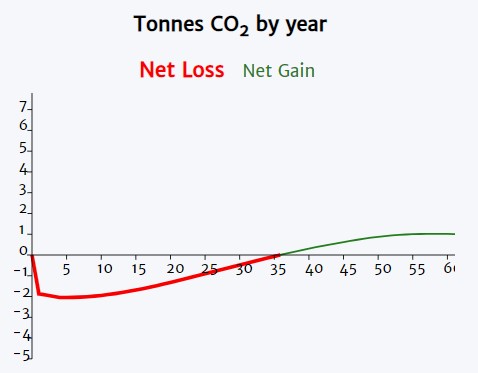
The graph shows the scenario of the replacement of a mature tree such as a Maple with a diameter of 60 cm by the 6 trees as determined by BTRS which are faster growing but shorter lived such as Rowens.

Assuming that the original tree is felled, chipped and used as fuel in a biomass boiler (the practice in Bristol), the carbon stored in the mature tree is returned to the atmosphere within months of felling.  The replacement trees start to grow, but absorb much less carbon than the original mature tree would have done, so they take many years to catch up. In the case shown in the graph, it takes 35 years (ie, to 2055) before the new trees mitigate the loss of the original tree.

Modelling

A model of this scenario needs to take into account:

  • the rate at which different species of tree grow at different ages in different conditions.
  • the estimated mortality of the tree over time.
  • the calculation of a tree’s biomass from its girth for different species.
  • the relationship between the tree’s biomass and the amount of carbon stored.

There is a lot of uncertainly in these relationships, partly because of the paucity of data on urban, as opposed to forest, trees. Urban trees are under threat not only from natural processes and disease, but also from the vagaries of vehicles and humans. Planting sites are often less than optimal and urban trees have no support from the ‘wood wide web’.

The interactive calculator allows the user to vary the parameters of the model using the sliders. This allows the sensitivity of the overall outcome to variation in values to be tested. Different policy choices can also be explored and can be used in a predictive sense to determine the number of replacements needed to achieve a given carbon neutral date.

Summary

Documentation on the website explains the thinking behind the model in more detail, and the sources of data used. The model is still under development, in particular to make it easier to select conditions for different species and situations, and to improve the quality of the model itself. The research literature is extensive but often of limited applicability to urban conditions.

We would be grateful to receive additional or better sources of this information, and indeed any comments on the model itself at co2@bristoltrees.space.

Chris Wallace, Bristol Tree Forum

Congratulations BCC on its successful Defra Urban Tree Challenge Fund bid!

Dear Bristol City Council,

We want to put on record our congratulations for the successful bid that your Parks Strategy team led for Bristol City Council to the DEFRA Urban Tree Challenge Fund (UTCF).  It has been some time in the resolution, but it is great that we now know for sure that it has succeeded.

We are delighted that there will now be more funds available to plant and maintain trees in the streets and green spaces of local communities that have perhaps been been overlooked in the past.

Thanks to you and to your excellent tree planting team, the Council has built an enviable reputation for planting urban trees across the city. Long may it continue!

We look forward to helping you with the planning and consultation that will be needed for adding these UTCF trees to next winter’s tree planting season.

This will make an important contribution to doubling Bristol’s tree canopy cover over the next 25 years.

We also applaud your decision to involve us in the collaborative partnership preparing the initial bid. As the only group specialising in protecting and caring for Bristol’s urban forest, we are very pleased to have been able to:

  1. Survey a representative sample of some of the 1,471 sites you have identified across the city, thereby relieving overstretched BCC officers who simply didn’t have the time to undertake this work.
  2. Adapt our Trees of Bristol website to record the planned planting locations for both street trees and the woodland sites.
  3. Develop our Tree Care site which communities will be able to use for post-planting tree maintenance and care – an important part of match funding the UTCF grant.
  4. We have also developed a comprehensive network of ward-based tree champions who are ready to be involved both in engaging with their local communities in the planned consultation and in helping with the ongoing care of newly planted trees.

As you can imagine, it was a lot of work, but we believe that it provided the sort of detail that helped clinch the bid.

Now that the funding has been secured, we look forward to meeting with you and the other partners to help with the next important planning phase of engaging with local communities and getting trees actually planted come next winter.

When can we meet to help you take this further?

In Defence of Dead Wood

It was once believed that when a tree died, it was no longer of use. For decades, we have actively removed trees at the first signs of rot or fungal attack, felling them at the base and removing all evidence of their existence…

Our guest editor, Nick Gates, Naturalist, writes

Storm damaged trees are hastily sectioned for firewood or bio-fuel. Sometimes, we replace them with a new, younger version of themselves. It was thought that this in turn kept other trees healthy, and that the wider environment benefited as a result.

The fall of a tree opens up new opportunities…

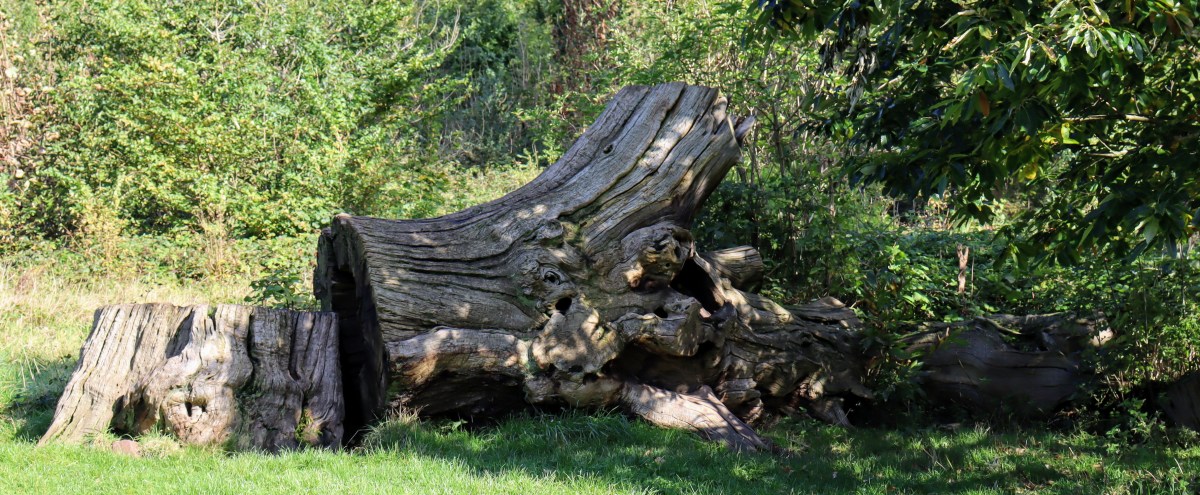
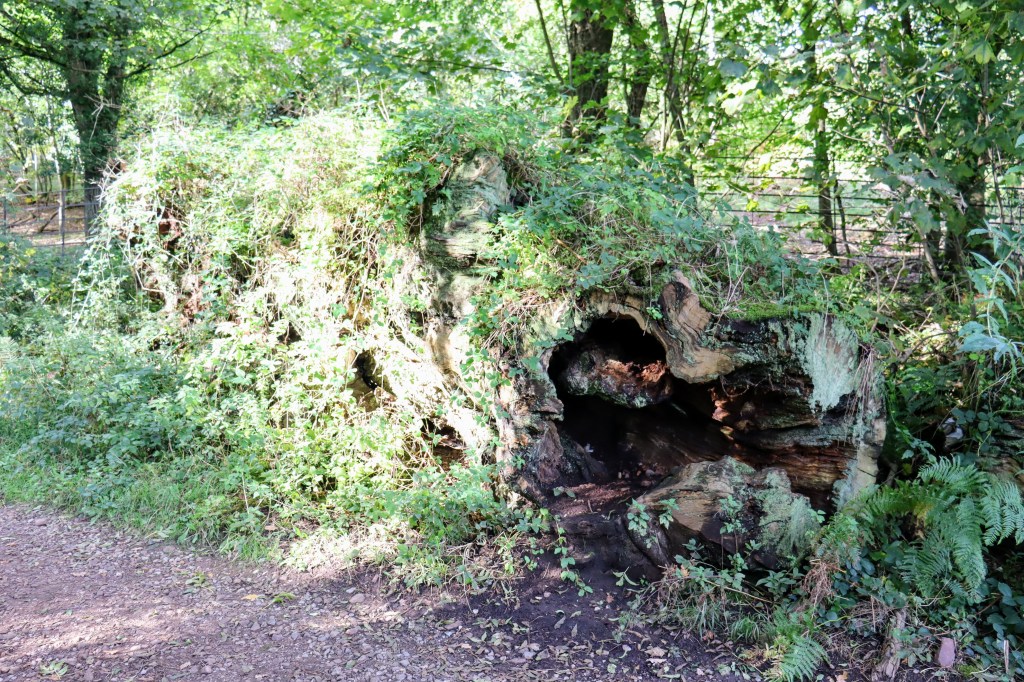
But nothing is further from the truth. By removing this deadwood, we are stripping out a most vital layer of the natural world. Because when a tree dies, it isn’t actually dead.

As a tree grows, its core begins to die. Have you ever looked at a majestic old oak, its core completely hollowed out, and wondered how on earth it was still producing green leaves and fresh shoots? The reason is that only the outer layers of the wood, just below the bark, are alive. They transport all the water and nutrients that a tree needs to survive. Simultaneously, under the soil, a massive network of fungi around its roots help the tree collect all of the vital nutrients and minerals it needs. As the tree grows, the wood core, the growth rings left behind and superseded from previous season, slowly dies.

Left to fade away…

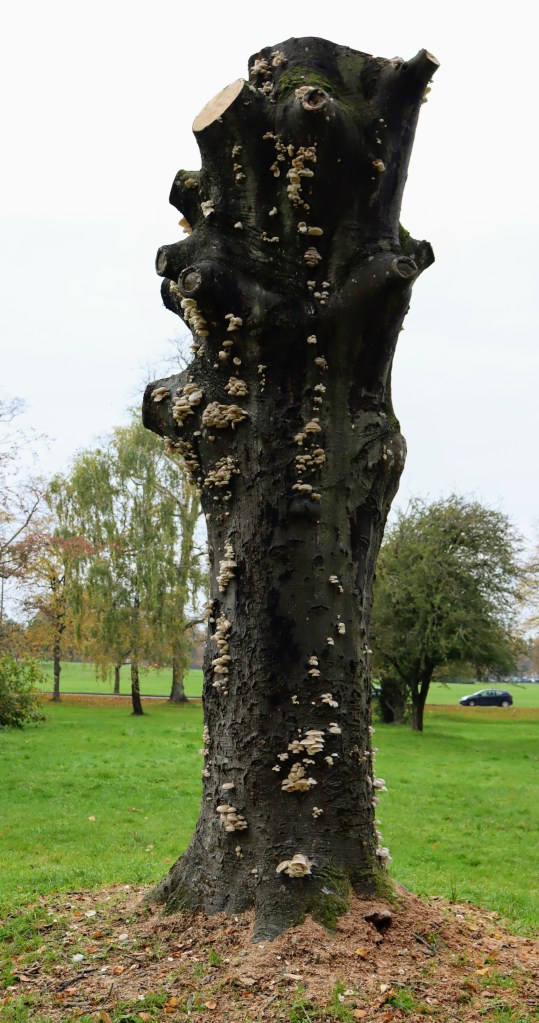
Over time, this core wood is slowly broken down by fungi. In the very oldest trees, the core is lost completely. Perhaps the most famous of these wood-feeding specialists is one you may well have eaten, the Shiitake mushroom. The fungi in turn are eaten by many species, from bacteria to nematodes, insects to mammals, whilst the rotten wood supports many more. Therefore, this soft rotting deadwood actually hosts a complex living food web.

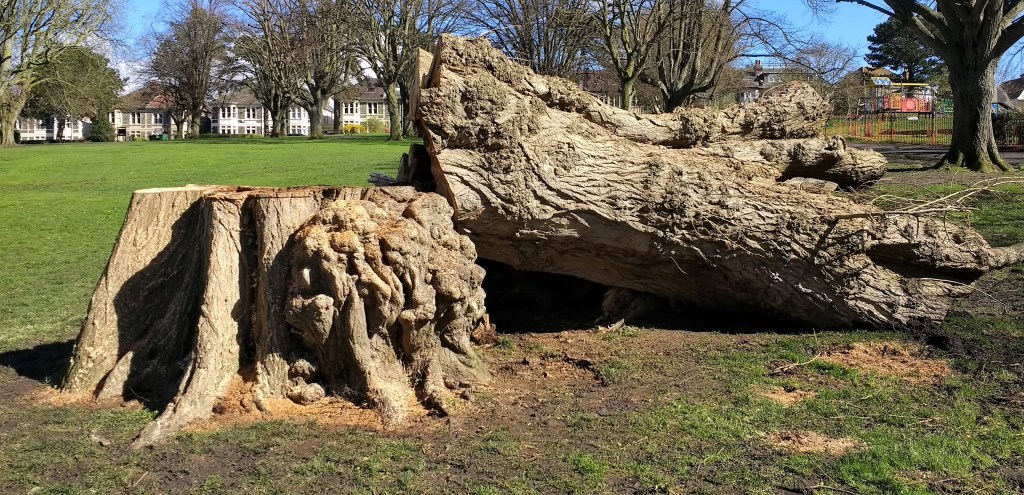
St Andrews Park – The fallen Black Poplar

An oak tree supports over 350 different varieties of insect. But over half of these feed on dead parts of the oak tree.  Bats rely on deadwood cavities to roost, whilst feeding on many species of night-flying beetle that feed solely on deadwood. Redstarts require hidden cavities to nest, whilst searching for bark beetles and moths that grew up in the deadwood. Everything from blue tits to woodpeckers and wood mice to tawny owls rely on deadwood for some part of their existence. By the time an old tree falls completely, upended from its rotting root network, the wood may be dead but the vast diversity of creatures it is feeding are very much alive. 

When we strip out deadwood from a natural environment, often under an aesthetic tidiness premise, we aren’t just taking the wood away. We are slowly eroding the complex living food web that the deadwood feeds. The Bristol Downs has suffered from this for many years. We could have hedgehogs snaffling snails from deadwood retreats and spotted flycatchers nesting amongst the craggy cavities in gnarled out stumps. Animals just need food and shelter to thrive. By removing deadwood, we take away both. There are many ways of leaving deadwood that look aesthetic whilst appreciating the enormous ecosystem service it provides. Good signage can help explain this.

In a time of unprecedented ecological collapse, we must all do what we can to help the natural world. Leaving deadwood in situ is one of the easiest ways to do this. So please, next time you see a fallen tree, don’t look on it as an untidy addition to the landscape, but enjoy it as the next opportunity for nature to reclaim a part in our everyday lives.

@NTGates Feb. 2020

A Manifesto for protecting Bristol’s existing Urban Forest

We invite all candidates standing in this May’s Mayoral and Councillor elections to endorse our tree manifesto which we set out here.

Bristol has declared a climate and ecological emergency. An emergency means making radical changes now – in every council department, by every developer, and by all those who own or care for trees.

All these proposals fit under Bristol’s existing 2011 Bristol Development Framework Core Strategy – BCS9 Green Infrastructure Policy which should now be implemented.  We must stop the needless destruction of so many trees in our city and instead learn to work around and with them.

Everyone from all sides of the political spectrum is talking about planting trees.  We fully endorse this, but it will take time for these new trees to mature. In the meantime, retaining existing trees will have the biggest immediate effect.

We propose that

  • There needs to be genuine community engagement in Bristol’s tree management decisions.  The council needs to listen to communities that want to save trees, not just to those who want to remove them.
  • Urban trees (planted or self-sown) have a tough life. Many bear the wounds and scars of previous damage or interventions.  These trees, though they may not be perfect, should be valued for the ecosystem services they provide and retained with appropriate and careful management wherever possible.
  • Alternatives to felling must be given priority, whether for street trees, or for those threatened by planning applications, or for other trees in the public or the private space.  
  • We need to strengthen planning policies to help retain trees on development sites by building around them, especially when the trees are on the edge of the site. 
  • Veteran and ancient trees require specialist management to ensure their retention whenever possible.
  • When surveys identify trees that present a risk, there should be consultation about the range of options available to mitigate the risk. This should always balance risk with the benefits the tree provides. Felling is only ever a last resort.
  • If trees must be felled, then more trees need to be planted to replace them. This should be based on well-established metrics used to calculate how to increase (not just replace) the natural capital of the lost tree.

Click here to print a copy of the manifesto. Candidates are welcome to download and use to support our aims.

Our Blogs contain many examples of the sorts of issues that have caused us to write this manifesto.

The trees at Stoke Lodge Park and Playing Fields – a letter to the Council

5th February 2020

Dear Bristol City Council Parks Department,

As you are aware, we have been expressing our continuing concerns about the welfare of the trees growing at Stoke Lodge Park and Playing Fields for the best part of a year now.

At the moment, our particular concerns are threefold:

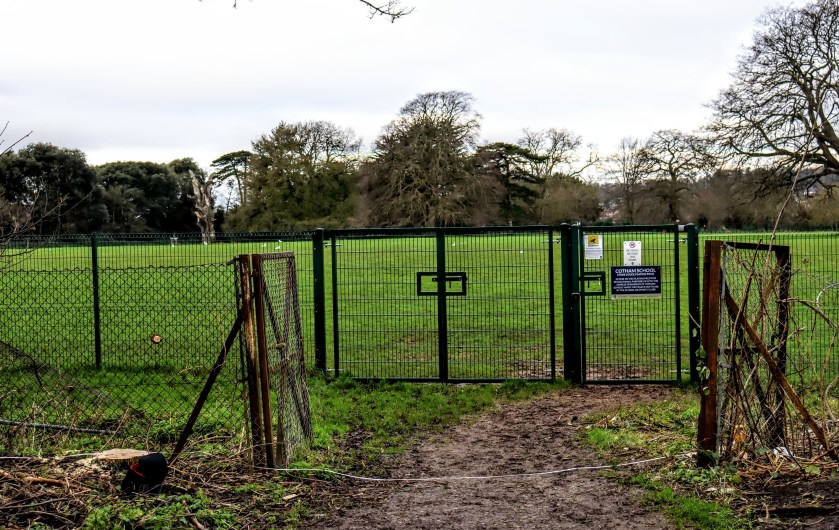
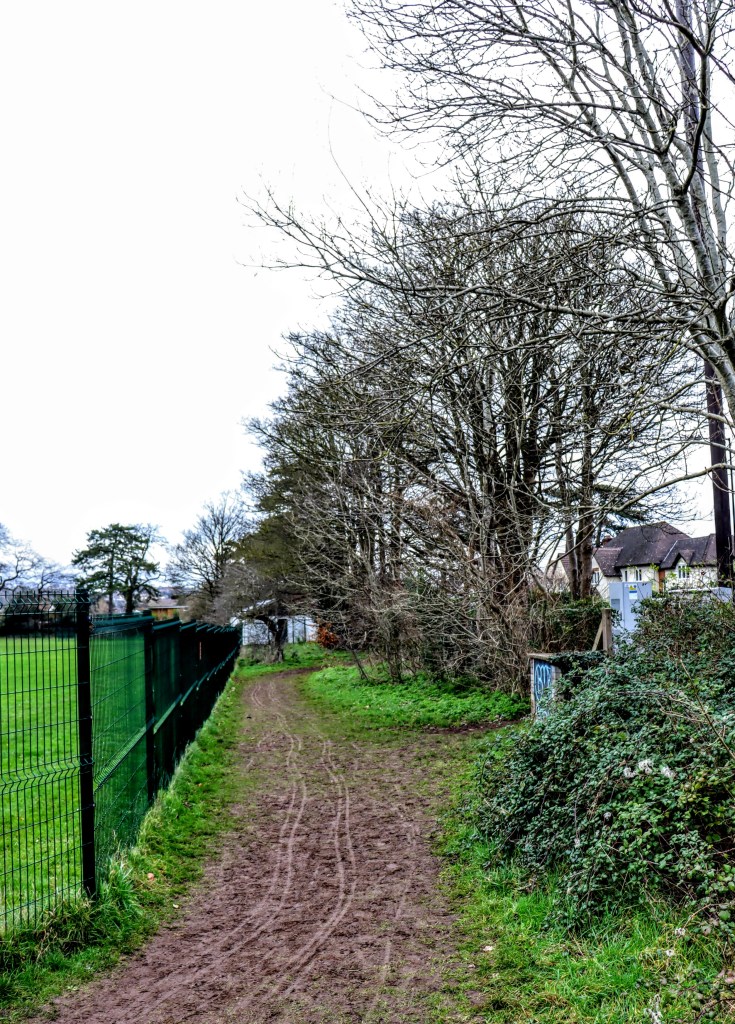
  1. The potential for damage to trees caused by pedestrians being obliged to pass over their root zones and under their canopies since Cotham School erected its boundary fence last year.
  2. The potential for damage being caused to the trees growing within the new fence being caused by the school’s grass mowing regime.
  3. The potential for damage to trees caused by vehicles passing over their root zones and under their canopies.

To a large extend, our concerns about issue three may have been allayed by the school’s adoption of a new access point at the eastern end of the fields, but we will have to see how this develops.

The new vehicle access point at the eastern end.

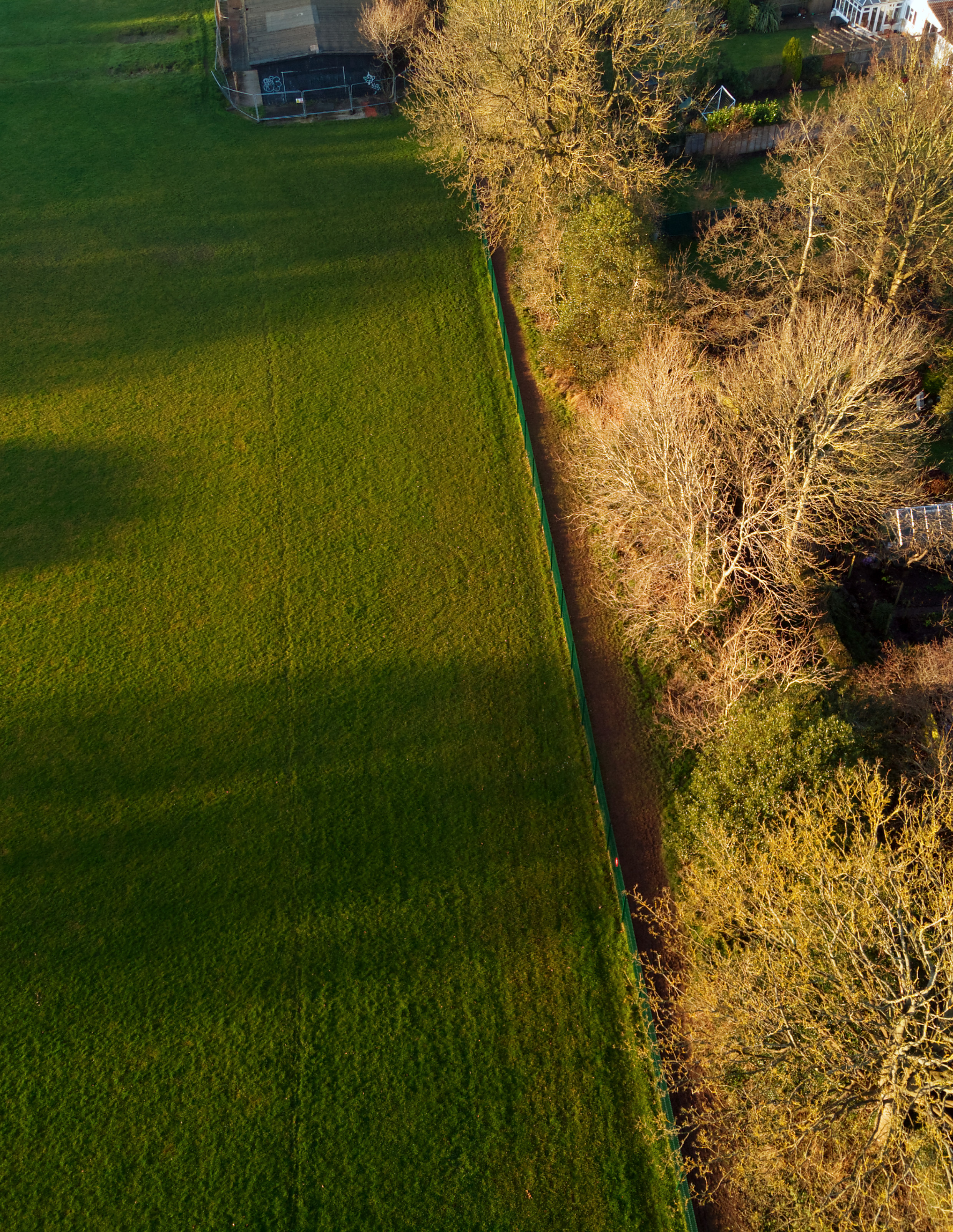
As for the other two issues, we attach images showing how the very muddy and disturbed path running around the outside of the school’s fence is causing disruption to the root zones of a number of trees – these are not all the trees being affected by this.

The eastern end of the fields.
The path leading to the Pavilion on the northern boundary.
created by dji camera
The path leading to the Pavilion.

These images show how the current mowing regime encroaches within the root zone of one of the Turkey oaks inside the fence.

The Turkey growing at the eastern end of the playing fields seen from above.
The Turkey growing at the eastern end of the playing fields – the mowing line is clearly visible.

Here is a video which shows the mowing issue more clearly.

In our view, something needs to be done about this before any damage being caused becomes irreversible.

Can you advise me what action the Council plans to take to protect these trees, please?

Best Regards,

The Bristol Tree Forum

Council no longer manages trees on educational sites – Part II

Our worst fears have been realised. Schools have been left to care for the trees growing on their own sites, including those growing on school playing fields.

This blog follows on from our recent article on this subject – Council no longer manages trees on educational sites.

We have now had a response to a recent Freedom of Information request.

Trying to avoid the Council’s earlier refusals to answer our earlier FoIs about this, we asked for the same information as before, but just about one school which we selected randomly.

The school’s identity has no particular significance. We believe that these responses reflect the same situation across many other schools in Bristol (and the rest of the country?) – the lease disclosed is a Department for Education (DfE) standard Academy Lease’.

We asked…

[We] have been advised that Bristol City Council no longer maintains or manages trees growing on some sites owned by it.

In respect of Henleaze Junior School, is it a site where the responsibility for the care of the trees growing on its site has been passed to the school?

If so, please provide the following information:

1. Does the Council retain the ownership of the trees on the site?
2. If it no longer retains ownership, who does?
3. Does the Council still retain liability for any damage caused by trees on this site?
4. If it no longer retains liability, who does?
5. is this site available for tree planting by the public through sponsorship schemes such as TreeBristol or through tree-planting initiatives such as One Tree Per Child or the Urban Tree Challenge Fund?
8. Who makes decisions about the planting, maintenance or felling of trees on this site?
9. If it is not the Council, is the decision maker obliged to consult the Council before proceeding to maintain or fell a tree, whether or not the tree is growing in a Conservation area, or is protected by a Tree Preservation Order or is the subject of a planning application?

Please provide a copy of any lease entered into between to Council and Henleaze Junior School for the lease of its site.

The Council has responded to say…

The site is let to the Academy on a 125 year Department for Education standard Academy Lease.  The Council holds the Freehold of the site, but the responsibility for the management of the trees has passed to the Academy and the Council no longer retains liability for any damage caused by trees on this site?  The Academy does.

While the the site is available for tree planting by the public through sponsorship schemes such as TreeBristol or through tree-planting initiatives such as One Tree Per Child or the Urban Tree Challenge Fund, consent by the Academy is required for this.

The Academy is not obliged to consult the Council regarding the maintenance, removal or planting of trees on site and has the sole responsibility for these activities. This is subject only to any Tree Protection Orders (TPO’s) and/or Conservation Area requirements that may exist for trees on the site. In these cases, a planning application must first be made and permission given before the school can proceed.

A copy of the lease is available here. There is no mention of trees in the lease.

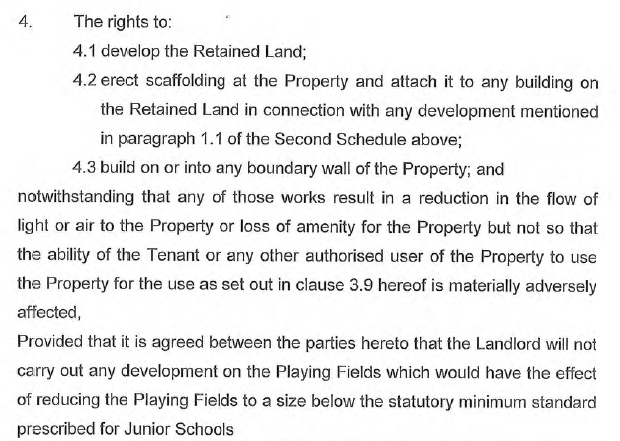
We are intrigued to note however, that the Council retains the right to develop the school and playing fields – Schedule Three – Rights Excepted and Reserved:

It appears very likely that similar arrangements to this will be found across most of the city’s 78 Academy schools (and possibly many Maintained and Special schools), by leaving them to make their own ad hoc arrangements to care for and/or plant trees as they may/or not desire.

Given that the One City Plan aims to double tree canopy cover over the next 25 years, it seems a great shame that this important land bank (we estimate some 188 hectares – land and buildings – for Academies alone) of possible new planting sites might have been excluded from helping to achieve Bristol’s ambitious plans.

What about protecting all the trees with a TPO?

There are already at least 3,400+ established trees growing on educational sites that could be at risk. As far as we can tell, very few of these trees are protected by a TPO, though some will be are growing in a Conservation area.

So, is it possible possible to protect all the remaining unprotected trees with TPOs? At least then all schools would be obliged to get planning permission before removing or ‘managing’ trees and we will be able to see what is planned.

Local Authorities have the power to make four types of TPO:

  • Individual TPOs: A single tree, illustrated as a trunk and approximate canopy spread. If trees merit protection in their own right, authorities should specify them as individual trees in the Order. 
  • Group TPOs: A group of trees, usually shown as a canopy, or group of canopies, with or without stems shown. The group category should be used to protect groups of trees where the individual category would not be appropriate and the group’s overall impact and quality merits protection. 
  • Woodland: Shown as an area of land. The woodland category’s purpose is to safeguard a woodland as a whole. So it follows that, while some trees may lack individual merit, all trees within a woodland that merits protection are protected and made subject to the same provisions and exemptions. 
  • Area TPO: Shown as an area, without stems highlighted. The area category is one way of protecting individual trees dispersed over an area. Authorities may either protect all trees within an area defined on the Order’s map or only those species which it is expedient to protect in the interests of amenity. 

We were recently been copied this answer when this issue was raised about some trees growing in the Bearpit:

Thank you for your email requesting a Tree Preservation Order for trees within the St James Barton roundabout/ Bearpit area. We have reviewed these trees following your TPO request. We understand that you are concerned about any future plans for the Bearpit which could affect these trees and the amenity they provide. 

The national guidance on ‘Tree Preservation Orders and Trees in conservation areas’ (https://www.gov.uk/guidance/tree-preservation-orders-and-trees-in-conservation-areas#making-tree-preservation-orders ) advises: 

“though some trees or woodlands may merit protection on amenity grounds it may not be expedient to make them the subject of an Order. For example, it is unlikely to be necessary to make an Order in respect of trees which are under good arboricultural or silvicultural management.” 

Furthermore, the potential effect of development on trees, whether statutorily protected (e.g. by a tree preservation order or by their inclusion within a conservation area) or not, is a material consideration. This means that tree matters must be taken into account by Bristol City Council as the Local Planning Authority when dealing with planning applications, and when undertaking consultations, and that members of the public can make clear their views. 

Given that these trees are already under existing arboricultural management, and that they would automatically be a material consideration should any future planning application come forward, it is not expedient or necessary for a Tree Preservation Order to be placed on these trees.

It appears that trees on educational land can, in theory, have TPO protection if it can be shown that they are not ‘under good arboricultural or silvicultural management’. But, how can the Local Authority know this?

However, our experience when we have requested that TPOs are made, is that the council will rarely do so, unless the trees are considered to have Amenity value and they are shown to be under immediate threat of destruction or damage. But, how can the Local Authority know this if the school is not obliged to tell them?

And…bitter experience has taught us that, whilst ‘…the potential effect of development on trees, whether statutorily protected…or not, may be ‘a material consideration’, other considerations often result in the welfare of trees being a very distant secondary consideration, with the result that they are frequently sacrificed to the too-oft-repeated argument that it is either the development or the trees, when there is no reason why it cannot be both.

So, the reality is that these trees are unlikely to be granted TPO status, save in exceptional circumstances and, even if they are, this is no guarantee of their future protection.

Our original concerns remain

We remain concerned that school governors (quite apart from lacking the necessary skills to manage the trees growing on their sites) may not yet have realised the full implications of the practical and strategic obligations that taking on such an important part of Bristol’s Natural Capital places upon them.

As a result, they are likely to buy in (at our eventual expense) ad hoc expertise, with the risk that they will overlook the wider strategic considerations that are needed when it comes to managing and promoting Bristol’s trees.

This, coupled with the distinct possibility that well-meaning, but unqualified Council officers in departments with no expertise in the management of trees may be making critical decisions about the welfare of trees across a wide range educational sites across the city, makes for a very worrying situation.

Our view is that the Council should take back the control and management of trees growing on land owned by it whether it is leased or not. Only then can we be assured that there is at least some degree of oversight and accountability, while helping us to achieve the wider strategic vision for the development of Bristol’s urban forest.